AOMEI Partition Assistant
How Do I Clear My Cache and Junk Files for Windows Computer?
If you want to know “how do I clear my cache”, you can read this post to gain 4 practical ways. Follow it to clear cache for Windows and make your computer run in a clean environment.

By Irene / Updated on July 8, 2025


About cache files
As we surf the web, use apps, and visit websites, our computers store temporary data called cache. It stores files, images, and relevant data on your device after you access an app or website for the first time.
These caches are utilized to enhance the performance and efficiency of the device or application by allowing faster access to frequently used data. But it can also cause some problems over time, such as storage space consumption, outdated data, slow computer performance and compatibility problems.
Where can I find the cache files on my Windows computer?
Windows cache's location is not fixed. Generally, cache files are stored in specific directories or folders within the system or application directories. The most common cache storage location in Windows should be "AppData" or "Temp" folder.
However, it's significant to be cautious when accessing and modifying these files, as some cache files are meant to be managed automatically by the system or applications. If you're unsure about handling cache files, it's best to seek guidance or use tools designed for cache management.
What kind of cache files can I delete?
You can safely delete various types of cache files on your computer. Here are some common cache files that you can consider deleting:
Browser cache: Cache stored by web browsers, such as Chrome, Firefox, Safari, and Edge, can be safely deleted.
App cache: Many applications, especially on mobile devices, store cache data. Clearing app cache can free up storage and resolve app-related issues.
System cache: Your operating system also maintains a system cache. Clearing this cache can help free up memory and improve overall system performance.
Temporary files: Temporary files generated by applications and the operating system can often be safely deleted. These files are meant to be temporary and are no longer needed once their purpose is served.
Thumbnail cache: The thumbnail cache stores small images or icons used for quick viewing in file explorer. Clearing this cache can free up storage space.
Microsoft Office Cache: Microsoft Office applications, like Word and Excel, store cache files. Clearing this cache can help fix issues with Office documents.
How do I clear my cache to make the PC run faster?
Cleaning the cache is an essential maintenance task for your computer. Here, we provide helpful methods to clean the cache.
Way 1: Clear Temporary Files
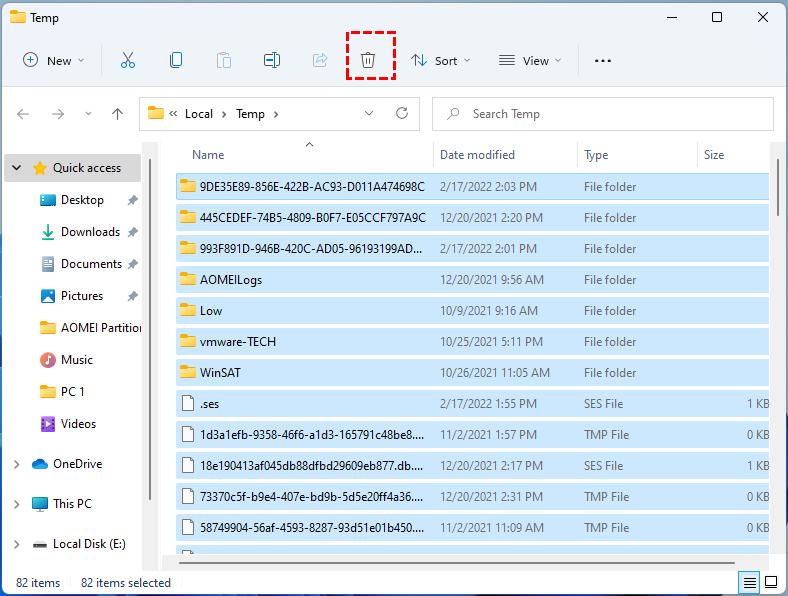
Temporary files, a common type of cache on your computer, are stored in the path C:\Users\Admin\AppData\Local\Temp. To delete them, press Windows + R to open the Run window, input "%temp%", and click OK to access the Temp folders. Then, delete all the temporary files and folders in this location.
Way 2: Enable Storage Sense for PC Cleanup
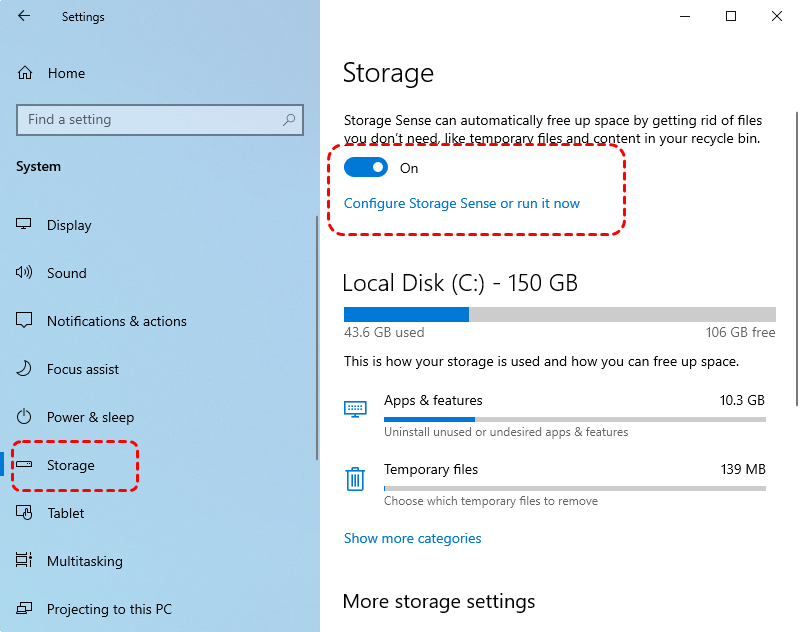
Storage Sense is a file-cleaning feature that allows Windows to automatically free up space by removing unnecessary junk files, including temporary files and items in the recycle bin. To utilize this tool:
Step 1. Click "Start" and then "Settings". In the new window, click "System".
Step 2. Select "Storage" and turn on "Storage Sense".
Way 3: Run Disk Cleanup
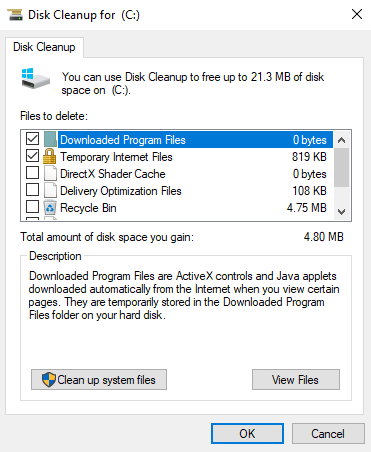
Disk Cleanup, a built-in Windows tool, also serves as a C drive cleaner to help users find and delete unnecessary files, thereby freeing up disk storage space on their PC's hard drive. To use Disk Cleanup, follow these steps:
Step 1. Press Win + S to search for Disk Cleanup and double-click the search result to open the tool.
Step 2. In the pop-up window, choose the drive you wish to clean up from the drop-down menu and click OK.
Step 3. Wait for the tool to finish scanning the selected drive. Then, in the new window, click "Clean up system files" to scan for additional system cache.
Way 4. Use a cache cleaner to clear cache for Windows computers
With these inbuilt tools, do you know how to clear the cache on my computer now? During the clean process, kindly please pay attention to cache files related to the system and application. Once delete the necessary data, they cannot work normally or even cause data loss.
Therefore, it is advisable to use a professional and safe cache cleaner for data safe. PartitionAssistant Cleanup is a free partition manager. Its PC Cleaner function can deeply scan the hidden cache and junk files from your Windows computer. Most importantly, it will list the classified file types, which allows you easily identify whether the cache can be deleted or not.
 PartitionAssistant Cleanup
The Best Windows Disk Partition Manager and PC Optimizer
Step 1. Install and launch PartitionAssistant Cleanup. Click the "Clean Junk Files" tab.
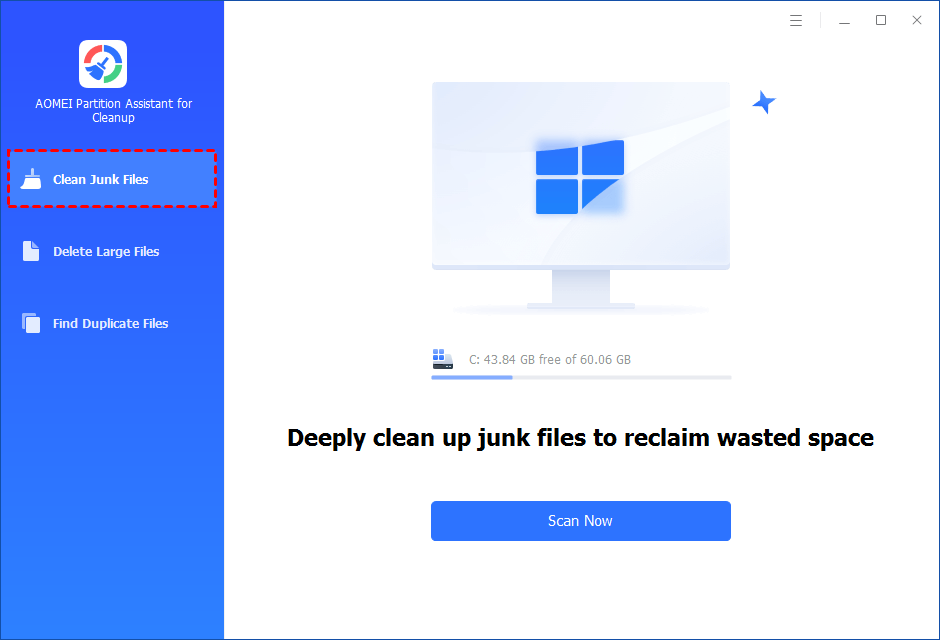
Step 2. Click the "Scan Now" button to start the process of scanning junk files.

Step 3. After the scan process is finished. All system junk files (including recycle bin files, temporary files, log files, invalid shortcuts, and so on) and registry junk files (including DLL registry, system registry, and program registry) will be displayed.
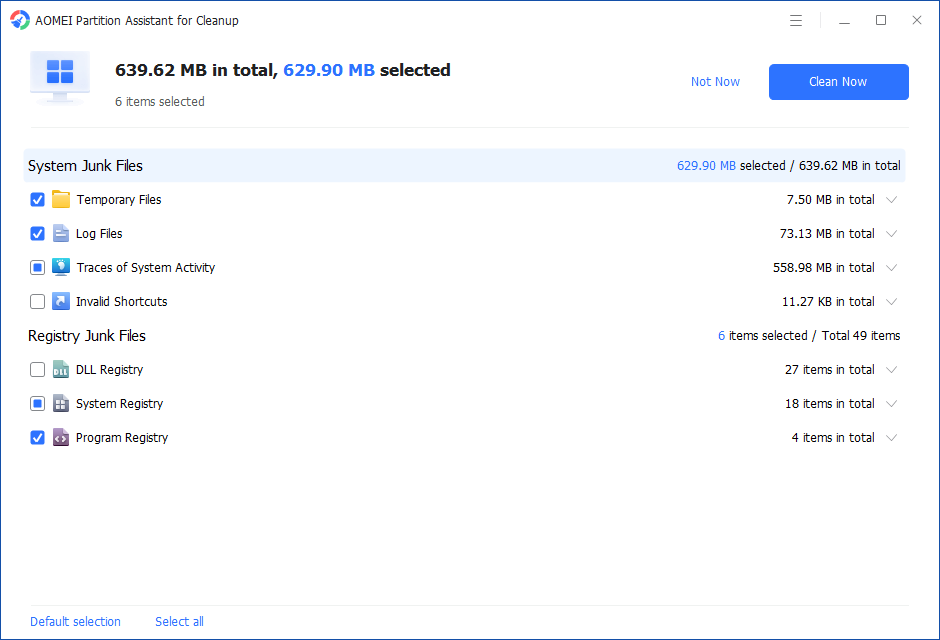
Step 4. You can also click the button behind to view the junk files details.

Step 5. And, you can click the button behind to locate the file.
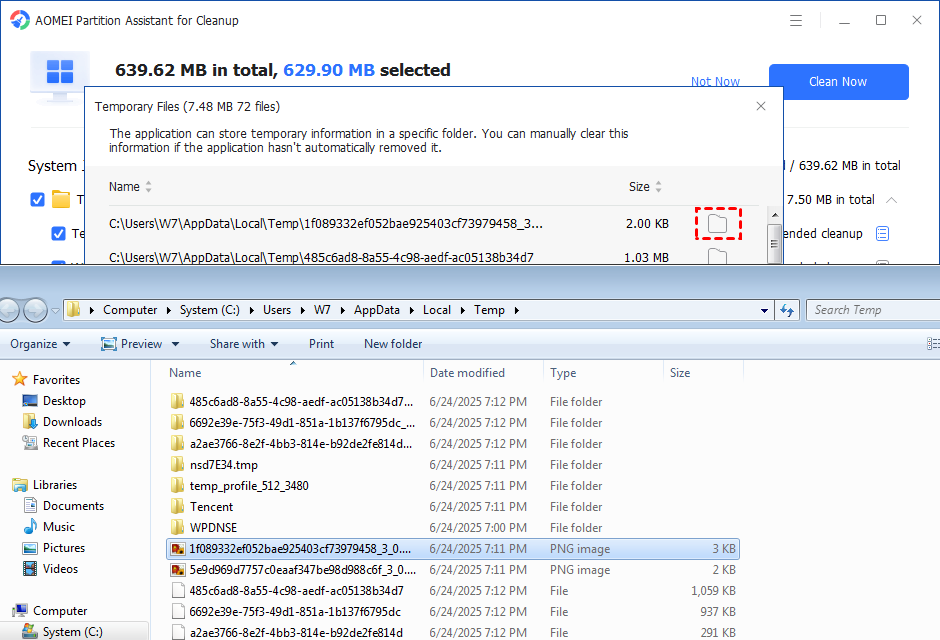
Step 6. By default, the program will select some junk files to clean up, for example, temporary files, log files, and so on. You can also manually check to select more or uncheck to deselect fewer listed junk files. Or, click "Select All" to select all junk files to clean up if you need to clean up all.
After selecting junk files that are not needed anymore, you can click the "Clean Now"button to start the cleanup.

Step 7. The process of the cleanup might take time, and the selected files will be cleaned up. After the process is finished, you will get a cleanup completed window displaying how many files you have cleaned and not yet cleaned.

★ You can try the "Delete Large Files" function to dig out all of the large files on PC and delete them according to your needs.
Conclusion
How do I clear my cache? This guide offers 4 effective ways. If you need to deeply clear cache for Windows, it is recommended to use a professional and safe PC Cleaner, such as PartitionAssistant Cleanup.