AOMEI Partition Assistant
How Much SSDDo I Need? Find Answer Here!
How much SSD do I need? It depends on how you use your computer. Different usage habits and workloads require different capacities, so refer to this article to learn more information.

By Hedy / Updated on August 26, 2025


How much SSD do I need?
When selecting storage—whether for a new laptop or a custom-built PC—the size of your SSD plays a critical role. The right capacity not only saves money but also ensures smoother performance and avoids the frustration of running out of space.
So, how much storage do you really need? Let’s break it down step by step.
⚡ For basic use:
>> 256GB
For light users, a 256GB SSD generally does the job. It works well for everyday tasks like browsing the web, checking emails, streaming videos, or creating Word and Excel documents. However, space fills up fast if you install many programs or keep large files locally. For entry-level needs, though, it’s a practical and affordable choice.
>> 512GB
While 256GB covers the basics, 512GB offers more breathing room. This size is ideal if you plan to store a few videos, install multiple apps, or keep some casual games. It strikes a nice balance for average users—enough capacity for the system, office tools, a handful of games, and personal files—without requiring constant cleanup.
⚡ For moderate use
>> 512GB
For users who split time between work and play, 512GB remains a good option. It can store office software, digital media, and smaller or indie games. But if you’re into heavy gaming—especially AAA titles—you’ll find yourself needing more space sooner than later.
>> 1TB
With 1TB, you gain room for larger games, a growing movie library, and other substantial media files. It’s well-suited for moderate workloads where 512GB simply won’t cut it.
⚡ Advanced use
>> 1TB
For many people, 1TB hits the sweet spot. It balances cost, speed, and capacity. Gamers, professionals, and creators working with large files will find it more than capable for demanding tasks. It easily accommodates multiple programs, high-resolution photos, and video projects.
>> 2TB and above
High-capacity drives—2TB or more—are designed for serious users. If you edit 4K or 8K video, maintain a vast game library, or run multiple operating systems and virtual machines, this range is the clear winner. Modern AAA games can exceed 100GB each, and raw video files quickly add up. With a larger SSD, storage constraints become a non-issue.
✍ Quick recommendations
⭕ Choose 256GB if:
You only need essential apps like Windows, Office, and a browser.
Most of your files are small documents.
You rely heavily on cloud storage.
Budget is tight.
⭕ Choose 512GB if:
You want free space after installing work tools.
Light image editing and document handling are part of your routine.
You plan to install 3–6 AAA games alongside indie titles.
You store a modest number of photos and HD videos.
⭕ Choose 1TB if:
You need medium storage for games, pictures, videos, and work files.
You want a balance between cost and space.
You use external or cloud storage for overflow files.
⭕ Choose 2TB or more if:
You frequently handle massive files like 4K/8K videos.
You maintain a large personal media or gaming collection.
You work with multiple virtual environments.
You want room to grow with no storage worries.
How to upgrade the SSD after purchase
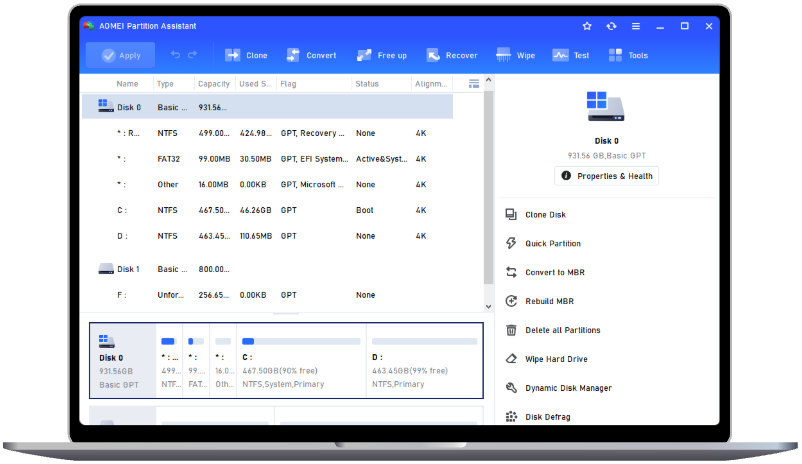
After installing a new SSD, the next step for many users is moving data from the old drive to the fresh one. To simplify this process, third-party tools like AOMEI Partition Assistant are highly recommended.
This software offers several cloning and migration functions designed to handle different needs:
✔️ Clone disk: It creates a full replica of an entire hard drive, including the operating system, partitions, data, and overall disk structure. It’s ideal when you want a complete transfer to a new drive.
✔️ Migrate OS to SSD/HDD: It moves only the operating system and essential system files to another disk, whether SSD or HDD, without duplicating the entire drive. This option is perfect for upgrading to an SSD while keeping storage on the original drive.
✔️ Copy partition: It clones a single partition rather than the entire disk, making it useful when you only need to move specific data or sections of a drive.
With these flexible options, you can choose the migration method that best suits your storage goals. Here, we take cloning hard drive as an example:
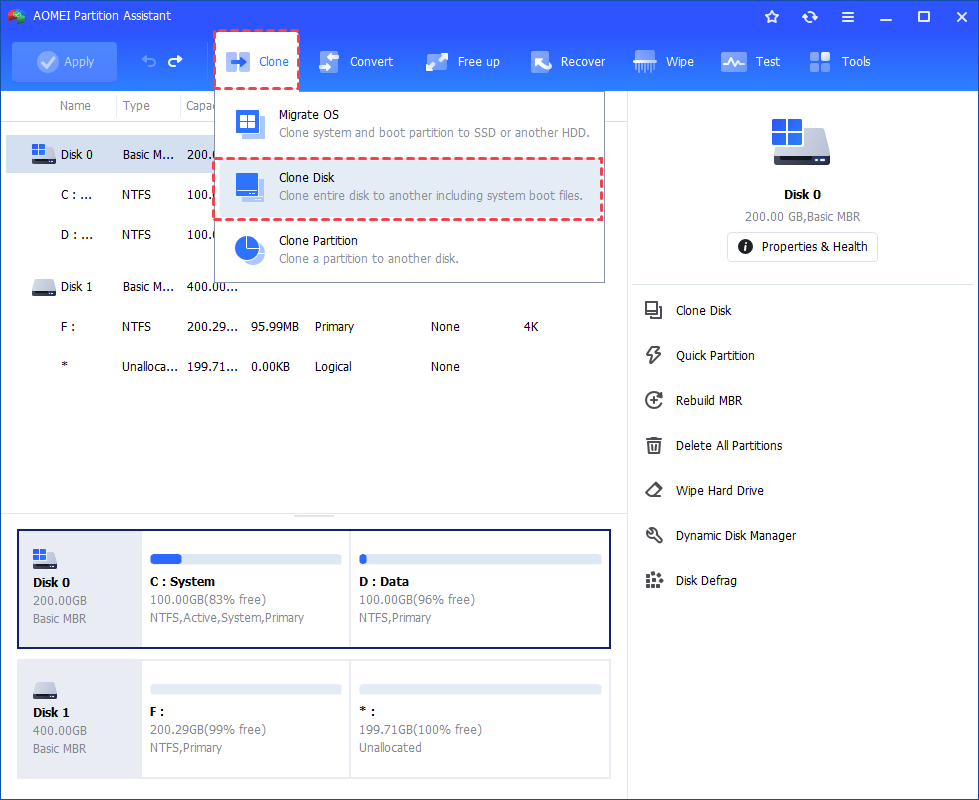
Step 1. Download this computer operating system clone software, then install and open it. Click "Clone" in the main interface, and select "Clone Disk".
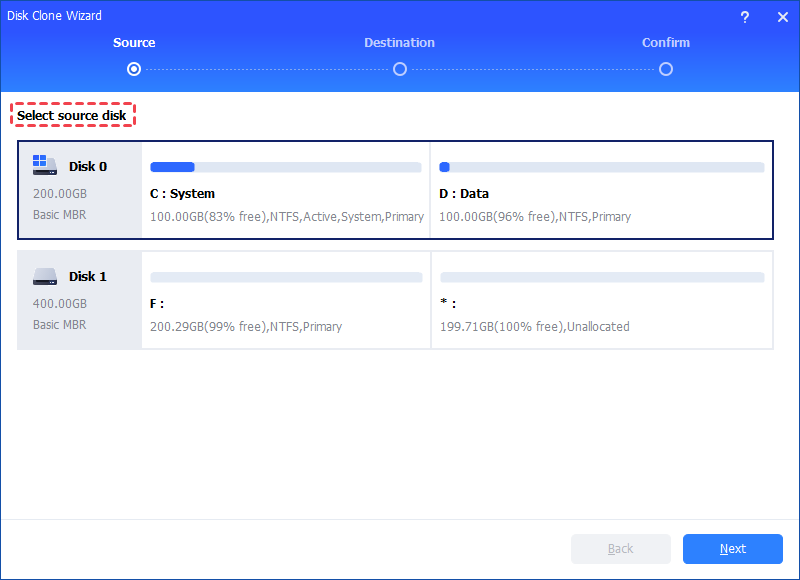
Step 2. Choose the hard disk that you need to clone as the source disk and click "Next".
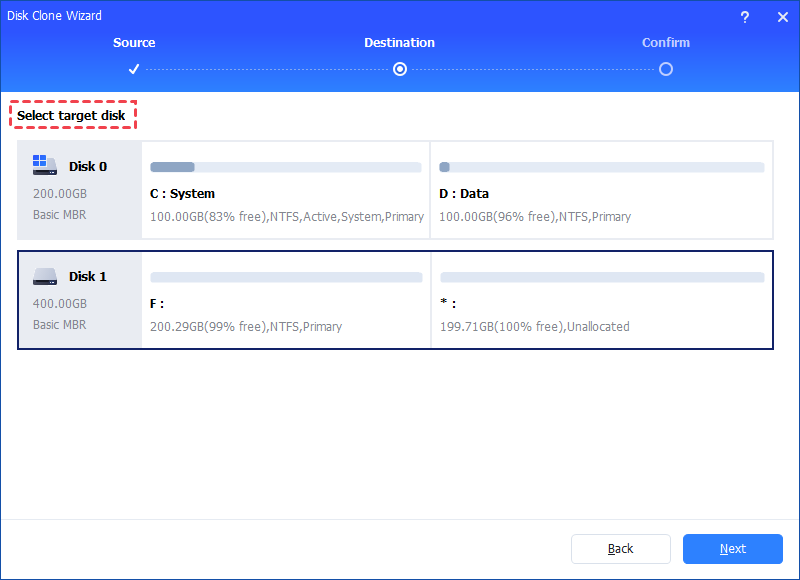
Step 3. Select another drive as the destination disk, and then click "Next".
Step 4. Then, you can check the source and destination disk in the next window or change to "Sector to Sector clone", and click the "Confirm" button to continue if there is no problem.
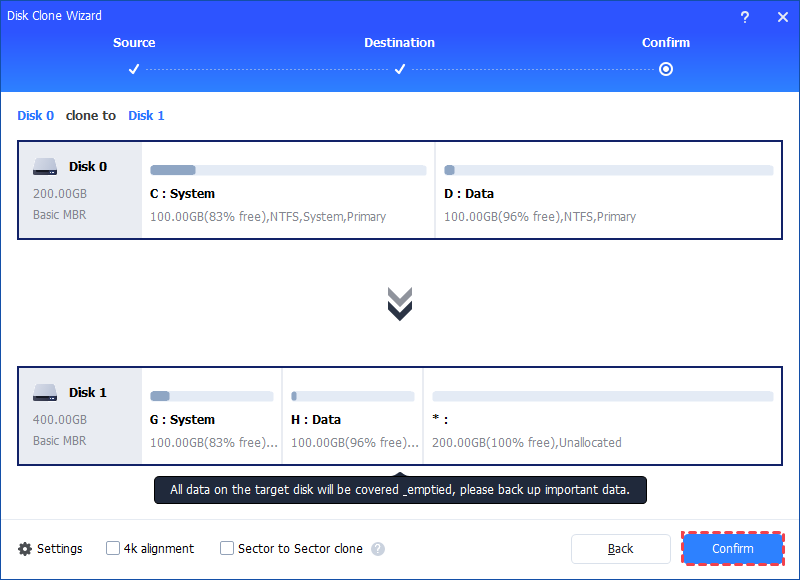
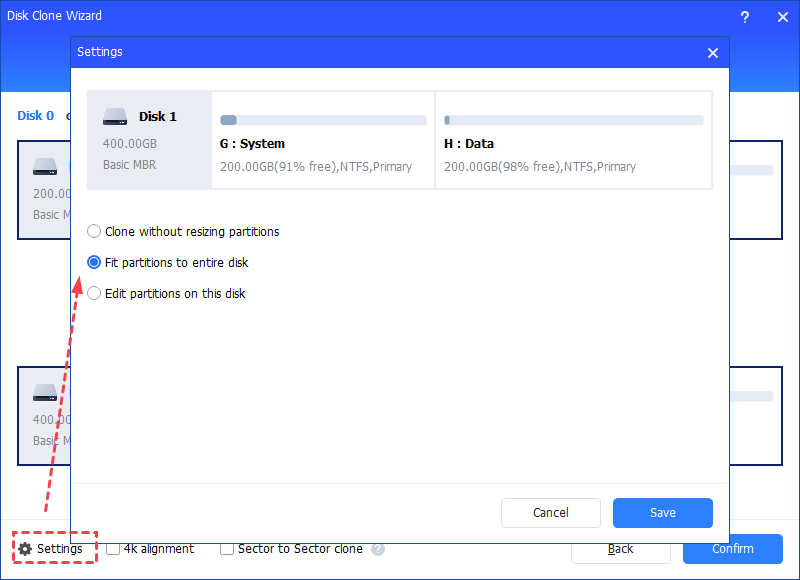
Here, you can also click the "Settings" button to adjust the partition size on the destination disk or tick "4k alignment" to improve the reading and writing speed of the SSD.
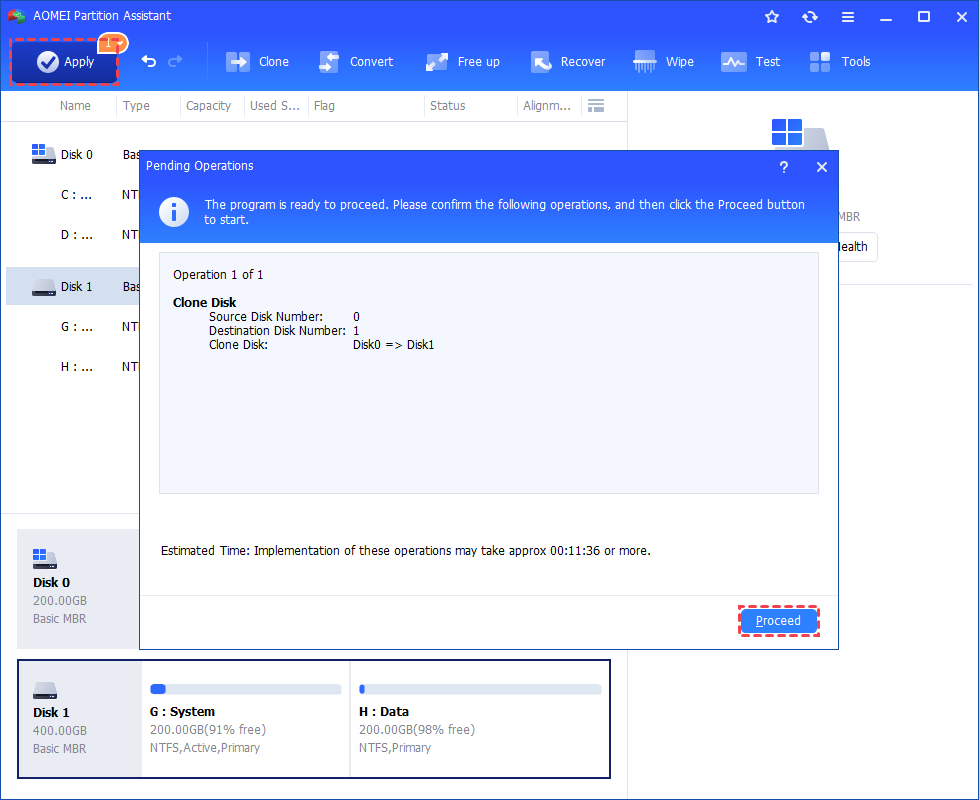
Step 5. After returning to the main interface, check the pending operation and click "Apply" and "Proceed" to commit the operation.
Conclusion
The right SSD size depends on your usage. For basic tasks, 256GB is enough, while 512GB suits average users. Gamers and professionals benefit from 1TB, and heavy creators or large game libraries need 2TB or more. If upgrading later, tools like AOMEI Partition Assistant simplify disk cloning and OS migration for a smooth transition.