AOMEI Partition Assistant
How to Create a Windows Repair Drive
Your complete guide to Windows system repair. Follow our step-by-step instructions to create a bootable USB repair drive and learn how to fix an unbootable PC with ease.

By Lucas / Updated on October 29, 2025


There's nothing more stressful than pressing the power button on your PC only to be met with a black screen, an error message, or an endless boot loop. When your system won't start, the panic can set in quickly. This is precisely where a Windows repair drive becomes one of the most valuable tools in your tech arsenal. It’s your first line of defense for performing a Windows system repair and getting your computer back in working order.
This guide will walk you through the importance of having a recovery tool ready. We'll explain why you need it, how to create one using Windows' built-in feature, and, most importantly, show you how to create a powerful repair drive using a third-party tool even if your PC is already unbootable.
Why Do You Need a Windows Repair Drive?
A Windows repair drive is a bootable USB flash drive that contains a copy of the Windows Recovery Environment. It allows you to troubleshoot and fix problems with your operating system, even if Windows itself won't load. Think of it as a first-aid kit for your PC.
Boot Failures: It helps you fix common startup problems, such as a missing operating system or a damaged Master Boot Record (MBR).
System File Corruption: If critical system files are damaged or deleted, the repair drive provides tools like Command Prompt and System Restore to fix them.
Performing a System Reset or Restore: You can use the drive to access advanced options to restore your PC from a system image or reset it to its factory state without losing your files.
Advanced Troubleshooting: It provides access to tools like Startup Repair, which can automatically diagnose and fix problems preventing a repair Windows 10 system or Windows 11 system repair.
Being proactive and creating this drive before you have a problem is one of the smartest steps you can take to safeguard your PC.
How to Create a Windows Repair Drive
Windows has a built-in utility that makes creating a basic repair drive a straightforward process. All you need is a working Windows PC and a USB flash drive (at least 16GB is recommended).
Step 1. Plug your USB flash drive into your computer. Type "Create a recovery drive" into the Windows search bar and select the corresponding app.
Step 2. You may be asked for administrator permission. Click "Yes."
Step 3. In the recovery drive tool, ensure the box for "Backup system files to the recovery drive" is checked. This allows you to use the drive to reinstall Windows if necessary. Click "Next."

Step 4. The tool will scan for and select your USB flash drive. Make sure you've selected the correct one, as the process will erase all data on it.
Step 5. Click "Next," and then "Create."
The process will take some time. Once it's finished, you can safely eject the USB drive, label it clearly, and store it in a safe place.
How to Make a Windows Repair Drive for an Unbootable PC
The built-in tool is great, but it has one major flaw: you need a working PC to create it. What happens if your computer is already dead and you never made a recovery drive? This is where a more powerful and flexible tool, AOMEI Partition Assistant Professional, comes to the rescue.
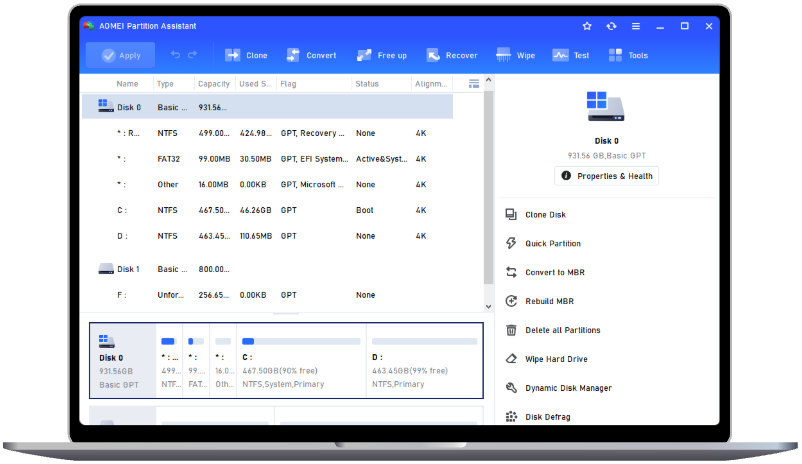
AOMEI Partition Assistant Professional is a comprehensive disk and partition management software that is packed with powerful features, including the ability to create a bootable repair disk on any working computer to fix another unbootable one. This makes it an essential tool for reactive troubleshooting.
This method shows you how to create a versatile bootable media that can help you fix critical boot issues like a damaged BCD.
Step 1: Create the Bootable Media on a Working PC
Step 1. Download and install AOMEI Partition Assistant Professional on any functional Windows computer. Plug in a USB drive and launch the software.
Step 2. In the top toolbar, click "Tools" and then select "Make Bootable Media."
Step 3. Follow the wizard. Select your USB drive as the target and click "Proceed." The software will create a bootable USB containing the AOMEI Partition Assistant environment.
Step 2: Use the Bootable Drive to Repair the Unbootable PC
Step 1. Plug the newly created bootable USB into the computer that won't start. Turn on the PC and immediately press the key to enter the BIOS/UEFI setup (usually F2, F12, DEL, or ESC).
Step 2. In the BIOS, change the boot order to make the USB drive the first boot device. Save and exit. The computer will now boot from the USB drive, launching the AOMEI Partition Assistant software.
Step 3. In the AOMEI interface, you can now perform repairs. For a common boot problem, right-click your system disk and select "Rebuild MBR" or "Boot Repair". Choose the correct OS version and click "OK."
Finally, click "Apply" in the top-left corner to execute the repair.
After the process is complete, remove the USB, reboot your PC, and it should start normally.
To Sum Up
Facing a computer that won't boot is a daunting experience, but being prepared can turn a crisis into a minor inconvenience. A Windows repair drive is an indispensable tool for troubleshooting and fixing a wide range of system issues. While the built-in Windows tool is a great proactive measure, it's useless if your PC is already down.
This is where AOMEI Partition Assistant Professional truly shines. It provides a reliable and powerful way to create a bootable repair disk on demand, giving you access to advanced recovery tools like "Rebuild MBR" that can solve complex boot problems and get your Windows 10 or Windows 11 system repair done efficiently. Having a tool like this on hand is the ultimate safety net for any Windows user.