
 PartitionAssistant Recovery


How To Remove CERBER Ransomware And Restore Files in Windows PCs?
How to remove CERBER ransomware and restore files? Here is a reliable data recovery tool can help you restore files from viruses and malware attack.

By Irene / Updated on August 4, 2025


What Is CERBER Ransomware?
Cerber is a dangerous type of ransomware that infects computers, encrypts personal files, and demands payment to unlock them. It usually spreads through phishing emails, which often include either a password-protected Word template (.DOT) or a Windows Script File (.WSF).
In one version, the email provides a password to open the .DOT file. Once opened, it asks the user to click “Enable Content,” which activates a harmful macro that installs the ransomware. In the WSF version, the email contains a fake “unsubscribe” link. Clicking it downloads the script file, which runs the malware.
After being installed, Cerber checks where the device is located. If it's in certain countries like Russia, Ukraine, or others in that region, the ransomware shuts down. If not, it waits until the user is inactive, triggers a screensaver, and tricks the user into restarting the system. It first reboots into Safe Mode with Networking, then reboots again into normal Windows mode to begin file encryption.
Cerber targets over 400 file types and can even access shared network drives. It uses strong encryption methods (AES-256 and RSA) to lock the files. Newer versions can also turn infected computers into part of a botnet used for large-scale cyberattacks.
Once files are encrypted, Cerber leaves “DECRYPT MY FILES” notes on the device, including text and even audio messages. Victims are told to install the Tor browser and pay the ransom in Bitcoin—usually starting around $500. It’s offered as ransomware-as-a-service (RaaS), meaning cybercriminals can rent and use it, with the original creators taking a share of the profits.
In short, Cerber is a well-crafted and highly effective ransomware threat that locks your data and demands money in return.
How to remove CERBER Ransomware?
Facing a Cerber ransomware attack can be overwhelming. Although getting rid of the malware itself is often not too difficult, the real problem lies in recovering your files, which Cerber encrypts with powerful security. Unfortunately, removing the virus won’t automatically unlock your data. However, taking immediate action can help limit the damage. Here’s what you should do:
Step 1: Restart in Safe Mode with Networking
Turn off your computer and reboot it in Safe Mode with Networking. This mode loads only the essential system files and lets you connect to the internet safely.
Step 2: Use Antivirus Software
Once in Safe Mode, open your antivirus program. Run a full system scan to detect and remove Cerber and any other harmful files. This helps stop the ransomware from spreading and encrypting more data.
Note: Removing Cerber will not unlock your encrypted files. They will remain unreadable without a decryption key, which the attackers claim to have.
Step 3: Don’t Pay the Ransom
It might be tempting to pay the attackers to restore your files, but this is not recommended. There is no promise they will send the key. In some cases, like with Petya ransomware, the encryption is permanent and can’t be undone—even by the hackers.
Also, paying the ransom only encourages more attacks. It tells cybercriminals that ransomware works and profits them.
Step 4: Rely on Backups
The best defense against ransomware is to keep regular backups of your files on an external drive or cloud service. If you have backups, you can simply wipe your system clean and restore your data without paying or worrying.
How to restore CERBER ransomware files?
If your files have been encrypted or lost due to a CERBER ransomware attack, using a reliable recovery tool is key. One trusted option is PartitionAssistant Recovery. This software is specially designed for Windows users and offers powerful data recovery features alongside partition management tools.
It is especially useful for restoring files lost due to virus attacks, system crashes, or accidental deletion. It works smoothly on Windows 11, 10, 8, 7, and Windows Server systems, and supports various storage devices like recovering data from hard drives, SSDs, USB drives, and SD cards.
Unlike basic Windows recovery tools, AOMEI provides a more user-friendly and advanced solution. Its smart scanning engine can detect and recover over 2,000 file types, including documents, photos, videos, emails, and more. Whether your files were removed by ransomware, data lost due to formatting, or affected by a system error, this tool gives you a high chance of getting them back.
Step 1. Install and launch PartitionAssistant Recovery. Choose the exact partition or disk where your data lost and click Scan.

Step 2. Then, the recovery tool start to scan and search. lt will execute the “Quickly Scan" first for finding your deleted data fast, and then execute the “Deep Scan" for searching other lost data.

Step 3. Once the scan is completed, all deleted files, recycle bins and other missing files will be displayed. Please select the file you would like to recover and then click "Recover".

Step 4. Then, select a folder path to save your recovered files.
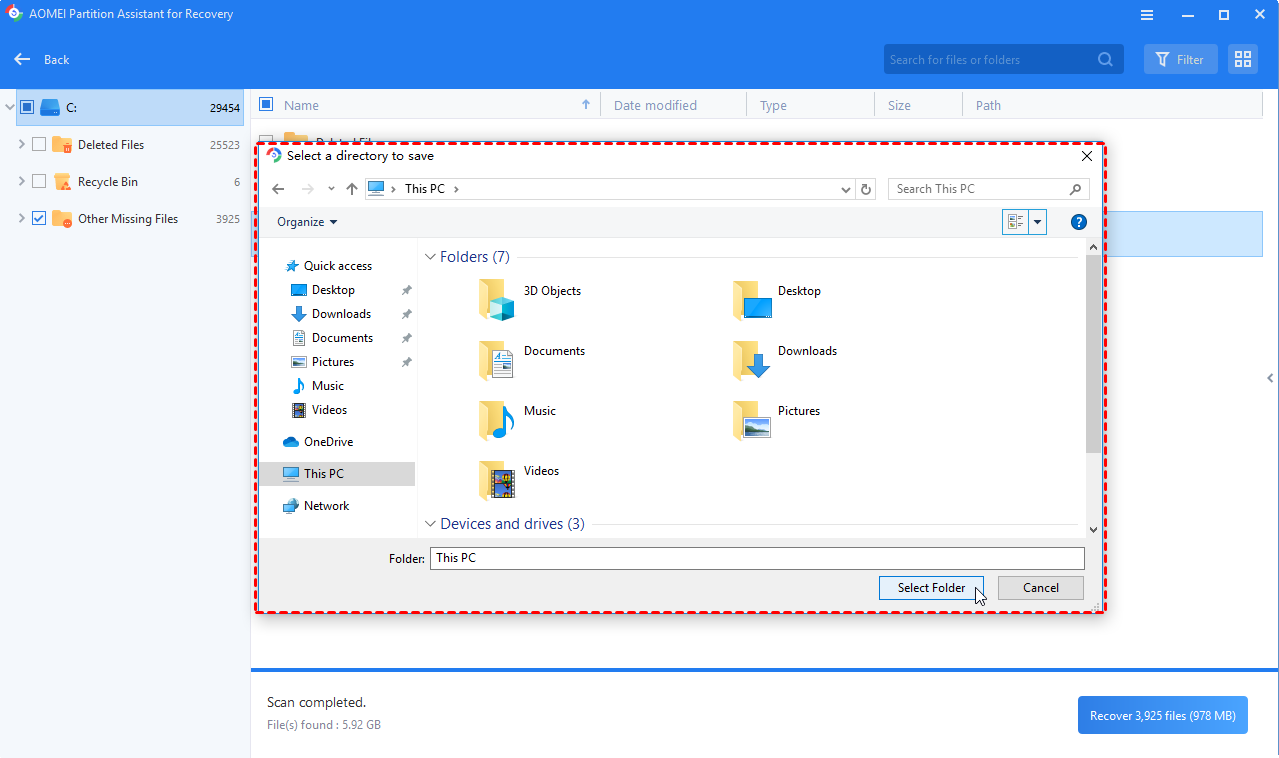
Step 5. Wait patiently for this process of recovering ends.
5 Tips for recover files deleted by virus
Recovering virus-infected files is a simple process using PartitionAssistant Recovery. However, to improve results and proactively prevent future occurrences, consider taking the following precautions:
1. Do not download programs and software from any platform you do not trust.
2. Do not click any link that looks suspicious.
3. Install a reliable and trusted antivirus program on your PC.
4. Scan every peripheral device that you connect to your computer before using it.
5. Try to scan and remove the virus before file recovery.
Conclusion
This article shares how to remove CERBER ransomware and restore files. Cerber ransomware is a serious threat that encrypts your files and demands payment to unlock them. It spreads mainly through phishing emails with dangerous attachments. While removing the malware is possible using antivirus tools, recovering your files is much harder because of strong encryption. Paying the ransom is risky and not recommended since there is no guarantee you will get your files back. The best protection is to regularly back up your data and use trusted recovery tools like PartitionAssistant Recovery. This software helps you scan and recover lost files safely and effectively. By acting quickly and following the right steps, you can reduce the damage caused by Cerber and protect your important information.
