
 PartitionAssistant Cleanup


How to Delete Temporary Files in Windows 10 PC?
You can delete temporary files in Windows 10 computer to free up more free space on the disk. In this guide, you’ll leaner how to clear all junk files with some cleanup tools.

By Lucas / Updated on July 11, 2025


What is a tmp file?
Tmp files (temp files), also known as Temporary Files, are files that programs save on your computer to keep information for a short amount of time in case the system needs the same data again. Other sorts of temporary files in Windows include those left over after installing a new version, upgrade logs, error reporting, temporary Windows installation files, and more.
Is it OK to delete all temp files?
Usually, temp files won’t cause any issues. However, the problem is that they grow quickly and take up free space on the hard drive, which can be the reason preventing you from installing a new version of Windows, or they can be the reason you are running out of space on your computer.
They are only useful when they are generated for specific programs. So, when you cease the running program, some of them will be outdated and useless. The new temp files will emerge when users run the program. Thus, it’s safe to delete all temp files.
How to delete temporary files in Windows 10/11?
In this part, we’ll show some ways to help you delete temporary files from Windows.
Way 1. Use Disk Cleanup to clean temp files
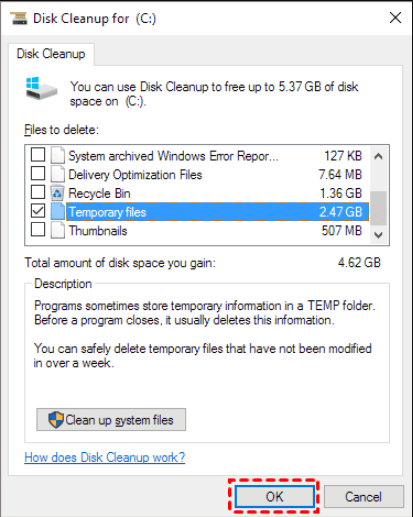
Disk Cleanup can help you get rid of most temp files on the C drive.
Step 1. Type "Disk Cleanup" in the search bar and press "Enter".
Step 2. Select the target drive and click“OK”.
Step 3. Then, tick the Temporary files and click "OK" to delete them.
Way 2. Use Storage Settings to delete temp files
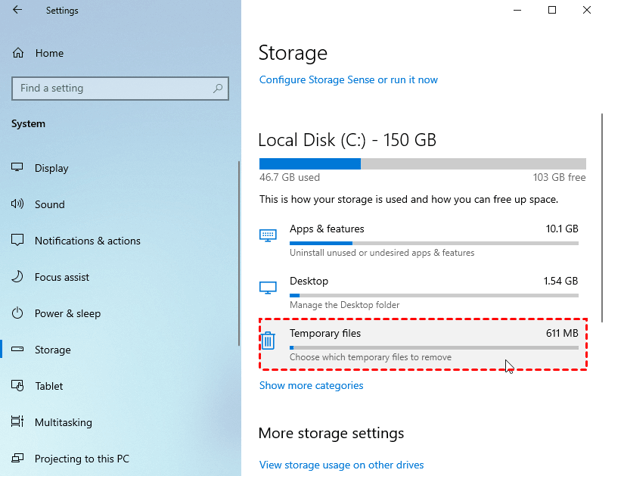
Windows 10 and Windows 11 allow users to clean storage junk files in Settings.
Step 1. Open start bar and turn to "Settings" > "System" > "Storage".
Step 2. Click “Temporary files”.
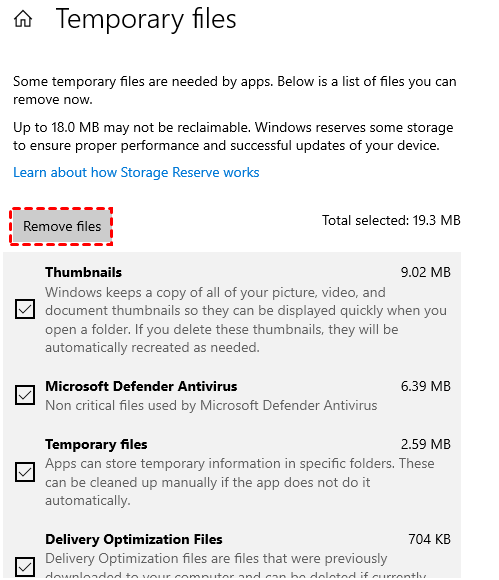
Step 3. All temp files will be listed, and you can click “Remove files” to delete these temp files.
Way 3. Delete the Temp folder to clear all temp files
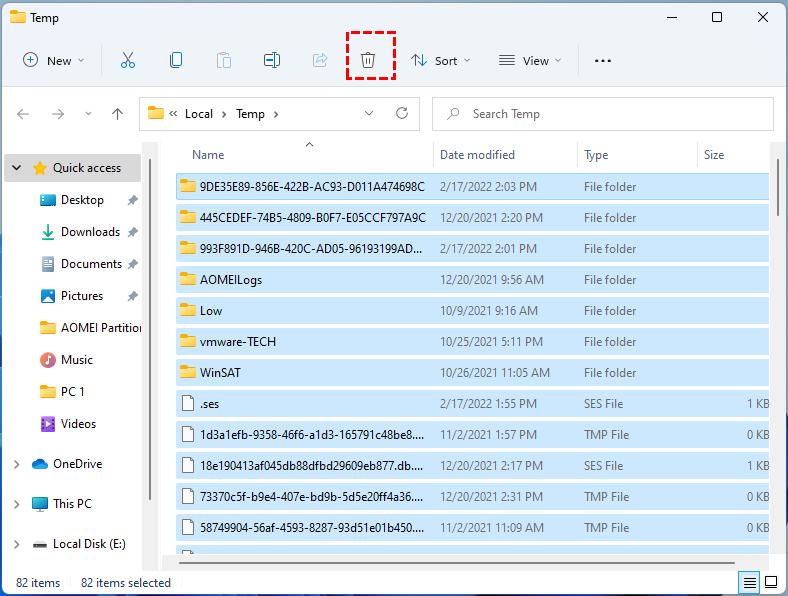
After using the first two ways to clear the temp files, you can open File Explorer to check the Temp folders whether there are some temp files are kept or not.
Step 1. Press “Windows + R”, type in “%temp%” and hit Enter.
Step 2. If there are many temp files, you can select the temp files and delete them.
Powerful cleanup tool for cleaning all junk files on the disk
You see, to delete all temporary files, you might need at least 2 tools in the system. And there are not only temp files, but also system cache files, Thumbnails, installer files, registry files… It’s impossible for users to find them all and safely delete them. Thus, a convenient cleanup tool will be very useful.
PartitionAssistant Cleanup is a disk partition cleanup software trusted by millions worldwide. It's an excellent PC Cleaner utility which is specifically designed to be an effective junk file cleaner for PC, meticulously scanning your system to analyze your system for common junk file categories, including system junk, browser junk (cache, cookies), application junk, and registry junk. This ensures a safe yet thorough cleaning process, making it accessible even for users who aren't tech-savvy.
 PartitionAssistant Cleanup
Free Up Disk Space To Keep Your PC Running Smoothly and Efficiently
Here is how to use this practical tool to clean all junk files.
Step 1. Initiate Clean Junk Files. Install and launch PartitionAssistant Cleanup. Click the "Clean Junk Files" tab.
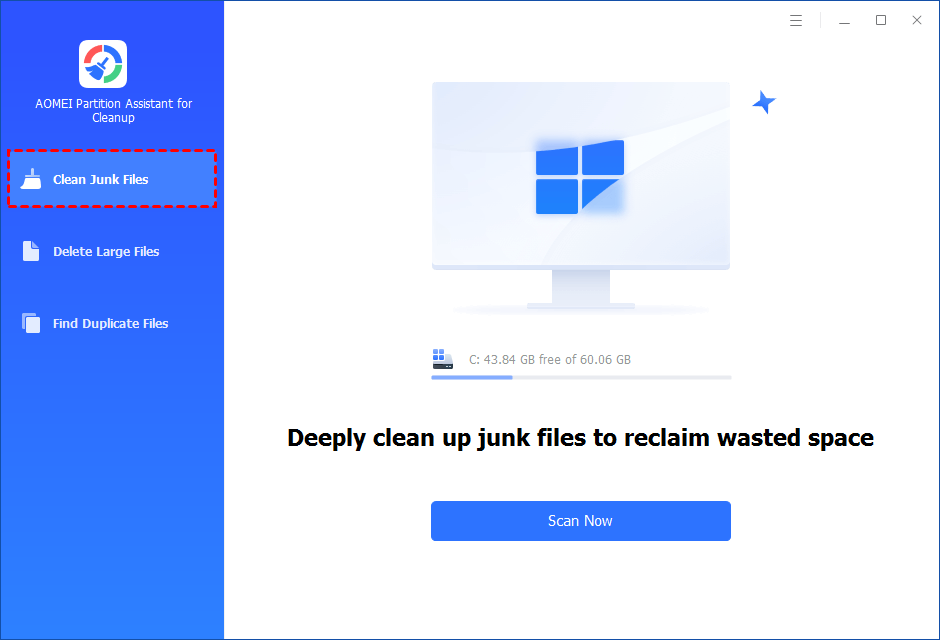
Step 2. Start scan junk files. Click the "Scan Now" button to start the process of scanning junk files.

Step 3. After the scan process is finished. All system junk files (including recycle bin files, temporary files, log files, invalid shortcuts, and so on) and registry junk files (including DLL registry, system registry, and program registry) will be displayed.
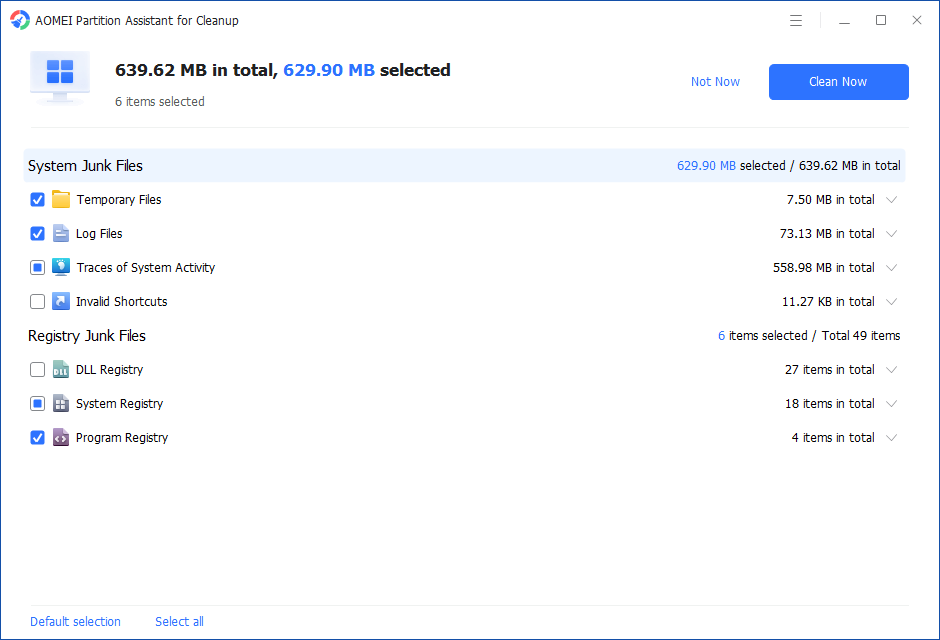
Step 4. You can also click the button behind to view the junk files details.

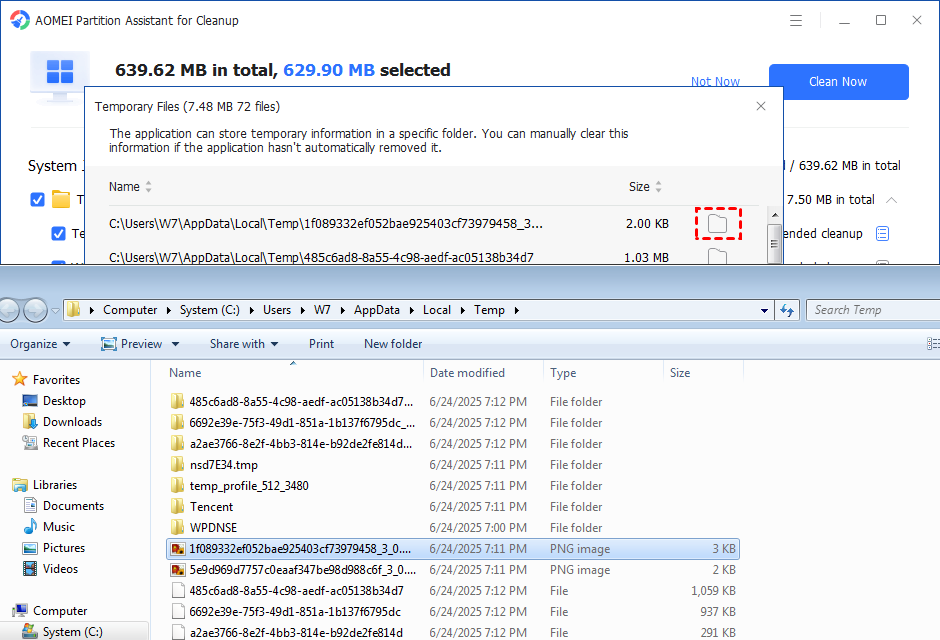
Step 5. And, you can click the button behind to locate the file.
Step 6. Select junk files to start cleanup. By default, the program will select some junk files to clean up, for example, temporary files, log files, and so on. You can also manually check to select more or uncheck to deselect fewer listed junk files. Or, click "Select All" to select all junk files to clean up if you need to clean up all.
After selecting junk files that are not needed anymore, you can click the "Clean Now"button to start the cleanup.

Step 7. Cleanup completed. The process of the cleanup might take time, and the selected files will be cleaned up. After the process is finished, you will get a cleanup completed window displaying how many files you have cleaned and not yet cleaned.

Final lines
You can delete temporary files in Windows 10 with the built-in tools, but if you want to optimize your PC further, PartitionAssistant Cleanup is a better option.
