


How to Disable Efficiency Mode in Windows 11 and Improve Performance?
This guide explains clear methods to disable efficiency or eco mode in Windows 11. It helps users improve system speed, prevent auto enable issues, and ensure smoother overall performance.

By Irene / Updated on October 24, 2025


User case: How to turn off Efficiency Mode in Windows 11 FOREVER?
Hey I got a lot of problems with this feature can somebody tell me how to get rid of this efficiency mode it's taking a lot of time opening tabs on websites and it takes a lot of time checking off all the efficiency mode Processes one at of time and if there is no option turning this off could you please, PLEASE make it as an option so i can turn it off.
- Question from learn.microsoft.com
Efficiency Mode (previously called Eco Mode) in Windows 11 and 10 is a feature designed to save energy and make your computer more efficient. It works by limiting how much power and CPU certain apps or background processes can use. This helps reduce battery drain, especially on laptops, and lowers overall system resource usage.
When Efficiency Mode is on, Windows automatically puts inactive background tabs or apps to sleep after a few minutes. This can slightly slow down animations or make videos less smooth when you are not actively using the app, but it generally helps your device last longer on battery power.
However, some users notice that their PC becomes slower when this mode is active, especially if they are running heavy programs like video editors or games. In such cases, it may be better to turn off Efficiency Mode. Still, it’s important to understand that Efficiency Mode is not the main reason for poor performance in most situations. A much more common cause of slow performance is low disk space or out of memory. When your device runs out of space, it struggles to handle background tasks and slows down, even if Efficiency Mode is turned off.
Efficiency Mode helps balance performance and power use, but if your computer is lagging, you should first check whether there is enough free space and memory before blaming this feature.
How to disable Efficiency Mode in Windows 11?
Fix 1. Use Task Manager to disable Efficiency Mode in Windows 11
In Windows 11 version 22H2, you can easily manage Efficiency Mode through Task Manager. This allows you to enable or disable it for specific apps. Here’s how to do it:
Step 1. Press Ctrl + Shift + Esc to open Task Manager.
Step 2. In the Processes tab, locate and right-click on the apps you want to disable efficiency mode.
Step 3. Then select Efficiency mode from the context menu, and it will be turned off.
Fix 2. Turn off Efficiency mode in Windows 11 in Windows Settings
If Efficiency Mode causes lag, slow responses, 100 CPU usage in Windows 11, or high battery usage, you can also turn it off in the system settings. This method is a bit more detailed but works effectively:
Step 1. Press Win + I to bring up the Settings window.
Step 2. Go to System > Power & sleep > find Related settings in the top right corner > tap on Additional power settings.
Step 3. In the Power Options window, click Change plan settings beside the existing power plan > select the Change advanced power settings link.
Step 4. You’ll see another Power Options box. Expand Processor power management > Minimum processor state > change the value to 100%.
Step 5. Click on Apply and OK to make the changes to take effect.
Once you complete these steps, efficiency mode will be disabled.
Fix 3. Stop Efficiency Mode in Windows 11 via Group Policy Editor
If you are tech-savvy, you can also disable efficiency mode using Group Policy Editor or Registry Editor. Here’s how to use Group Policy Editor.
Step 1. Press Win + R to evoke the Run dialog box.
Step 2. Type gpedit.msc and hit Enter to open Group Policy Editor.
Step 3. In the Group Policy Editor window, navigate to the following location:
Computer Configuration > Administrative Templates > System > Power Management > Energy Efficiency Mode
Step 4. Double-click Turn off Energy Efficiency Mode on the right pane > choose Enabled > hit OK to keep the setting.
How to improve PC performance?
Over time, Windows 11 accumulates unnecessary files like temporary data, cache, old updates, and leftovers from uninstalled programs. These files can take up significant storage, leaving less space for Windows to manage tasks efficiently. As a result, your PC may respond slowly, apps take longer to open, and switching between tasks feels laggy.
Many users blame Efficiency Mode for slow performance, but the real culprit is often low disk space or limited memory. Even after turning off Efficiency Mode in Windows 11, a full drive can still cause lag because Windows struggles to process data smoothly.
To fix slow PC performance, regular cleanup is essential, and PartitionAssistant Cleanup is an excellent free tool for this. It scans your drives, categorizes junk files, and removes them instantly. Beyond cleaning, it optimizes disk space, and fixes low-storage issues. Using this tool helps your PC run faster and smoother while keeping Windows efficient.
 PartitionAssistant Cleanup
The Best Windows Disk Partition Manager and PC Optimizer
Step 1. Install and launch PartitionAssistant Cleanup. Click the "Clean Junk Files" tab.
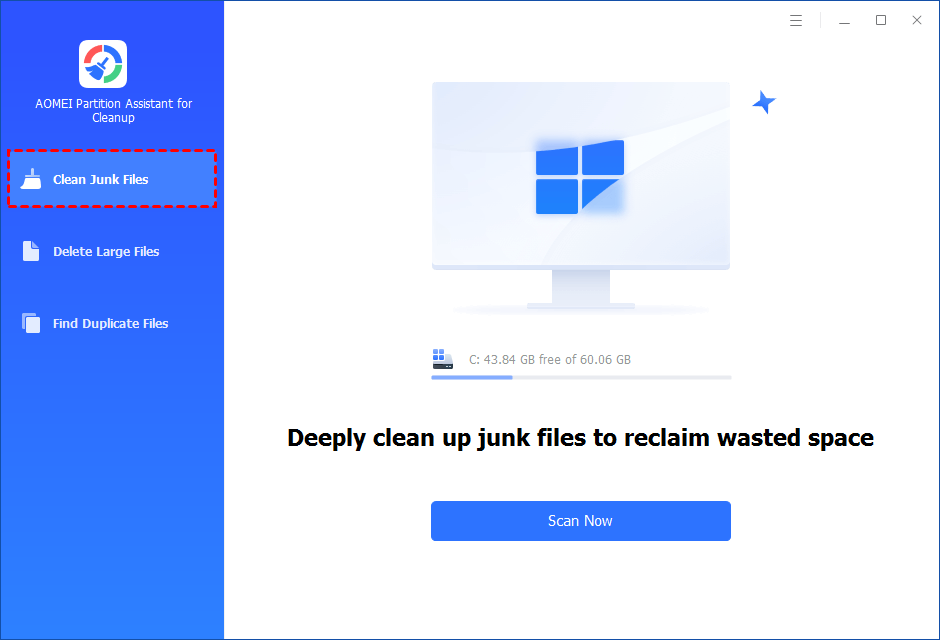
Step 2. Click the "Scan Now" button to start the process of scanning junk files.

Step 3. After the scan process is finished. All system junk files (including recycle bin files, temporary files, log files, invalid shortcuts, and so on) and registry junk files (including DLL registry, system registry, and program registry) will be displayed.
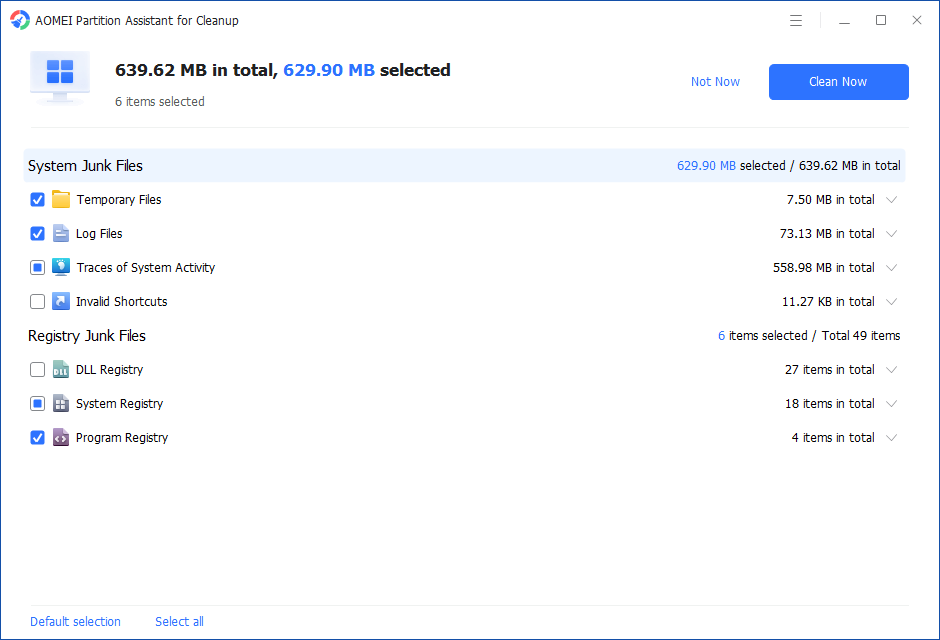
You can also click the button behind to view the junk files details.

Step 4. And, you can click the button behind to locate the file.
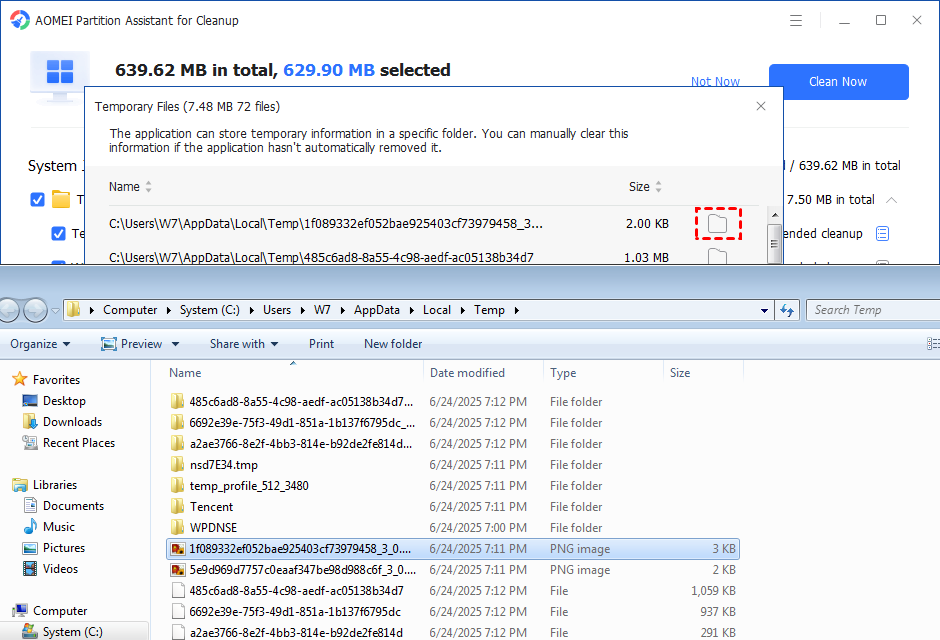
By default, the program will select some junk files to clean up, for example, temporary files, log files, and so on. You can also manually check to select more or uncheck to deselect fewer listed junk files. Or, click "Select All" to select all junk files to clean up if you need to clean up all.
Step 5. After selecting junk files that are not needed anymore, you can click the "Clean Now"button to start the cleanup.

The process of the cleanup might take time, and the selected files will be cleaned up. After the process is finished, you will get a cleanup completed window displaying how many files you have cleaned and not yet cleaned.

Conclusion
In conclusion, Efficiency Mode in Windows 11 can help save energy and manage system resources, but it is not usually the main cause of a slow PC. Most performance issues are linked to low disk space or limited memory. Disabling Efficiency Mode can help when running heavy applications, but for the best results, cleaning up unnecessary files is essential. Tools like PartitionAssistant Cleanup make this process simple and effective. By scanning, categorizing, and removing junk files, this free software frees up storage, optimizes disk space, and improves overall system performance. Combining the disabling of Efficiency Mode with regular cleanup ensures your Windows 11 PC runs faster, smoother, and more efficiently.
