PartitionAssistant Cleanup


[Windows OS] Best PC Cleaner Free Download
In this post, you can find the best PC cleaner free download only for Windows systems. With this free PC cleaner you can easily and efficiently keep your PC in perfect status.

By Lucas / Updated on July 10, 2025


Why do you need a PC cleaner?
It's only a matter of time before you fill it up, even if your PC installs a TB drive. Slow computer performance is a common outcome of not cleaning your computer for a long time, not to mention lagging or regularly frozen PC.
▶ Common junk files on PC
Besides what you download from the Internet, various data files will be stored on your PC no matter whether you need them or not.
• Temporary system files
System files can be created and saved even you turn on or off your computer. They are used to boot or shut specific critical functions or programs. When system files have served their job, they become obsolete and won’t be not automatically cleared.
• Cache files
A cache is temporary storage space that enables a device, browser, or app to operate more quickly and effectively. After you access an app or website for the first time, a cache saves files, pictures, and other pertinent data on your device. The cached data is then utilized to swiftly load an app or website for each future visit. When you first view a webpage, the information on that page gets cached on your computer. Then you may reopen this page more quickly the next time.
The system cache in Windows is a quick storing technique. It might be a standalone high-speed storage device or a dedicated area of main memory.
• Thumbnails
Thumbnails can assist a photo load faster if you need them again, but most of the time your PC only needs them once or you'll have to wait a long time for the same image to be returned. When you return to the image, a new thumbnail is always generated.
• Program files
Program files are designed to assist you with installing and running application apps on your device. Once the installation is complete, some files become outdated, and there will be a large number of registry files and other data once you boot the applications each time. Furthermore, certain apps may contain further malware.
When these junk files pile up, sorting and filtering through all of your files and applications may be extremely difficult and time-consuming, especially if done manually. PC cleaner tools can assist you in removing old and unneeded files from your computer, therefore increasing its overall performance. They often delete temporary files, items left unused in your Downloads folder, and objects in your Recycle Bin.
How often do you need to clean your PC?
Cleaning the computer should become a regular work, otherwise, the computer's performance may suffer. If you are not a deep user, home computers may be cleaned once a year on average, but workplace computers should be cleaned every 1 to 3 months.
Best Windows PC cleaner free download
Although Windows has some built-in tools to help you clean your computer such as Disk Cleanup, Storage Sense and directly deleting files, these tools can’t thoroughly clean all junk files and you may delete important files by mistake.
In this case, we suggest you choose a third-party PC cleaner. Windows free PC cleaner, PartitionAssistant Cleanup, is a disk and partition manager for Windows 11/10/8/8.1/7/XP. Its “PC Cleaner” feature can scan your computer and find all junk files hidden in your disk, then you can select the files to clean or not.
 PartitionAssistant Cleanup
Free Up Disk Space To Keep Your PC Running Smoothly and Efficiently
Step 1. Initiate Clean Junk Files. Install and launch PartitionAssistant Cleanup. Click the "Clean Junk Files" tab.
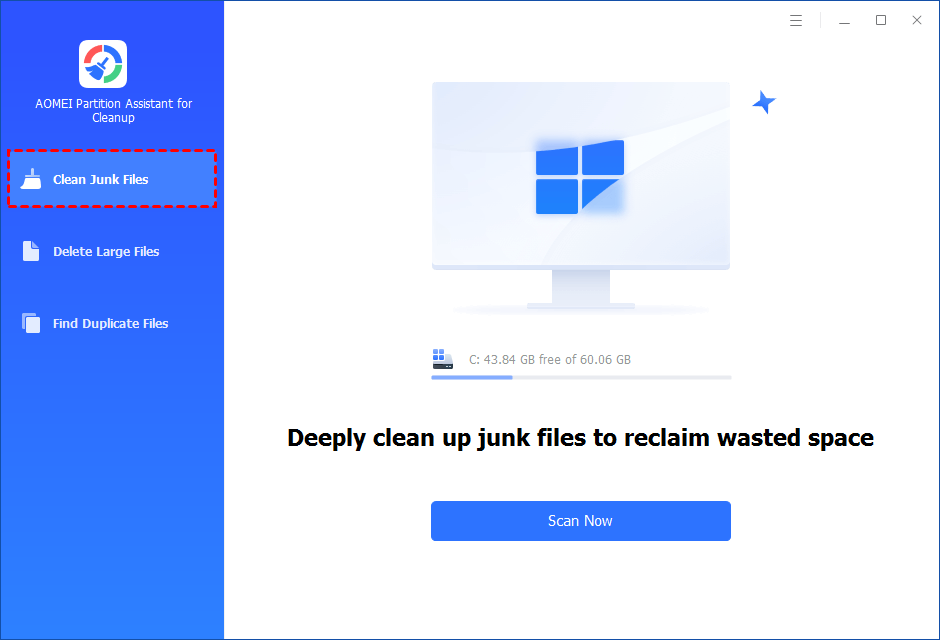
Step 2. Start scan junk files. Click the "Scan Now" button to start the process of scanning junk files.

Step 3. After the scan process is finished. All system junk files (including recycle bin files, temporary files, log files, invalid shortcuts, and so on) and registry junk files (including DLL registry, system registry, and program registry) will be displayed.
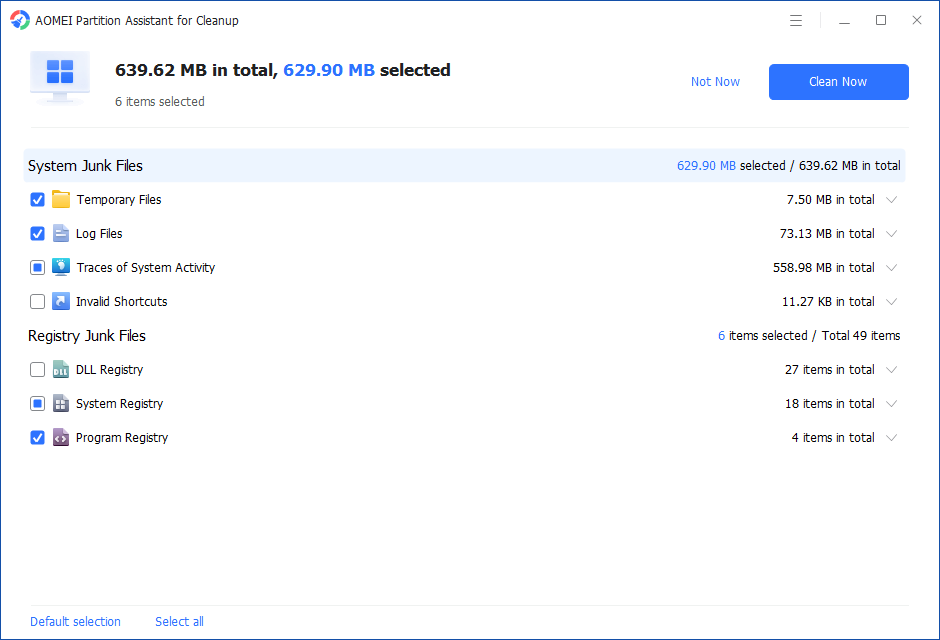
Step 4. You can also click the button behind to view the junk files details.

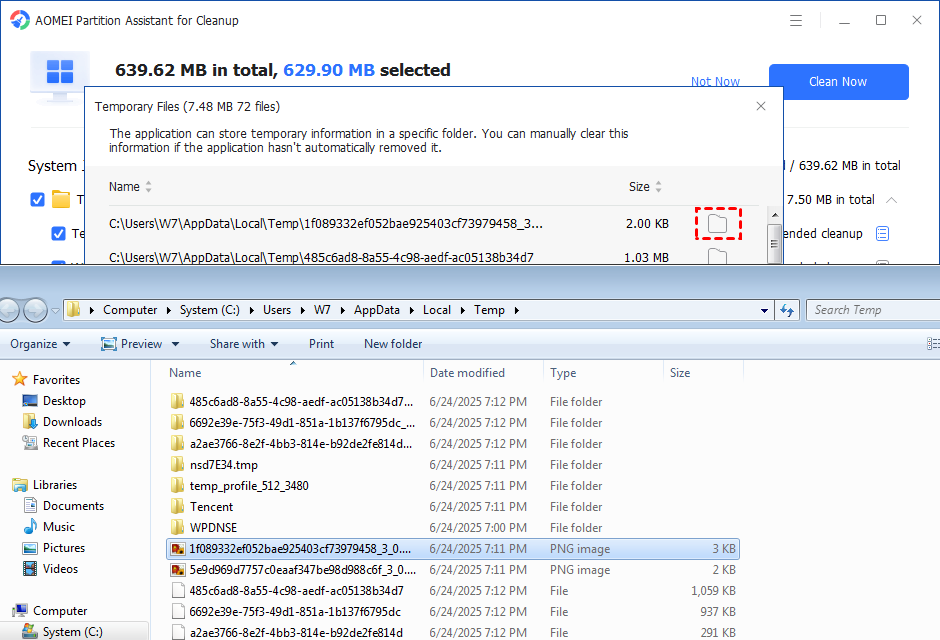
Step 5. And, you can click the button behind to locate the file.
Step 6. Select junk files to start cleanup. By default, the program will select some junk files to clean up, for example, temporary files, log files, and so on. You can also manually check to select more or uncheck to deselect fewer listed junk files. Or, click "Select All" to select all junk files to clean up if you need to clean up all.
After selecting junk files that are not needed anymore, you can click the "Clean Now"button to start the cleanup.

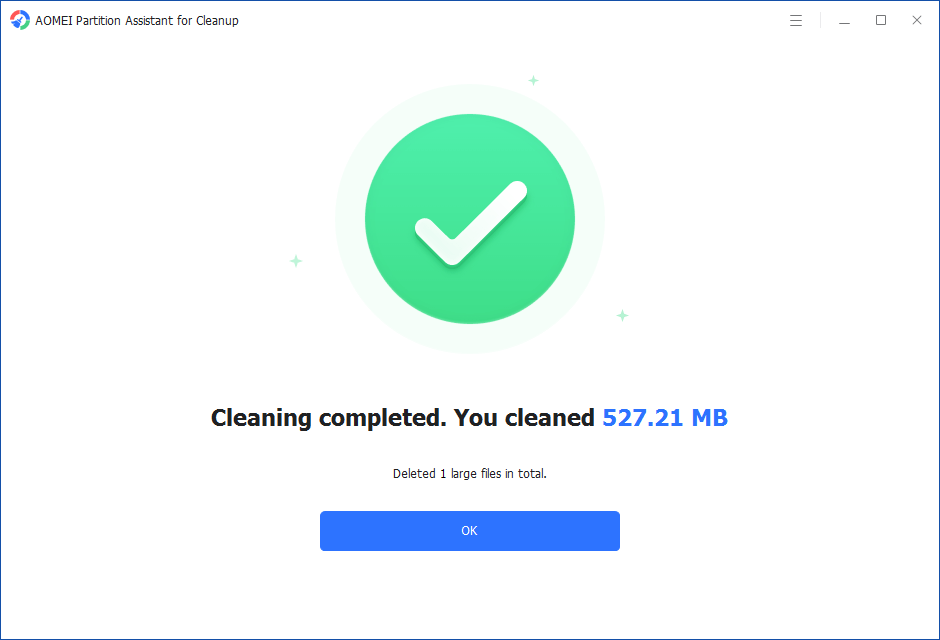
Step 7. Cleanup completed. The process of the cleanup might take time, and the selected files will be cleaned up. After the process is finished, you will get a cleanup completed window displaying how many files you have cleaned and not yet cleaned.

Bonus tips: Delete large files to release free space on your PC
If you find that only cleaning junk files can’t release sufficient space on your disk, you can upgrade this PC disk cleaner to the Professional Edition to choose the “Delete Large Files” feature to reclaim available space. The software will scan all large files that are stored in the deep folder.
Step 1. Initiate Delete Large Files. Install and launch PartitionAssistant Cleanup. Click the "Delete Large Files" tab.
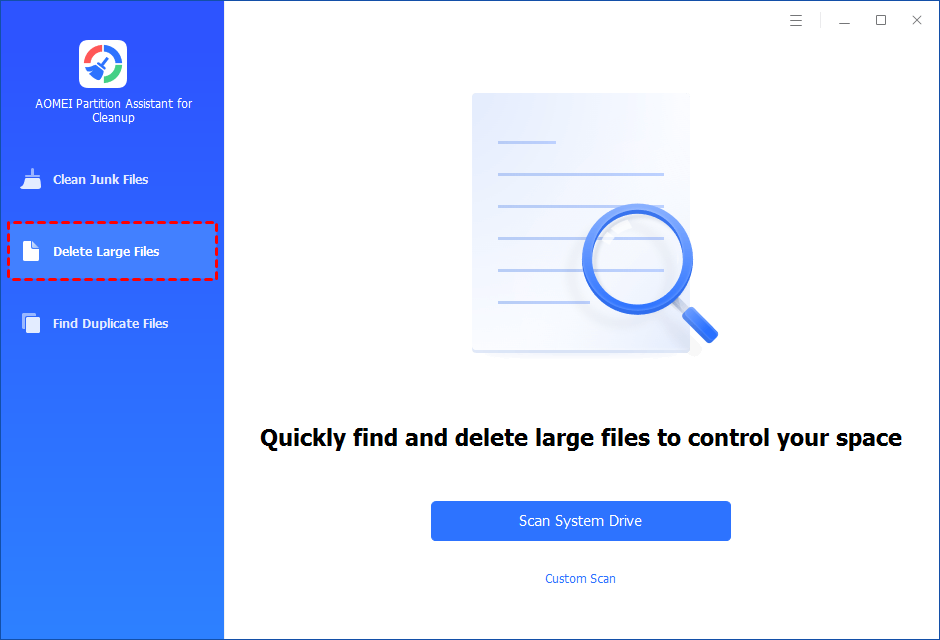
Step 2. Select a path to scan large files. You can either click "Scan System Drive" to start the scan of your system C: drive. Or, click "Custom Scan" to manually select paths to be scanned. (Here, we take the "Custom Scan" as an example.)
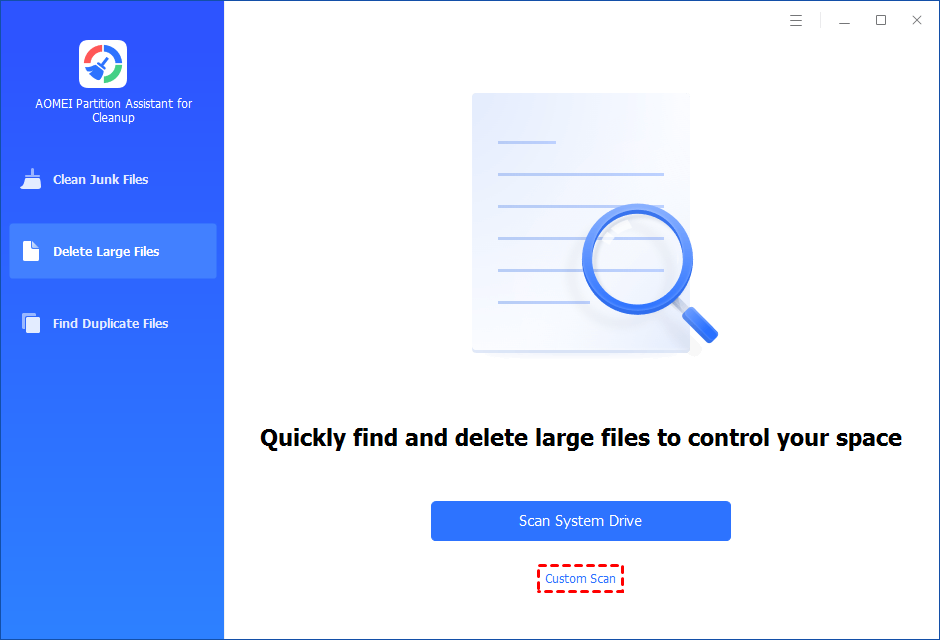
Step 3. After clicking "Custom Scan", all local and external drives on your PC and the common Desktop, Documents, and Downloads paths will be displayed. You can manually select paths to be scanned. Once necessary paths are added, you can click the "Scan Now" button to start the scan process.

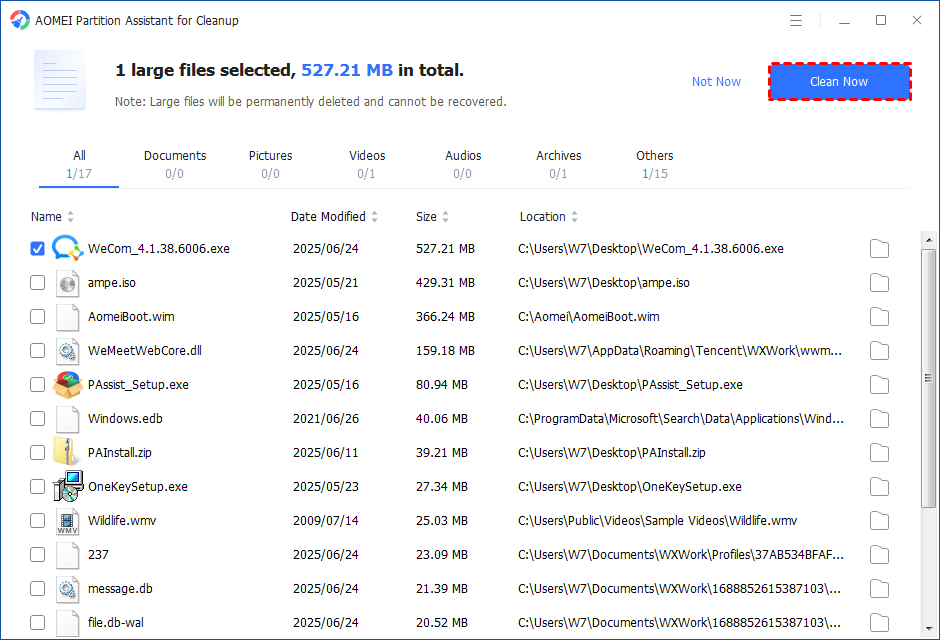
Step 4. The scan process might take time. After the scan is complete, all large files found will be listed.
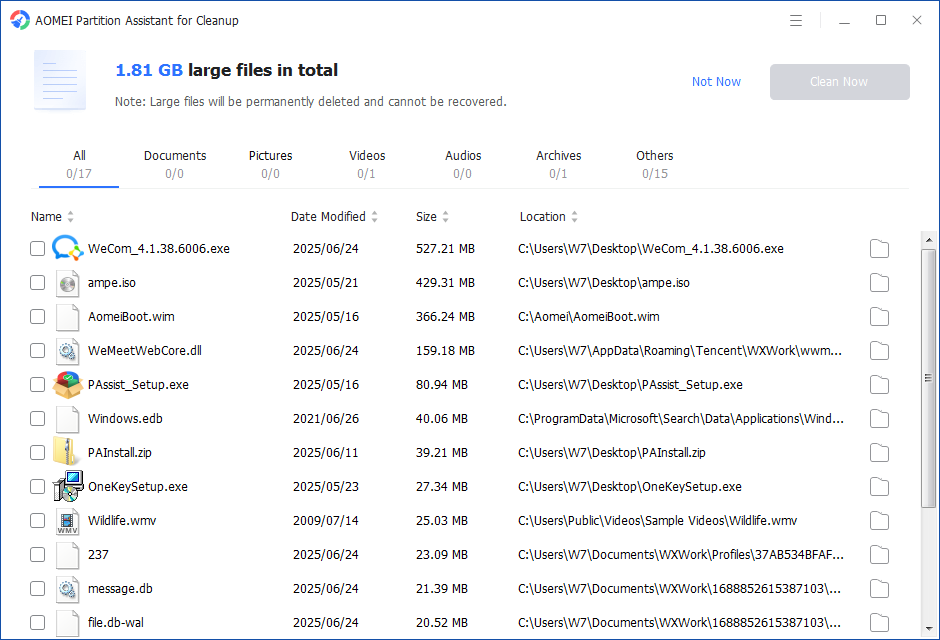
Step 5. You can also check the large files and click the button behind to locate them.
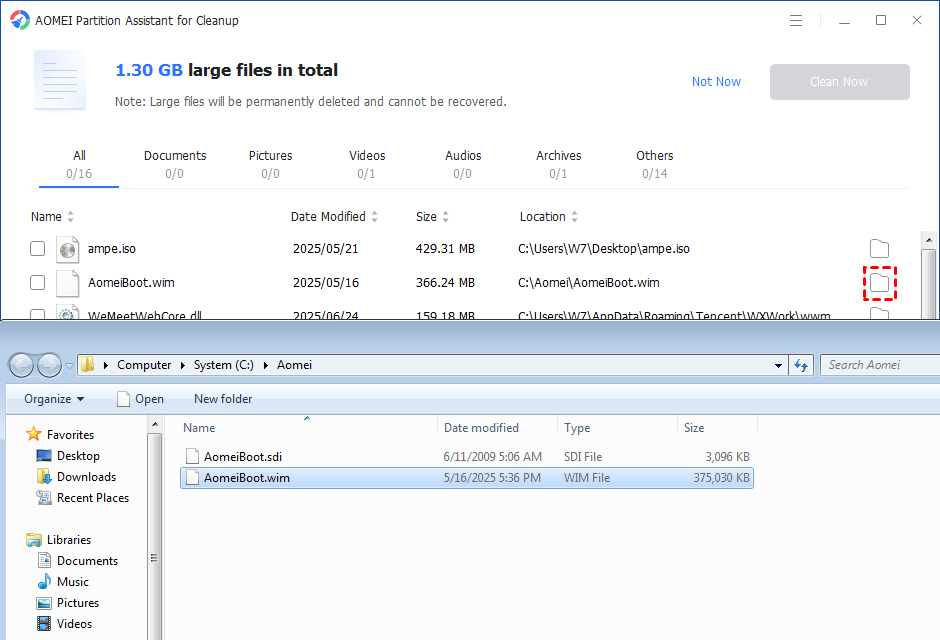
Step 6. Select large files to start deletion. Tick the files you want to delete, and then click the "Clean Now" button to start the deletion.
Step 7. Delete successfully. The deletion might take time. After the process is finished, the selected files will be deleted, and you will get a cleaning completed window displaying how much data you deleted in total.