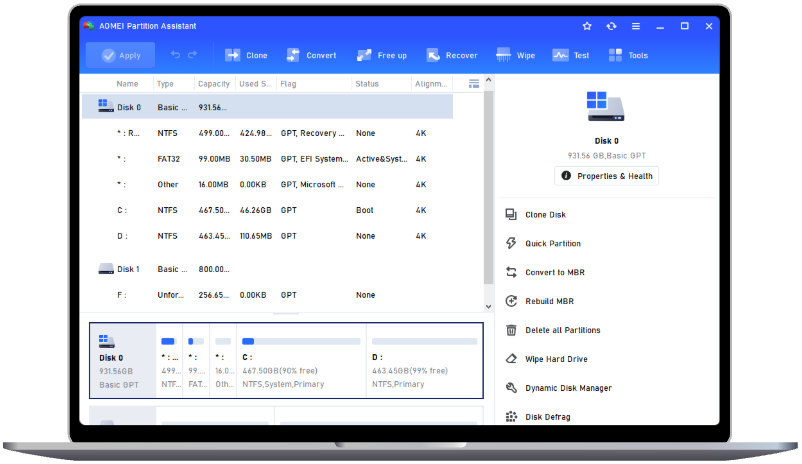
AOMEI Partition Assistant
Exploring the Latest: Windows 11 Embraces ReFS Support
Dive into the recent update on Windows 11 as it adopts ReFS support. This article explores the significance of this integration, shedding light on how it can streamline file system management and enhance data integrity. Explore the implications and benefits of Windows 11 is getting ReFS support for users and system administrators alike.

By Hedy / Updated on January 30, 2024


In the ever-evolving landscape of operating systems, Windows 11 is getting ReFS (Resilient File System) support. This development marks a crucial advancement in file system technology, promising enhanced data integrity and management capabilities for users. Let's delve deeper into what this means for Windows 11 users and how it could shape the future of file systems.
Understanding the Significance of ReFS Support in Windows 11
ReFS, originally introduced in Windows Server 2012, is designed to address the limitations and challenges of traditional file systems like NTFS (New Technology File System). While NTFS has served as the standard file system for Windows operating systems for decades, it has certain limitations when it comes to handling large volumes of data and ensuring data integrity in modern computing environments.
Solutions for Enhanced File System Support in Windows 11
Solution 1: Implementation of ReFS
1. Windows 11 now offers native support for ReFS, allowing users to leverage its advanced features for improved data integrity and resilience.
2. Users can opt to format disks using the ReFS file system during the installation or upgrade process to take advantage of its benefits.
3. ReFS introduces features such as data scrubbing, integrity streams, and enhanced error correction mechanisms to mitigate data corruption and ensure data reliability.
Solution 2: Data Deduplication
1. Windows 11 provides built-in support for data deduplication, allowing users to optimize storage utilization by identifying and eliminating duplicate data across volumes.
2. By enabling data deduplication, users can reduce storage costs, improve backup and restore times, and streamline data management workflows.
3. Data deduplication works seamlessly with ReFS, enhancing its capabilities for managing large-scale data sets more efficiently.
Solution 3: Enhanced Resilience and Recovery
1. Windows 11 incorporates enhanced resilience and recovery features, leveraging the capabilities of ReFS to protect against data corruption and hardware failures.
2. Users can benefit from features such as automatic integrity checking, mirrored storage spaces, and transparent data recovery mechanisms built into ReFS.
3. In the event of data corruption or hardware failures, ReFS facilitates rapid data recovery and minimizes downtime, ensuring continuity of operations for critical workloads.
FAQs About ReFS Support in Windows 11
**Q1: What is ReFS and how does it differ from NTFS?**
A: ReFS, or Resilient File System, is a modern file system introduced by Microsoft to address the limitations of traditional file systems like NTFS. ReFS offers enhanced data integrity, scalability, and resilience compared to NTFS.
**Q2: Can I convert existing NTFS volumes to ReFS in Windows 11?**
A: While Windows 11 supports ReFS, converting existing NTFS volumes to ReFS requires careful consideration and planning. Users should evaluate their specific requirements and backup critical data before attempting the conversion process.
**Q3: What are the advantages of using ReFS in Windows 11?**
A: ReFS offers several advantages, including improved data integrity, enhanced scalability, support for larger volumes, and advanced resilience features such as data scrubbing and integrity streams.
**Q4: Is ReFS suitable for all types of workloads and storage scenarios?**
A: While ReFS offers significant benefits for many workloads and storage scenarios, users should assess their specific requirements and consult Microsoft documentation for guidance on optimal use cases and configurations.
**Q5: How does ReFS contribute to data protection and recovery in Windows 11?**
A: ReFS incorporates features such as data integrity checking, mirrored storage spaces, and transparent data recovery mechanisms to protect against data corruption and hardware failures, ensuring reliable data storage and recovery in Windows 11.
Tech Terms Explained
1. **Resilient File System (ReFS)**:
A modern file system introduced by Microsoft to address the limitations of traditional file systems like NTFS, offering enhanced data integrity, scalability, and resilience.
2. **Data Deduplication**:
A storage optimization technique that identifies and eliminates duplicate data within storage volumes, reducing storage costs and improving data management efficiency.
3. **Data Scrubbing**:
A process used in ReFS to proactively identify and repair data corruption or integrity issues, ensuring data reliability and consistency.
4. **Mirrored Storage Spaces**:
A storage configuration in which data is duplicated across multiple physical disks for redundancy and fault tolerance, enhancing data resilience and availability.
5. **Transparent Data Recovery**:
A feature of ReFS that enables automatic detection and recovery of corrupted data, minimizing downtime and data loss in the event of hardware failures or data corruption.
Conclusion
The integration of Windows 11 is getting ReFS support heralds a new era of file system technology, offering users enhanced data integrity, scalability, and resilience for modern computing environments. By embracing ReFS and leveraging its advanced features, users can optimize storage utilization, protect critical data assets, and ensure continuity of operations in Windows 11. As organizations and individuals transition to Windows 11, understanding and harnessing the capabilities of ReFS will be essential for maximizing the benefits of this groundbreaking file system technology.