AOMEI Partition Assistant
Can Windows 10 be installed on a USB NVMe Drive?
Can Windows 10 be installed on a USB NVMe Drive? This complete guide shows you how to create a portable Windows To Go drive, even on fast NVMe SSDs, for work or system repair.

By Lucas / Updated on September 23, 2025


Ever wished you could carry your personal Windows environment in your pocket? With the advent of high-speed USB drives, like NVMe SSDs in external enclosures, this is no longer a dream. Creating a portable Windows installation allows you to boot your own customized operating system on almost any computer.
This guide will walk you through everything you need to know about how to install Windows 10 on a USB, turning a powerful portable drive into your personal workstation.
Question: Can Windows 10 be installed on a USB NVMe Drive?
This is a common question, and we're happy to report that the answer is a definitive yes. This section will clarify what it means to have a fully functional Windows OS on a portable drive.
Not only can you install Windows 10 on a USB NVMe drive, but it's one of the best ways to experience a portable OS. A standard Windows installation process won't allow you to select a USB drive as the destination. However, by using a feature called "Windows To Go" (WTG), you can create a complete, bootable copy of the Windows operating system on an external drive.
Using a high-speed NVMe SSD in a USB enclosure ensures your portable Windows experience is fast, responsive, and smooth, rivaling the performance of an internal drive. This is far different from a simple bootable installer; it's your entire desktop, ready to go anywhere.
Why Install Windows on a USB Drive?
Before we dive into the "how-to," let's explore the compelling reasons you might want a portable Windows installation. Understanding the benefits can help you decide if this solution is right for you.
Having a portable Windows OS offers incredible flexibility and several practical advantages:
Ultimate Portability: Carry your work environment, including files, applications, and settings, and use it on any compatible PC. It's perfect for remote work, travel, or using a shared or public computer securely.
System Rescue and Repair: If your main computer fails to boot, you can use your Windows To Go drive to access your files, run diagnostic tools, and perform repairs without removing the internal hard drive.
Software Testing: Safely test new software or system updates in an isolated environment without risking your primary OS installation.
Secure Browsing: Use your portable OS on public computers without leaving any personal data or browsing history behind. Once you unplug the drive, your session vanishes from the host machine.
How to Install Windows 10 on USB via Windows To Go
This section will detail two primary methods for creating a Windows To Go drive. We will cover both the native Windows tool, which has limitations, and a more powerful third-party solution that simplifies the process for everyone.
Method 1: Using the Built-in Windows To Go Creator (Limited)
This part explains the native Windows To Go feature, which is only available in specific, older versions of Windows 10.
Microsoft included a built-in "Windows To Go" creator tool in the Enterprise and Education editions of Windows 10 (versions before 2004). If you are running one of these specific versions, you can access it through the Control Panel. However, this method has significant drawbacks:
Edition Restricted: It's not available in Windows 10 Home or Pro. Only for Enterprise/Education to Go.
Officially Deprecated: Microsoft no longer supports this feature, meaning it won't receive updates and has been removed from newer Windows versions.
Picky Hardware: It was designed to work only with a handful of Microsoft-certified USB drives, which are now rare and expensive.
For these reasons, most users will find this method inaccessible. Fortunately, a much better alternative exists.
Step 1. Download the Windows 10 ISO file from Microsoft and plug your USB drive into your Windows 10 PC.
Step 2. Search “Windows to Go” in your Control Panel and click on it to proceed.
Step 3. Then, in the pop-up window, all inserted USB drives will appear. Select the USB drive you wish to burn the ISO file to and click on “Next” to continue. (The USB drive should be certified. Otherwise, the “Next” button will be greyed out.)

Step 4. Click on “Add search location” to search the Windows 10 installation ISO file and then, choose the mounted one.
Step 5. Preset a Bitlocker passcode to encrypt your Windows 10 to go workplace.
Method 2: A Simpler Way to Install Windows 10 on a USB with AOMEI Partition Assistant
For a more flexible and user-friendly approach that works with all editions of Windows 10 and 11, we recommend using a dedicated software tool. This guide will show you how to install Windows 10 on a USB with ease.
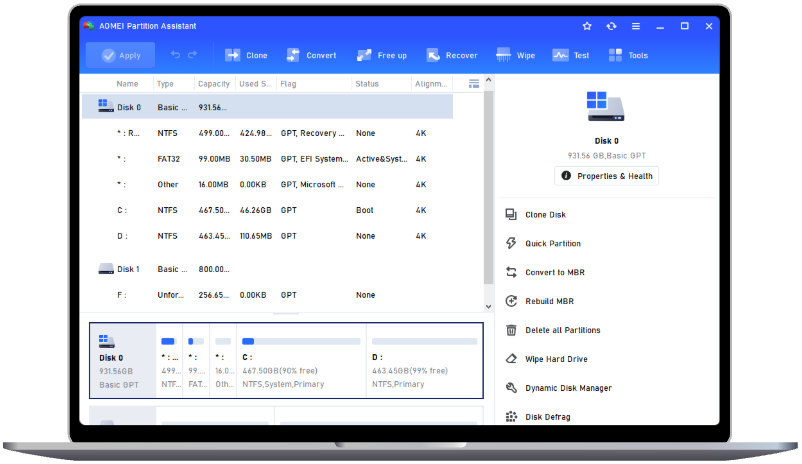
When the built-in tools fall short, a robust disk management utility like AOMEI Partition Assistant Professional steps in to fill the gap. This comprehensive software is designed to handle all your disk and partition management needs, from resizing and merging partitions to migrating your entire OS to a new SSD. Its standout feature for our purposes is the "Windows To Go Creator," which makes the process of installing Windows on a USB drive straightforward and accessible to everyone, regardless of your Windows edition or the type of USB drive you own.
Whether you're trying to figure out how to install Windows 11 on a USB or stick with Windows 10, this tool is the perfect solution.
Prerequisites:
1. A USB drive (13GB or larger is the minimum, but 32GB or more is recommended for better performance and space). An external NVMe SSD is ideal.
2. A Windows 10 or Windows 11 ISO file. You can download this directly from the official Microsoft website.
3. A computer running Windows with AOMEI Partition Assistant Professional installed.
 100% Secure
Step 1. Connect your USB NVMe drive to the computer and ensure it is detected.
Step 2. Launch AOMEI Partition Assistant Professional. In the main interface, navigate to the top toolbar and click Tools > Windows To Go Creator.
Step 3. In the pop-up window, select "Create Windows To Go for personal computer" and click Next.
Step 4. The tool will ask you to choose the creation method. Select "Create Windows To Go with system disc/ISO". Locate your downloaded Windows 10 ISO file by clicking the folder icon. Click Next.
Step 4. The software will now display the USB drive you connected. Select it as the destination target and click Proceed to begin the installation process.
AOMEI Partition Assistant will format the drive and install the Windows files. This may take some time depending on the speed of your USB drive and computer. Once finished, you will have a fully functional portable Windows 10 system on your USB NVMe drive.
- ★More Than Just a Windows To Go Creator
- Beyond creating a portable OS, AOMEI Partition Assistant Professional is a complete toolkit for your PC. Some of its other handy functions include:
- Migrate OS to SSD/HDD: Move your current Windows installation to a new drive without reinstalling.
- Disk Clone Wizard: Create an exact copy of your hard drive for backup or upgrade purposes.
- Partition Recovery Wizard: Recover lost or deleted partitions.
- Convert MBR to GPT: Convert disk styles without data loss, which is essential for upgrading to Windows 11.
To sum up
This article has provided a comprehensive overview of how you can create a powerful, portable Windows workstation.
We've answered the key question, "Can Windows 10 be installed on a USB NVMe drive?" with a clear "yes" and explained the benefits of doing so. While Microsoft's native Windows To Go feature was a good starting point, its limitations and deprecated status make it impractical.
For a reliable, fast, and universally compatible solution, using a third-party tool like AOMEI Partition Assistant Professional is the recommended path.