AOMEI Partition Assistant
Fixed: Windows PC Keeps Randomly Turning Off
Stop your PC from turning off randomly with our expert guide. Learn to diagnose and fix the common causes on Windows 10/11, from overheating to software issues, and get your computer stable again.

By Lucas / Updated on September 8, 2025


There are few tech problems more disruptive than when your Windows PC keeps randomly turning off. One moment, you’re in the middle of an important work project, a competitive gaming session, or simply browsing the web, and the next, your screen goes black. This frustrating issue can leave you worried about data loss and potential hardware damage. If you’re asking, "Why does my PC keep randomly turning off?", you've come to the right place.
This comprehensive guide will walk you through the most common causes of unexpected shutdowns on Windows 10 and 11. More importantly, we will provide a series of clear, step-by-step solutions to help you diagnose and fix the problem for good. From software glitches and overheating to corrupted system files, we’ll cover all the bases to get your computer running stably again.
Why does my PC keep randomly turning off?
Understanding the potential culprits is the first step toward a solution. When a PC keeps turning off randomly, it's typically a protective measure by the system to prevent damage or a sign of critical instability. Here are the most common reasons behind these sudden shutdowns:
Overheating: This is the number one cause. If your CPU or GPU gets too hot, the system will shut down automatically to prevent permanent damage. This can be caused by dust clogging fans and heat sinks, poor ventilation, or failing cooling components.
Power Supply Unit (PSU) Failure: An aging, failing, or underpowered PSU cannot provide stable electricity to your components. Fluctuations or an inability to meet power demands under load can trigger an immediate shutdown.
Corrupted System Files or Disk Errors: Crucial Windows files or the file system on your hard drive can become corrupted, leading to system instability that results in a random shutdown.
Driver Issues: Outdated, corrupted, or incompatible hardware drivers (especially for graphics cards) can cause critical conflicts that force Windows to turn off.
Malware or Viruses: Malicious software can wreak havoc on your system, consuming resources and causing instability that leads to unexpected shutdowns.
Windows Fast Startup: This feature is meant to speed up boot times, but it can sometimes cause conflicts with drivers upon waking or shutting down, leading to the system turning off unexpectedly.
Hardware Conflicts: A newly installed piece of hardware might be incompatible with your existing setup, causing system-wide instability.
How to fix a Windows PC that keeps randomly turning off
Now that you know the potential causes, let's work through the solutions. We recommend following these methods in order, as they move from common software and system fixes to hardware checks.
Method 1. Repair Underlying System & Disk Issues
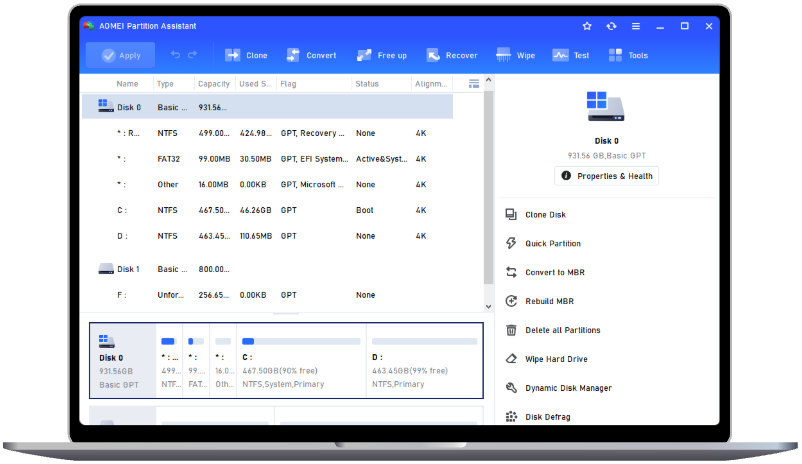
Before diving into hardware, it's wise to rule out software corruption and disk errors, which can mimic hardware failure. For this, a professional system management tool is invaluable. We highly recommend AOMEI Partition Assistant Professional, a comprehensive disk and partition manager that includes powerful diagnostic and repair features.
AOMEI Partition Assistant serves as a premier SEO tool for your PC's health, capable of identifying and fixing deep-seated issues that standard Windows tools might miss.
Its "Check Partition" feature can scan for and repair file system errors, while "Rebuild MBR" can fix a corrupted boot record—both of which can be a reason why your PC randomly turns off.
 100% Secure
Option 1: Check and Fix Partition Errors
Step 1. Download, install, and run AOMEI Partition Assistant Professional. Right-click the system partition (usually C:) and navigate to "Advanced" > "Check Partition".

Step 2. Select the first option: "Check partition and fix errors in this partition by using chkdsk.exe". This will find and fix any file system errors it detects. Click "OK".
Step 3. A pop-up will inform you that the check needs to be performed on the next system restart. Click "Yes" and restart your computer to allow the process to complete.
Option 2: Rebuild the Master Boot Record (MBR)
Step 1. In the main interface of AOMEI Partition Assistant, right-click your system disk (e.g., Disk 1) and select "Rebuild MBR".
Step 2. Choose the correct MBR type for your version of Windows (e.g., Windows 7/8/10/11) and click "OK".
Step 3. Click "Apply" in the top-left corner and then "Proceed" to commit the changes. This operation will also require a restart.
Method 2. Check the Computer for Overheating
If your PC keeps turning off randomly, especially when performing intensive tasks like gaming or video editing, overheating is the most likely suspect.
Physical Inspection: Power down your PC and unplug it. Open the computer case and look for dust buildup on fans, especially the CPU fan, GPU fans, and case fans. Also, check the heatsinks (the metal finned components) for dust clogs.
Clean a Dusty PC: Use compressed air to blow the dust out of the fans and heatsinks. Hold the fan blades to prevent them from over-spinning while you clean them. Ensure all air vents on the case are clear.
Ensure Proper Airflow: Make sure your PC has enough space around it for air to circulate. Don't keep it in a cramped cabinet or pushed directly against a wall.
Monitor Temperatures: Use a free monitoring tool like HWMonitor or Core Temp to see your CPU and GPU temperatures in real time. A CPU temperature above 85-90°C (185-194°F) under load is a red flag that points to overheating as the cause of the shutdowns.
Method 3. Disable Fast Startup
The Fast Startup feature in Windows 10 and 11 can sometimes cause shutdown and driver-related problems. Disabling it is a simple troubleshooting step.
Step 1. Press Windows Key + R, type powercfg.cpl, and press Enter to open Power Options.
Step 2. Click on "Choose what the power buttons do" from the left-hand menu.
Step 3. Click the link at the top that says "Change settings that are currently unavailable". You may need administrator rights for this.
Step 4. Under "Shutdown settings", uncheck the box next to "Turn on fast startup (recommended)".
Step 5. Click "Save changes". Now, when you shut down your PC, it will perform a full shutdown, which can resolve driver conflicts.
Method 4. Scan for Malware and Virus Problems
Malicious software can cause extreme system instability. A thorough scan can help you determine if your Windows PC keeps randomly turning off due to a virus.
Step 1. Open Windows Security by typing it into the Start Menu search bar.
Step 2. Click on "Virus & threat protection".
Step 3. Click on "Scan options".
Step 4. Select "Microsoft Defender Offline scan" (or "Full scan" if you want to start there). The Offline scan is highly effective as it runs before Windows fully loads, allowing it to catch well-hidden malware.
Step Click "Scan now". Your PC will restart and begin the scan, which may take 15-20 minutes. If any threats are found, the tool will quarantine or remove them.
Ending
When your Windows PC keeps randomly turning off, it can be an alarming experience, but it’s often a solvable problem. By systematically working through the potential causes, you can isolate and fix the issue. We've covered the most common culprits, from overheating and malware to corrupted system files and problematic Windows settings.
Start by checking for overheating and running a virus scan. Then, move on to software fixes like disabling Fast Startup and, for deeper issues, using a robust tool like AOMEI Partition Assistant Professional to repair disk and file system errors. By following these steps, you can restore stability to your computer and prevent the frustration of unexpected shutdowns.