


3 Ways to Clear Local Storage Chrome with Ease
If you are wondering how to clear local storage Chrome, you come to the right place. Here, you will learn three reliable and practical methods to clean locale storage Chrome data.

By Hedy / Updated on March 3, 2026


Local storage in Chrome is like a digital backpack that websites use to remember things about you. It stores data directly on your device so that websites can load faster and function smoothly. This data stays even after you close the browser, unlike session storage, which disappears when the tab is closed. According to Chrome developer documentation, local storage allows websites to save key-value data that persists across browsing sessions, helping maintain settings, login states, and preferences.
Think of it as a sticky note your browser keeps for each website. That note might contain your dark mode preference, items in your shopping cart, or even partially completed forms. Without it, every website visit would feel like starting from scratch. But over time, these notes pile up, and when they become outdated or corrupted, things start breaking. Buttons stop working. Pages freeze. Features disappear.
Modern Chromium-based browsers allow roughly 8MB per domain for local storage. That might sound tiny, but across dozens of websites, this can create performance bottlenecks. When the space fills up or gets messy, clearing local storage becomes essential—not optional.
How to clear local storage Chrome
Local storage in Chrome stores website data that can speed up browsing but may also cause issues if it becomes outdated. Clearing it can help resolve site errors, free up space, and improve browser performance. Here’s how to do it efficiently.
Method 1. Using Chrome developer tools
Chrome’s Developer Tools let you inspect and manage local storage for specific websites, giving you precise control. This method is ideal if you only want to clear storage for selected sites.
Step 1. Open Chrome and navigate to the website you want to clear local storage for.
Step 2. Press F12 (Windows) to open Developer Tools.
Step 3. Click the Application tab at the top of Developer Tools.
Step 4. In the left sidebar, expand Local Storage and select the website.
Step 5. Right-click on the listed items and select Clear or Delete All.
Step 6. Refresh the website to see the changes.
Method 2. Clearing local storage via Chrome settings
Using Chrome settings allows you to remove all local storage and other site data in one go. This method is great for a complete clean-up if you don’t need selective control.
Step 1. Open Chrome and click the three-dot menu in the top-right corner.
Step 2. Go to Settings > Privacy and security > Cookies and other site data.
Step 3. Scroll down and click See all cookies and site data.
Step 4. Use the search bar to find a specific site or click Remove All to clear everything.
Step 5. Confirm your choice by clicking Clear All.
Step 6. Restart Chrome to ensure changes take effect.
Method 3. Using a Shortcut
For quick access, Chrome supports shortcuts that take you directly to the site data page, making it faster to clear local storage without navigating multiple menus.
Step 1. Open Chrome and type chrome://settings/siteData in the address bar, then press Enter.
Step 2. Scroll through the list to find the website whose local storage you want to clear.
Step 3. Click the trash icon next to the site name to delete its data.
Step 4. For bulk clearing, click Remove All at the top of the page.
Step 5. Close and reopen Chrome to apply the changes.
Best tool to clear local storage Chrome
PartitionAssistant Cleanup is a versatile disk cleaningsoftware that goes beyond basic browser cleanup methods. Over time, browsers like Google Chrome accumulate temporary files, caches, cookies, and other browsing data that can take up significant storage on your system. Using PartitionAssistantfor Cleanup, you can safely remove these redundant files from your local storage, optimizing your drive space and improving system performance.
Instead of only deleting visible browsing data, it helps:
🔸 Remove hidden junk files created by Chrome
🔸 Clean system temp files linked to browser activity
🔸 Detect large or duplicate files stored locallyand remove them easily
 PartitionAssistant Cleanup
Free Up Disk Space To Keep Your PC Running Smoothly and Efficiently
Step 1. Install and launch PartitionAssistant Cleanup. Click the "Clean Junk Files" tab.
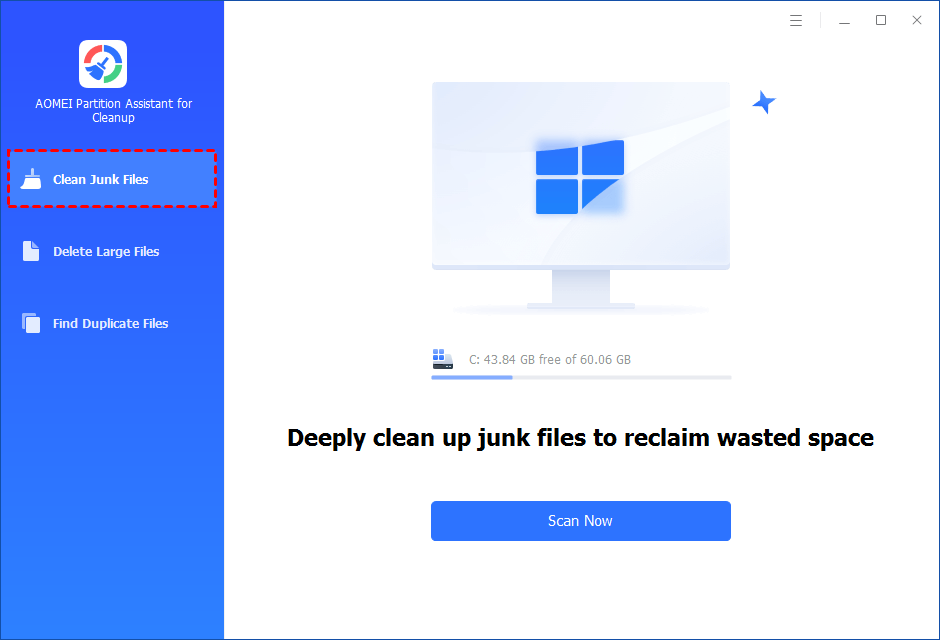
Step 2. Click the "Scan Now" button to start the process of scanning junk files.

Step 3. After the scan process is finished. All system junk files (including recycle bin files, temporary files, log files, invalid shortcuts, and so on) and registry junk files (including DLL registry, system registry, and program registry) will be displayed.
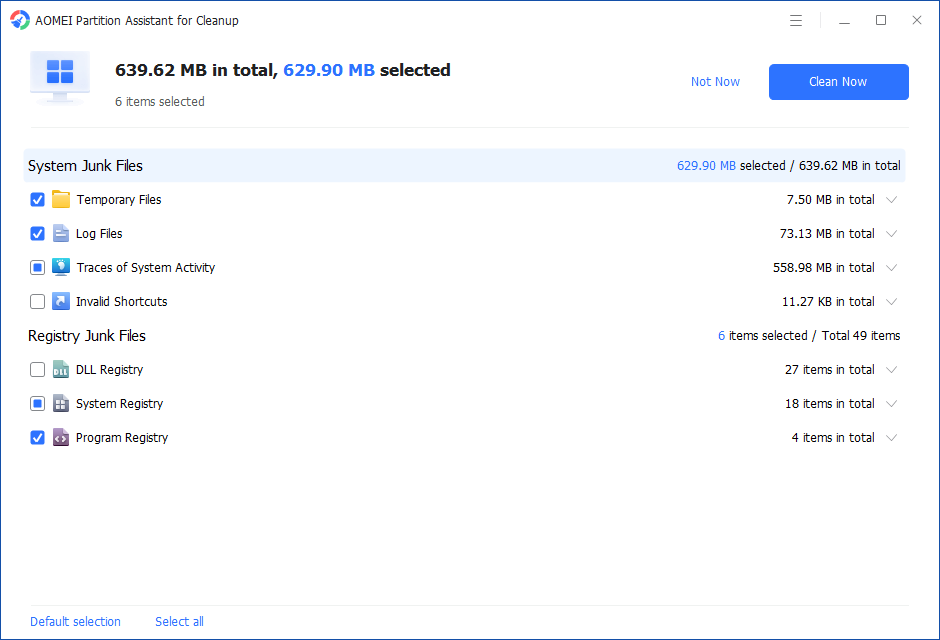
You can also click the button behind to view the junk files details.

Step 4. And, you can click the button behind to locate the file.
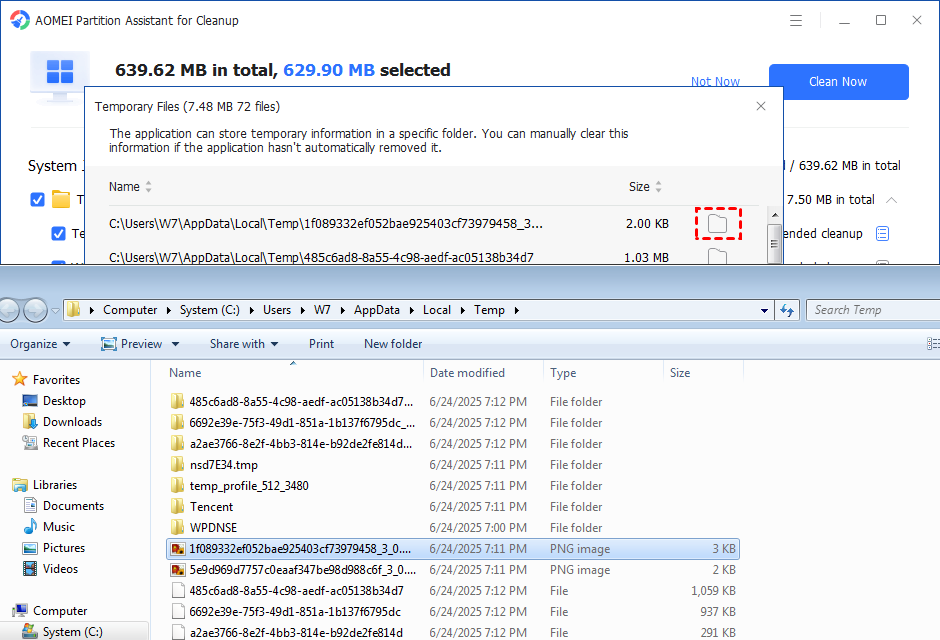
By default, the program will select some junk files to clean up, for example, temporary files, log files, and so on. You can also manually check to select more or uncheck to deselect fewer listed junk files. Or, click "Select All" to select all junk files to clean up if you need to clean up all.
Step 5. After selecting junk files that are not needed anymore, you can click the "Clean Now"button to start the cleanup.

The process of the cleanup might take time, and the selected files will be cleaned up. After the process is finished, you will get a cleanup completed window displaying how many files you have cleaned and not yet cleaned.

FAQs
🔨 Is clearing local storage safe?
Yes. Clearing local storage is generally safe. It only removes website-specific saved data like preferences or cached states, not essential system files or browser functionality.
🔨 Will it delete bookmarks?
No. Clearing local storage does not affect bookmarks. Bookmarks are stored separately in your browser profile.
🔨 Does it affect extensions?
Usually no. However, extensions that rely on stored site data may reset settings or require re-login.
🔨 Can it fix loading errors?
Yes. Clearing local storage can resolve site glitches, login loops, or outdated cached data causing loading issues.
🔨 Should developers clear storage during testing?
Yes. Clearing storage ensures tests run in a clean environment without interference from old or cached data.
Conclusion
Clearing local storage helps restore website functionality and improve browsing speed when issues arise. While manual methods in Chrome work well for quick fixes, deeper cleanup may be needed to remove hidden junk affecting performance. Tools from Google and advanced solutions developed by AOMEI can work together to keep both your browser and system running smoothly over time.
