


[Fixed]: Hard Disk Is Full, Please Save to Another Place
Seeing a warning like “Hard disk is full, please save to another place” can be frustrating, especially when you’re in the middle of important work. Don’t worry! This guide will walk you through several proven solutions to resolve the issue efficiently.

By Gia / Updated on July 10, 2025


Hard Disk Is Full! Please Save to Another Place!
I’ve been trying to save a video project I’ve been working on, but I am prompted that the hard disk is full and there is not enough space for saving. I’ve deleted a few files, but it doesn't work. Any ideas on how to fix this?
- Question from User
If this sounds familiar, you’re not alone. Many users encounter errors like “hard disk is full, please save to another place” when trying to save something important. This message may come from your operating system or from the application you're using, such as a video editor or office software.
This error usually means your hard drive has very little available space left for saving new files. Worse, low disk space can slow down your PC, and some programs may stop responding properly. Fortunately, this problem is fixable. In this guide, we’ll explore how to clean a hard drive using three reliable methods to free up space and prevent the error from appearing again.
How to Clean a Hard Drive to Save New Files?
If you couldn't write a file because the hard drive is probably full, it's time to clean up your disk. By removing temporary files, forgotten downloads, system junk, and unused software, you can reclaim valuable storage space. Below, we’ll cover three proven methods to clean your hard disk:
Method 1. Clean Disk Using Software
Over time, a large number of unnecessary files can accumulate on your device, causing your disk to become full. If the disk remains full even after uninstalling unused applications and deleting unwanted files, consider removing system junk files and registry junk files as well. PartitionAssistant Cleanup is a powerful and user-friendly disk management tool that helps you analyze, clean, and optimize your disk. With just a few clicks, you can identify and remove all unnecessary files easily.
- Why use AOMEI Partition Assistant?
- Cleans up junk files safely and quickly.
- Offers multiple options to optimize disk space, such as deleting duplicate files, extending disk space, or upgrading to a larger disk.
- Designed with a user-friendly interface, making it suitable for all users.
- Supports both Windows 11, 10, 8/8.1/7 and Servers.
 PartitionAssistant Cleanup
Free Up Disk Space To Keep Your PC Running Smoothly and Efficiently
Let's use PartitionAssistant Cleanup to clean up unnecessary files:
Step 1. Install and launch PartitionAssistant Cleanup. Click the "Clean Junk Files" tab.
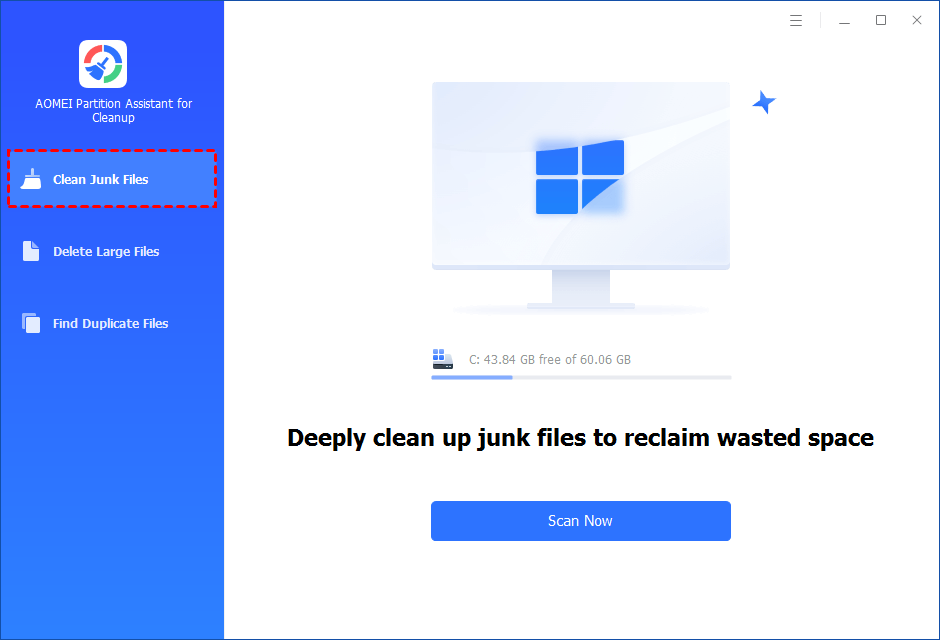
Step 2. Click the "Scan Now" button to start the process of scanning junk files.

Step 3. After the scan process is finished. All system junk files (including recycle bin files, temporary files, log files, invalid shortcuts, and so on) and registry junk files (including DLL registry, system registry, and program registry) will be displayed.
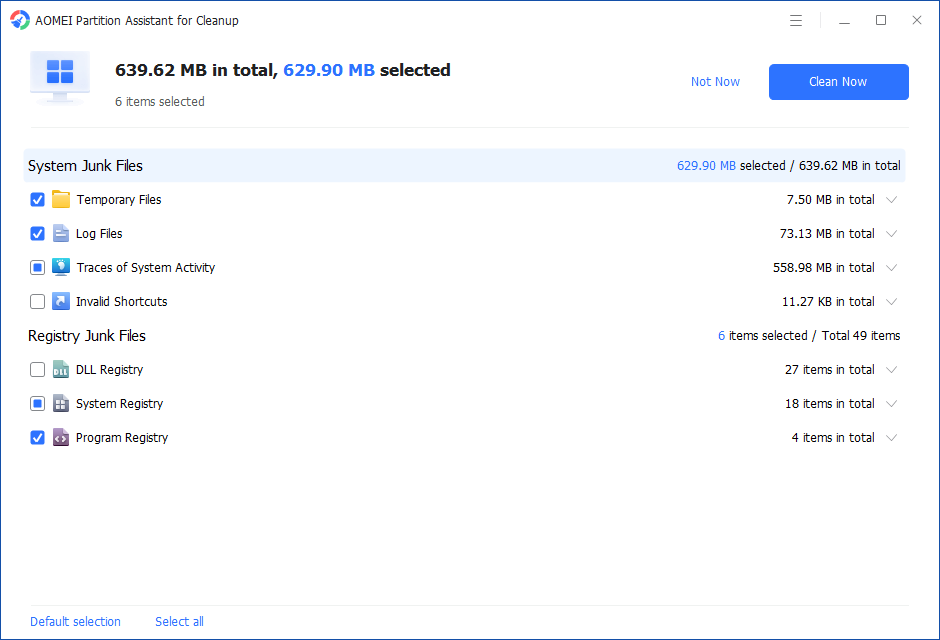
You can also click the button behind to view the junk files details.

Step 4. And, you can click the button behind to locate the file.
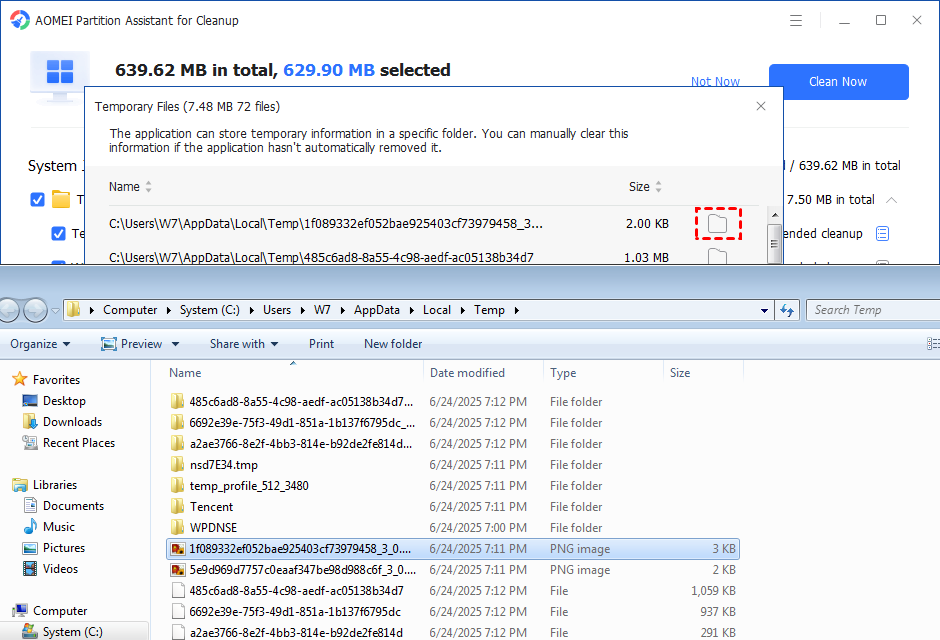
By default, the program will select some junk files to clean up, for example, temporary files, log files, and so on. You can also manually check to select more or uncheck to deselect fewer listed junk files. Or, click "Select All" to select all junk files to clean up if you need to clean up all.
Step 5. After selecting junk files that are not needed anymore, you can click the "Clean Now"button to start the cleanup.

The process of the cleanup might take time, and the selected files will be cleaned up. After the process is finished, you will get a cleanup completed window displaying how many files you have cleaned and not yet cleaned.

Method 2. Run Disk Cleanup
Disk Cleanup is a built-in tool in Windows designed to remove unnecessary system files, like Windows update logs, Recycle Bin items, and temp files. Here's how to run it to clean a hard drive:
Step 1: Right-click the drive you want to clean up and select Properties.
Step 2: Click the Disk Cleanup button in the disk properties window.
Step 3: In the Disk Cleanup window, select the files you want to delete and click OK.

Method 3. Enable Storage Sense
Windows has a built-in feature called Storage Sense that can help automatically free up space. It removes temporary files, leftover system update files, recycle bin contents, and more. Follow these steps to enable this feature to clean up your disk:
Step 1: Click Start > Settings to open the Windows Settings menu, then click System.
Step 2: In the left panel, choose Storage, then turn on Storage Sense.
Step 3: You can click the "Configure Storage Sense or run it now" option to customize when and how often Storage Sense should run and what types of files it will clean.
Conclusion
If you’ve been getting errors like “Hard disk is full, please save to another place,” it’s a clear sign that your storage needs attention. This guide provides three practical methods to clean up your hard drive effectively. To free up more disk space, consider using PartitionAssistant Cleanup. Don’t let a full hard drive slow you down, and start cleaning today to keep your system running smoothly.
FAQs
Q1: Why is my hard drive full even though I deleted files?
This often happens due to system junk files or registry junk files. Tools like AOMEI Partition Assistant can help you remove them.
Q2: How to clean a hard drive without deleting important files?
Delete only junk files like cache, temp files, or unused software. Alternatively, you can move the required programs and files to another drive.
Q3: What types of files should I delete to free up space?
Start by removing temporary files, system junk, large media files, old downloads, and duplicate files. You can also uninstall software you no longer use.
