


[Explained]: Is It Safe to Delete Temp Files on Windows 10?
When deleting temp files to free up space on Windows PC, many people may be wondering if is it safe to delete temp files on Windows 10, 8, and 7. This article will answer your doubts and show you how to delete temp files without risks.

By AOMEI / Updated on July 11, 2025


What are temp files?
Temporary files are temporary data files created by Windows or the program itself that help the computer to run related tasks successfully. They are also called foo files and have .temp as the extension.
In essence, there is no difference between temporary files and virtual memory, except that temporary files are more targeted than virtual memory and serve a program alone. The path of temp files varies by program and operating system. But for Windows, the directory for temp files is generally stored in the AppData folder(C drive). So, some users may need to move AppData to another drive for saving more space.
For example, when a user is browsing a website, in order to improve the access speed of our next login to the website, cookies will generate a temporary file to record the user's identification and other information. If uncleaned for a long time, these temporary files can take up a lot of disk space and slow down Windows performance. Deleting temporary files can free up disk space to keep Windows running properly.
Is it safe to delete temp files in Windows 10 and 11?
After upgrading from Windows 10 to Windows 11, many users will find a lot of update temp files on the disk. Is it safe to delete temp files in Windows 11? Yes, it is safe to delete temp files.
Generally speaking, all files in the temporary folder can be safely deleted. As mentioned before, the purpose of a temporary file is to store temporary information so that the task can be read when it is running to shorten the loading time, and it cannot determine the execution of the task. However, you'd better not delete temporary files that are running, because this may cause program errors.
How to delete temp files in Windows 10, 8, 7, and 11
Now, you have a definitive answer to “Can I delete the temp files in Windows 10?”. Next, I will show you how to delete temp files easily and safely.
▶ Method 1. Delete temp files manually
You can manually delete temporary files in the traditional way, please refer to the following steps:
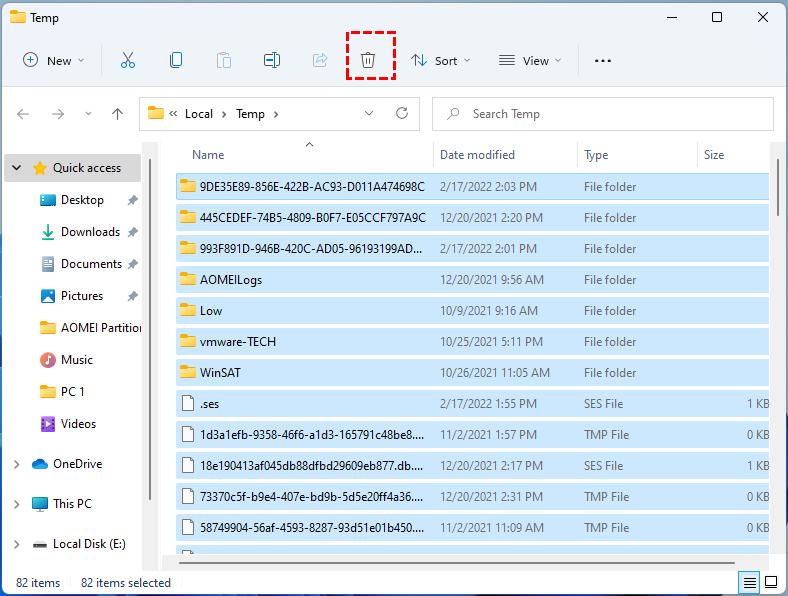
Step 1. Press “Windows + R”, type in “%temp%” and hit Enter.
Step 2. Here, you can select the temp files and delete them.
▶ Method 2. Run Disk Cleanup
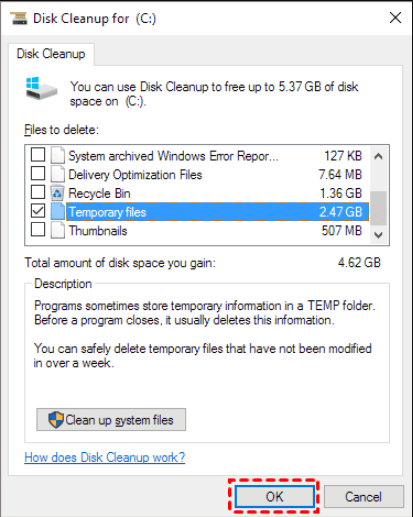
Disk Cleanup is a Windows built-in cleaner, which can delete Temporary files on the target drive.
Step 1. Type "Disk Cleanup" in the search bar and press "Enter".
Step 2. Select the target drive and click“OK”.
Step 3. Then, tick the Temporary files and click "OK" to delete it.
▶ Method 3. Clean temp files via Storage
Windows 10 and 11 users can manage Temp files with Storage feature:
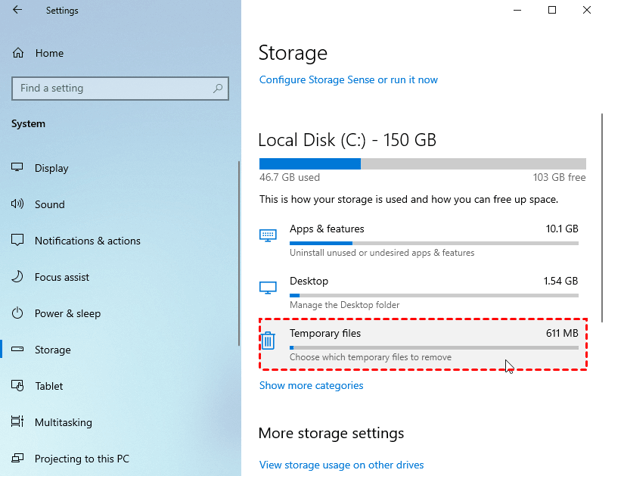
Step 1. Open start bar and turn to "Settings" > "System" > "Storage".
Step 2. Click “Temporary files”.
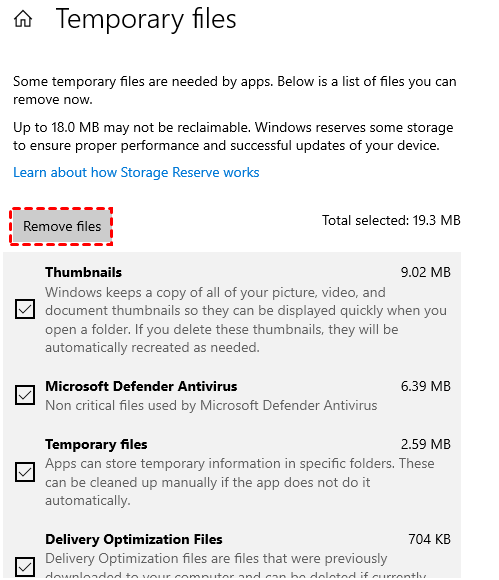
Step 3. All temp files will be sorted, you can click“Remove files”to delete these temp files.
Powerful junk cleaner: Delete PC temp files safely
Actually, the best way to delete temporary files is PartitionAssistant Cleanup. This is a free and powerful junk cleaner compatible with Windows 11, 10, 8, and 7.
Its "Clean Junk Files" can automatically scan system junk files, including Recycle Bin, Temporary Files, Log files, etc. After the scan is complete, you can also see the paths of all temporary files on your computer according to the scan results. You just need to click “Clean All” to remove all junk files.
 PartitionAssistant Cleanup
Free Up Disk Space To Keep Your PC Running Smoothly and Efficiently
Step 1. Install and launch PartitionAssistant Cleanup. Click the "Clean Junk Files" tab.
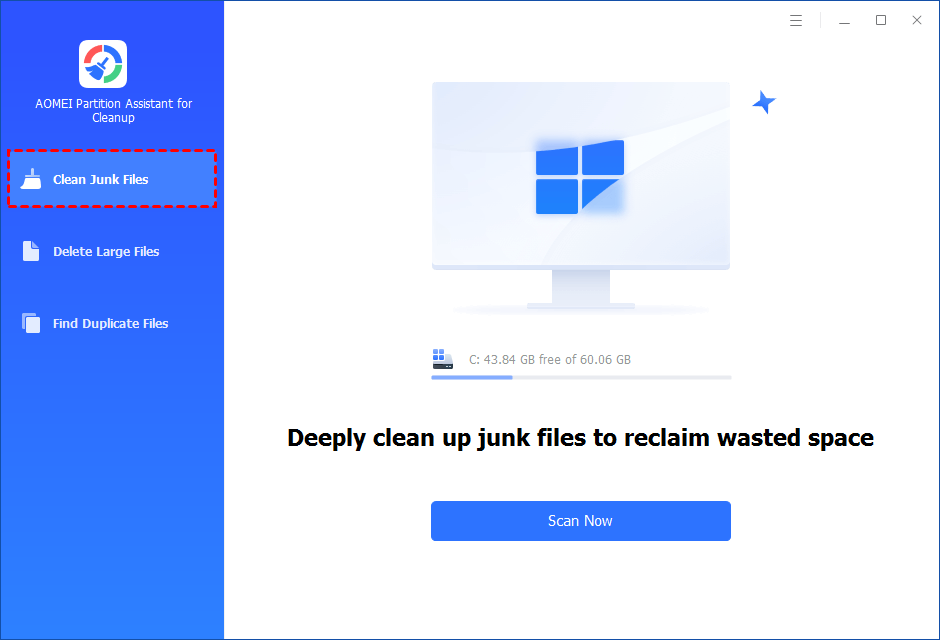
Step 2. Click the "Scan Now" button to start the process of scanning junk files.

Step 3. After the scan process is finished. All system junk files (including recycle bin files, temporary files, log files, invalid shortcuts, and so on) and registry junk files (including DLL registry, system registry, and program registry) will be displayed.
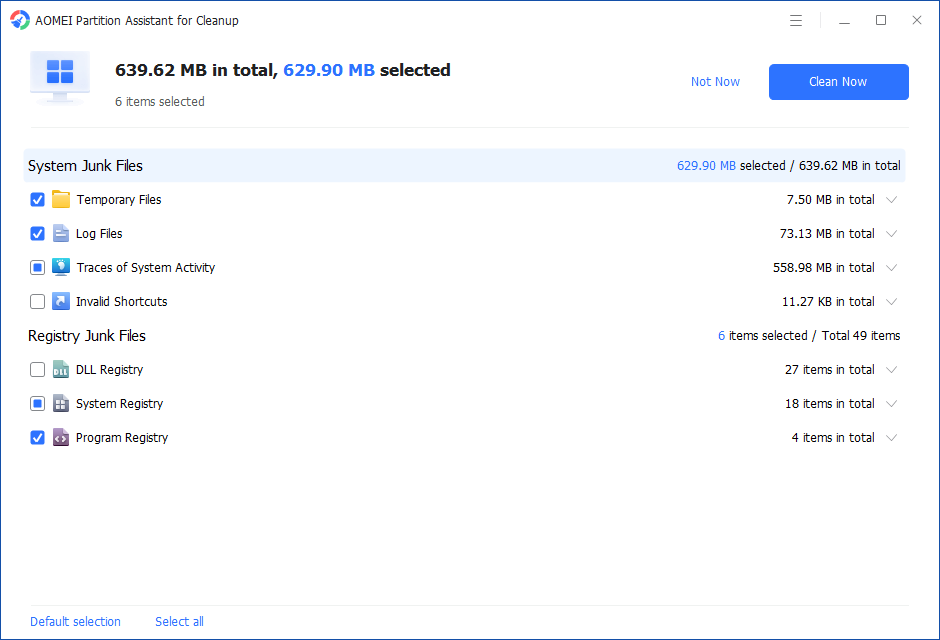
You can also click the button behind to view the junk files details.

Step 4. And, you can click the button behind to locate the file.
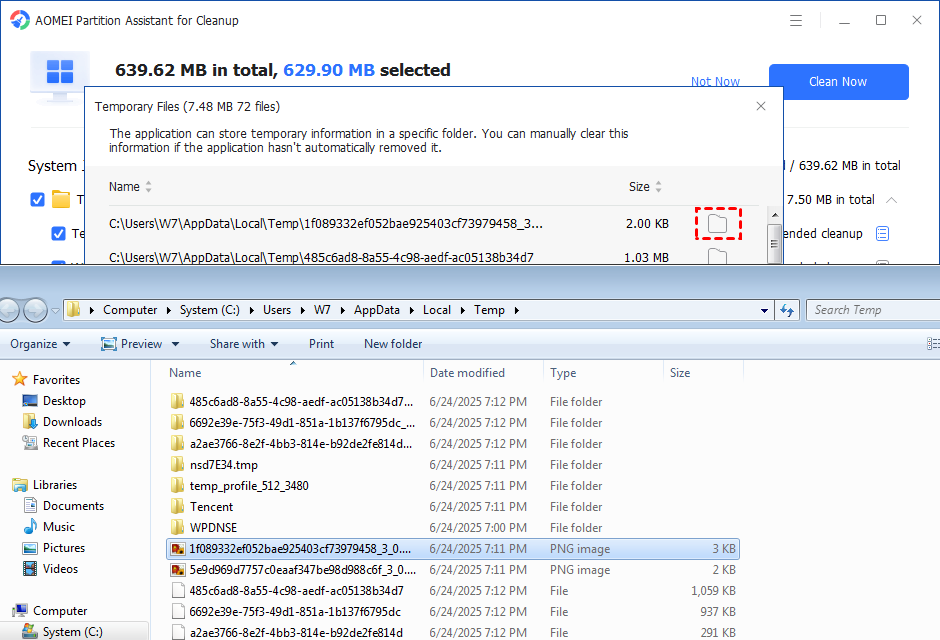
By default, the program will select some junk files to clean up, for example, temporary files, log files, and so on. You can also manually check to select more or uncheck to deselect fewer listed junk files. Or, click "Select All" to select all junk files to clean up if you need to clean up all.
Step 5. After selecting junk files that are not needed anymore, you can click the "Clean Now"button to start the cleanup.

The process of the cleanup might take time, and the selected files will be cleaned up. After the process is finished, you will get a cleanup completed window displaying how many files you have cleaned and not yet cleaned.

Bottom line
After reading this article, I believe you have a basic understanding of temporary files. In addition to answering "Is it safe to delete temp files in Windows 10", this article also provides specific steps on how to delete temp files.
There is no doubt that PartitionAssistant Cleanup is the most suitable for deleting temporary files.
