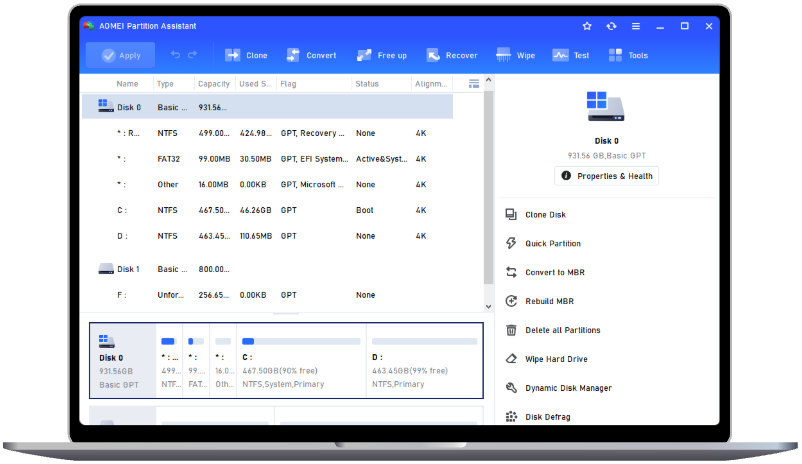
AOMEI Partition Assistant
How to Fix [After Update Windows 11 Laptop Slow]?
Discover why after update to Windows 11 the laptop slow. Solutions and AOMEI Partition Assistant Professional recommendations for optimal performance.

By Irene / Updated on January 15, 2024


After updating to Windows 11, many users experience a notable decline in laptop speed. This can manifest in slow boot times, lagging applications, and an overall sluggish performance.
Possible Reasons
1. Insufficient System Resources:
Windows 11 may demand more resources than your laptop can provide, leading to slowdowns.
2. Outdated or Incompatible Drivers:
Drivers optimized for Windows 10 might not be as effective on the new Windows 11 platform.
3. Background Processes Overload:
Increased background processes and services can consume system resources, impacting performance.
Solutions to Revitalize Your Laptop
1. Optimize System Resources:
Adjust visual effects, disable unnecessary startup programs, and ensure Windows 11 requirements align with your hardware.
2. Update Drivers:
Visit your laptop manufacturer's website and update all drivers, especially graphics and chipset drivers.
3. Manage Background Processes:
Task Manager is your ally; identify and disable resource-hungry background processes.
4. Disk Cleanup:
Eliminate unnecessary files using the built-in Disk Cleanup tool to free up disk space.
5. Adjust Power Settings:
Navigate to Power & sleep settings and select a power plan suitable for performance.
AOMEI Partition Assistant Professional: The Ultimate Solution
Pros:
1. User-Friendly Interface: AOMEI's intuitive design caters to users of all levels.
2. Versatile Features: From partition management to disk cloning, it offers a suite of powerful tools.
3. Reliable Performance: Ensures data integrity during complex operations.
How to Use AOMEI Partition Assistant Professional:
1. Download and install the software.
2. Open the tool and select the desired operation.
3. Follow on-screen instructions to complete the task.
Tech Terms Demystified
1. System Resources:
The collective power, memory, and processing capabilities of your laptop that an operating system utilizes.
2. Background Processes:
Tasks and applications running in the background, utilizing system resources without direct user interaction.
3. Disk Cleanup:
A built-in Windows tool that removes unnecessary files to free up disk space and enhance system performance.
Expert Tips for a Faster System
1. Regularly update drivers for enhanced compatibility.
2. Utilize AOMEI Partition Assistant Professional for comprehensive disk management.
3. Monitor background processes to prevent resource overload.
Conclusion
While the Windows 11 update may introduce a slowdown, armed with the right knowledge and tools, you can transform your laptop into a high-performance machine. Implement the suggested solutions, leverage AOMEI Partition Assistant Professional, and optimize your Windows 11 experience. Say goodbye to sluggishness and embrace a revitalized computing journey.
Frequently Asked Questions (FAQs)
Q: How crucial are regular driver updates after transitioning to Windows 11?
A: Driver updates are vital for optimal performance. Regularly check your laptop manufacturer's site for the latest versions.
Q: Can inadequate disk space contribute to a slow laptop after the Windows 11 update?
A: Absolutely. Free up space using Disk Cleanup and consider upgrading your storage capacity if necessary.
Q: Are there specific power plans recommended for boosting laptop performance on Windows 11?
A: The 'High Performance' power plan is often ideal for users seeking maximum system responsiveness.
Q: Can AOMEI Partition Assistant Professional resolve disk-related slowdowns?
A: Yes, it offers advanced disk management tools to optimize storage and enhance overall system performance.
Q: How often should I perform disk cleanup to maintain a smooth-running laptop?
A: Aim for regular cleanups, especially when you notice a decline in performance or low disk space warnings.