AOMEI Partition Assistant
Resolve IRQL Not Less or Equal Error: Effective Solutions
Learn how to fix IRQL Not Less or Equal error with simple troubleshooting methods. Resolve system issues quickly and efficiently.

By Irene / Updated on January 29, 2024


Encountering the IRQL Not Less or Equal error can be frustrating, especially when it disrupts your workflow or gaming session. In this comprehensive guide, we'll delve into the intricacies of this error and provide actionable solutions to resolve it effectively. Whether you're a novice or experienced user, understanding the underlying causes and implementing the right fixes can help restore stability to your system.
Understanding the IRQL Not Less or Equal Error
The IRQL Not Less or Equal error, indicated by the blue screen of death (BSOD), signifies a critical system issue requiring immediate attention. It typically occurs when a driver attempts to access a memory address at an incorrect IRQL (Interrupt Request Level). This error can stem from various factors, including hardware issues, driver conflicts, or corrupted system files.
Causes of the IRQL Not Less or Equal Error
- Driver Issues: Outdated, incompatible, or corrupted device drivers can trigger the IRQL Not Less or Equal error.
- Faulty Hardware: Malfunctioning hardware components, such as RAM modules or hard drives, may contribute to this error.
- System File Corruption: Corruption within the Windows operating system files can lead to IRQL-related issues.
Solutions to Fix IRQL Not Less or Equal Error
Solution 1: Update Device Drivers
- Access Device Manager: Right-click on the Start button and select Device Manager.
- Update Drivers: Expand the categories, right-click on the device, and choose Update driver.
- Search Automatically: Select "Search automatically for updated driver software" and follow the on-screen instructions.
- Restart Your Computer: After updating drivers, restart your computer to apply the changes effectively.
Solution 2: Check Hardware Components
- Run Memory Diagnostics: Press Windows Key + R, type "mdsched.exe," and press Enter to run Windows Memory Diagnostic.
- Test RAM Modules: Follow the on-screen instructions to test your RAM modules for errors.
- Check Hard Drive: Use CHKDSK command to scan and repair disk errors. Open Command Prompt as administrator and type "chkdsk /f /r" and press Enter.
- Monitor System Temperature: Install temperature monitoring software to ensure your system components are not overheating.
Solution 3: Perform System File Checker Scan
- Open Command Prompt: Right-click on the Start button and select Command Prompt (Admin).
- Run SFC Scan: Type "sfc /scannow" and press Enter to initiate the System File Checker scan.
- Wait for Completion: Allow the scan to complete, and follow any on-screen prompts to repair corrupted system files.
- Restart Your Computer: Once the scan is complete, restart your computer to apply the repairs.
Recommendation of AOMEI Partition Assistant Professional
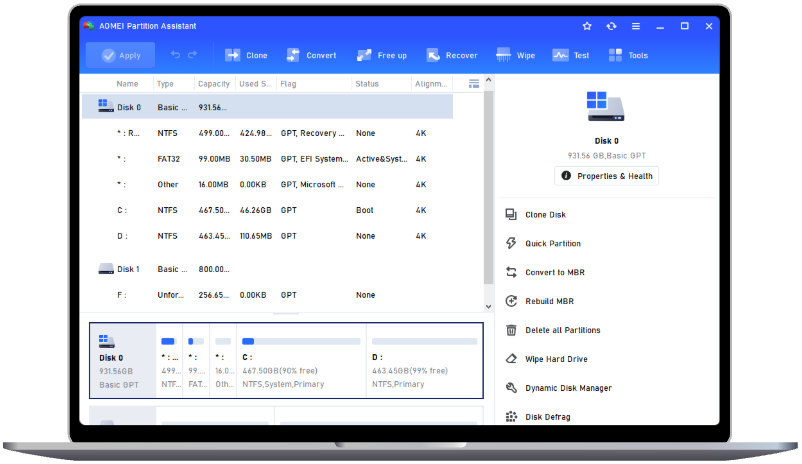
AOMEI Partition Assistant Professional is a versatile disk management tool that offers a wide range of features to optimize and organize your hard drives. With AOMEI Partition Assistant Professional, you can:
- Resize, Merge, and Split Partitions: Easily resize partitions, merge adjacent partitions, or split large partitions into smaller ones without data loss.
- Allocate Free Space: Allocate free space from one partition to another to optimize disk usage and improve performance.
- Convert Disk and Partition: Convert between MBR and GPT disk styles, or convert between NTFS and FAT32 file systems effortlessly.
- Clone Disk or Partition: Clone entire disks or individual partitions to migrate data or create backups for disaster recovery.
- Securely Wipe Data: Permanently erase sensitive data from your hard drive to prevent recovery by unauthorized users.
To use AOMEI Partition Assistant Professional, simply download and install the software from the official website. Once installed, launch the program and follow the intuitive interface to perform various disk management tasks with ease.
Key Tech Terms Explained
- Interrupt Request Level (IRQL): The priority level assigned to hardware interrupts, determining the order in which they are processed by the CPU.
- Blue Screen of Death (BSOD): A stop error screen displayed on Windows systems when the operating system encounters a critical error that it cannot recover from.
- Device Manager: A Windows utility that allows users to view and control the hardware devices installed on their computer.
- RAM Modules: Random Access Memory modules that temporarily store data and instructions for active programs and processes.
- System File Checker (SFC): A Windows utility that scans for and repairs corrupted system files, helping maintain system integrity and stability.
Tips for Preventing IRQL Not Less or Equal Error
- Keep Drivers Updated: Regularly update device drivers to ensure compatibility and stability.
- Perform Regular Maintenance: Run disk cleanup, defragmentation, and system file checker scans periodically to maintain system health.
- Monitor Hardware Health: Use monitoring tools to track system temperatures and detect hardware issues early.
Conclusion
In conclusion, the IRQL Not Less or Equal error can be a challenging issue to troubleshoot, but with the right approach, it can be resolved effectively. By understanding the underlying causes and implementing the recommended solutions outlined in this guide, you can mitigate the risk of encountering this error and maintain the stability of your system.
FAQs
Q: How do I know if a driver is causing the IRQL Not Less or Equal error? A: You can use Windows Event Viewer to check for error logs related to drivers causing the IRQL Not Less or Equal error. Look for entries under "System" or "Application" logs that coincide with the time of the error occurrence.
Q: Can overclocking hardware contribute to the IRQL Not Less or Equal error? A: Yes, overclocking hardware can lead to instability and system errors, including the IRQL Not Less or Equal error. Revert overclocked settings to default values and observe if the error persists.
Q: Is it possible to disable the IRQL Not Less or Equal error message? A: While it's not advisable to disable error messages altogether, you can configure Windows to automatically restart after encountering a BSOD error, which may prevent the error message from being displayed indefinitely.
Q: Does system restore help resolve the IRQL Not Less or Equal error? A: Performing a system restore to a previous stable state may help resolve the IRQL Not Less or Equal error if it was caused by recent system changes or installations. However, this may not always be effective, especially if the error stems from hardware issues.
Q: Are there any software utilities that can automatically fix the IRQL Not Less or Equal error? A: While there are software utilities that claim to automatically fix system errors like the IRQL Not Less or Equal error, it's essential to exercise caution when using such tools. Always research and ensure that the software is reputable and reliable before attempting to use it for error resolution.