AOMEI Partition Assistant
How to Perform Recovery Windows Boot
Master the Windows Recovery Environment! Discover multiple ways to boot windows in recovery mode, from simple restarts to advanced methods. We'll also show you how to boot to windows recovery using a powerful tool to create a recovery drive.

By Lucas / Updated on August 13, 2025


It’s a moment every PC user dreads: you press the power button, and instead of your familiar desktop, you’re greeted by a black screen, a cryptic error message, or an endless loading loop. These boot failures can be frustrating, but Windows has a built-in safety net called the Windows Recovery Environment (WinRE). Understanding how to perform a recovery Window boot is a critical skill for troubleshooting and fixing a misbehaving PC.
This comprehensive guide will walk you through everything you need to know about WinRE. We'll cover what it is, the different ways to access it, and how to use a powerful third-party tool to create an advanced recovery solution when the standard options aren't enough.
What is Recovery Windows Boot?
Before diving into the "how," let's understand the "what." A recovery Windows boot simply means starting your computer in a special diagnostic mode outside of the main Windows operating system. This mode, the Windows Recovery Environment (WinRE), is a lightweight companion OS with a suite of powerful tools designed to help you repair, restore, or reset your computer.
WinRE gives you access to several troubleshooting options, including:
Startup Repair: Automatically scans for and attempts to fix common problems preventing Windows from starting.
System Restore: Reverts your computer's system files and settings to an earlier point in time without affecting your personal files.
Command Prompt: Provides command-line access for advanced users to perform complex troubleshooting and repair tasks.
Uninstall Updates: Removes recently installed quality or feature updates that may be causing issues.
System Image Recovery: Restores your entire system from a previously created system image backup.
UEFI Firmware Settings: Allows you to access your computer's BIOS or UEFI settings.
How to Boot System Recovery in Windows 10 & 11
Whether your PC is running smoothly or stuck on a blue screen, there are several ways to boot into Windows recovery mode to troubleshoot issues. The method you use depends on whether you can successfully start Windows.
Method 1: Boot Windows in Recovery Mode When Your PC Starts Normally
If you can access your desktop, getting to the recovery environment is straightforward. This is useful for proactive maintenance or fixing minor issues before they become major problems. This section explains two simple ways to boot Windows in recovery mode from a functioning system.
Step 1. Click on the Start Menu and go to Settings (the gear icon).
Step 2. Select Update & Security.

Step 3. Navigate to the Recovery tab in the left-hand pane.
Step 4. Under the Advanced startup section, click the Restart now button.
Step 5. Your computer will restart and boot directly into a blue screen with the "Choose an option" menu. From here, select Troubleshoot to access the recovery and repair tools
Method 2: How to Boot into Windows Recovery When Your PC Fails to Start
When your PC can't load Windows, you'll need to use one of these methods to force a Windows boot recovery. This part covers what to do when your computer is stuck in a boot loop or shows a black/blue screen.
Windows is designed to automatically enter WinRE if it fails to start properly three consecutive times. You can trigger this manually.
Step 1. Press and hold the physical power button on your PC until it shuts down completely.
Step 2. Press the power button again to turn it on.
Step 3. As soon as you see the manufacturer logo or Windows loading dots, immediately press and hold the power button again to force another shutdown.
Step 4. Repeat this process 2-3 times. On the next boot, Windows should display a "Preparing Automatic Repair" screen and then load the recovery options.
Advanced Fix: Create a Bootable USB for Recovery Windows Boot
Sometimes, the built-in recovery partition can become corrupted or the standard tools fail to fix the problem. In these severe cases, you need a more robust solution. When you can't even get to the recovery screen, it's time to boot to Windows recovery using an external tool.
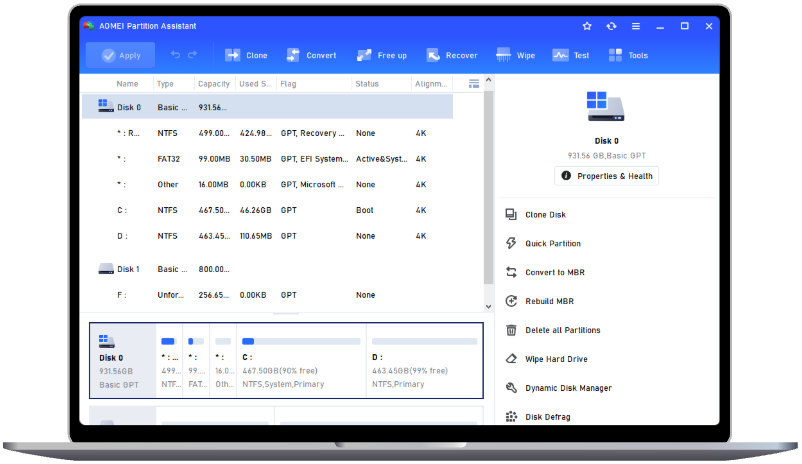
AOMEI Partition Assistant Professional is a comprehensive and powerful disk management software trusted by millions worldwide. While it excels at tasks like resizing partitions, migrating your OS, and cloning disks, it also includes a critical feature for our purposes: the ability to create bootable media and repair boot records.
When Windows' own tools fail, AOMEI Partition Assistant provides the advanced functionality needed to fix the root cause of many boot failures, such as a damaged Master Boot Record (MBR).
 100% Secure
Step 1. After launching AOMEI Partition Assistant on your PC, choose the Boot Repair tool below the Recover section on the main interface.
Step 2. Click Next to start the system’s boot entries scan process.
Step 3. After the process is completed, you will see all scan results, including system paths, system versions, and boot status. Select the repairable boot entries you want to repair and click the Repair button.
Ending
Knowing how to boot into Windows recovery is an essential skill for any Windows user. From the simple Shift + Restart trick to forcing an automatic repair, Windows provides solid first-line-of-defense tools. However, when faced with more severe corruption or boot record errors, the built-in options may fall short.
For those situations, having a tool like AOMEI Partition Assistant Professional in your digital toolkit is invaluable. By allowing you to create bootable media and perform advanced repairs like rebuilding the MBR, it provides a powerful and reliable way to solve complex boot problems and manage your system's health effectively. Being prepared with these methods ensures that a boot failure is just a temporary hiccup, not a catastrophe.