
 PartitionAssistant Cleanup


A Comprehensive Guide to Cleaning Your BitLocker Drive in Windows 10
Our complete guide shows you how to clean a BitLocker drive. Find step-by-step instructions for clearing memory allocation cache, removing junk files.

By Lucas / Updated on December 1, 2025


BitLocker is a powerful full-disk encryption feature included with Windows that provides excellent protection against data theft and exposure. However, over time, even an encrypted drive can become cluttered with unnecessary files, caches, and other data that can consume valuable space and potentially slow down your system.
Many users wonder about the best way to clean these drives, whether it's to free up space or to wipe the drive for reuse or disposal completely. This guide provides a detailed walkthrough for managing and cleaning your BitLocker-encrypted drive, ensuring optimal performance and data security. We will explore everything from removing temporary files to securely wiping the entire drive, addressing common questions and providing step-by-step instructions for various tools.
Do you need to perform clearing memory allocation cache clear on BitLocker drive Windows 10?
A BitLocker-encrypted drive does not have a separate "memory allocation cache" that you can manually clear. The encryption is a disk-level feature. Any caching that occurs is managed by Windows for the entire system, regardless of whether a drive is encrypted or not.
The memory being referred to is most likely the system's RAM cache, which temporarily stores frequently requested data to speed up operations. Windows manages this cache automatically, and it is dynamic—it will grow or shrink as needed.
How to Clean a BitLocker Drive
Whether you want to perform a light cleanup of junk files or a deep scrub of your drive, several methods are available. Before you begin any file-level cleaning operation, you must ensure the BitLocker-encrypted drive is unlocked. Simply sign in to your Windows account for the system drive or enter your password or recovery key for other encrypted drives.
1. Run Disk Cleanup
This classic utility scans your drive for files you can safely erase.
Step 1. Search for "Disk Cleanup" in the Start Menu and open it.
Step 2. Select the BitLocker-encrypted drive you wish to clean from the dropdown menu and click "OK."
Step 3. The tool will calculate how much space you can free up.
Step 4. In the next window, check the boxes next to the types of files you want to delete (e.g., Temporary Internet Files, Thumbnails, Recycle Bin).
Step 5. For a more thorough cleaning, click "Clean up system files." The tool will restart and scan for additional files, such as old Windows Update files.
Step 6. After making your selections, click "OK" and then "Delete Files" to confirm.

2. Try Storage Sense
A more modern feature, Storage Sense can automate the cleanup process.
Step 1. Go to Settings > System > Storage.
Step 2. You can manually trigger a cleanup by clicking on "Temporary files," selecting what you want to remove, and clicking "Remove files."
Step 3. For automation, toggle Storage Sense "On." Click "Configure Storage Sense or run it now" to customize how it works. You can set it to run automatically when you're low on disk space and decide how often it cleans the Recycle Bin and Downloads folder.
Step 4. Quick Clean Hard Disk Cache Data
Sometimes, "cleaning" means more than just removing junk files; it means completely wiping the drive to remove all data permanently. This is a common need when selling a computer or repurposing a drive. The question often arises, can you clean a bitlocked hard drive in this manner? Yes, and the diskpart command-line utility is a powerful way to achieve this.
3. Clean BitLocker Drive with Diskpart
Using diskpart to clean a drive is an advanced operation that will erase all partitions and data, effectively removing the BitLocker encryption along with everything else. This method is irreversible, so proceed with extreme caution and ensure you have backed up any important data.
Step 1. Open Command Prompt as an administrator. You can do this by searching for "cmd" in the Start Menu, right-clicking it, and selecting "Run as administrator."
Step 2. Type diskpart and press Enter to start the utility.
Step 3. Type list disk and press Enter. This will show all the disks connected to your computer. Identify the BitLocker drive you want to wipe by its size. Note its disk number (e.g., Disk 1).
Step 4. Type select disk X (replace X with the disk number from the previous step) and press Enter. Be certain you have selected the correct disk.
Step 5. Type clean and press Enter. This command will instantly remove all partition and volume information from the selected disk.
Step 6. Once finished, you can type exit to close diskpart and then close the Command Prompt. The drive will now appear as "Unallocated" in Disk Management, ready to be re-partitioned and formatted.
4. Advanced Cleanup with a Third-Party Tool: PartitionAssistant Cleanup
While Windows tools are useful, they may not remove all junk files, especially stubborn system cache files. For a more comprehensive solution, a professional tool like PartitionAssistant Cleanup offers advanced features. This powerful software is a complete disk management utility that provides users with a wide range of functions to control and optimize their hard drives.
This tool is specifically designed to perform a deep scan and remove junk files from your system to free up space and boost performance. It can identify and eliminate a wider variety of unnecessary files than the standard Windows utilities.
 PartitionAssistant Cleanup
Free Up Disk Space To Keep Your PC Running Smoothly and Efficiently
Step 1. Install and launch PartitionAssistant Cleanup. Click the "Clean Junk Files" tab.
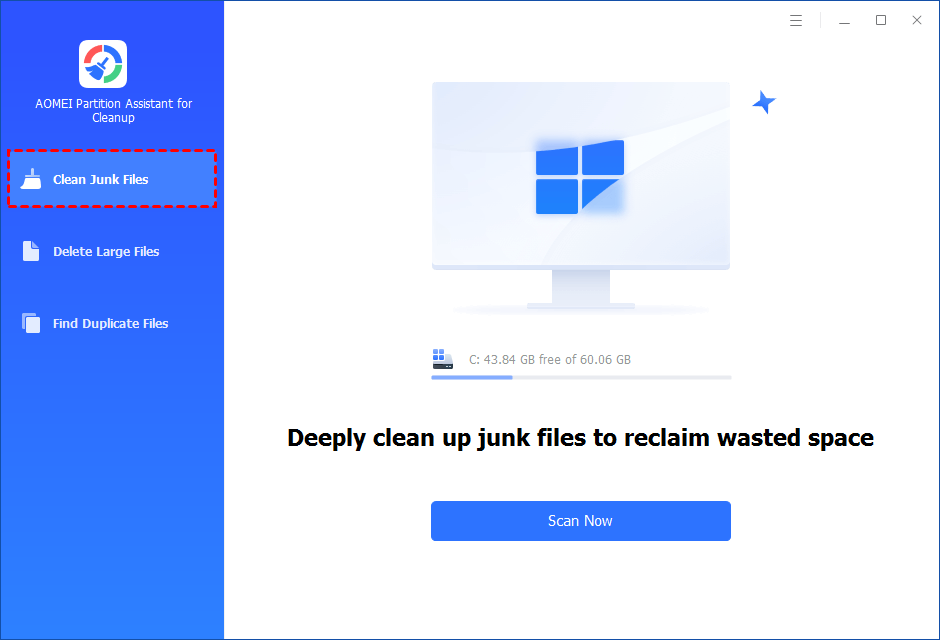
Step 2. Click the "Scan Now" button to start the process of scanning junk files.

Step 3. After the scan process is finished. All system junk files (including recycle bin files, temporary files, log files, invalid shortcuts, and so on) and registry junk files (including DLL registry, system registry, and program registry) will be displayed.
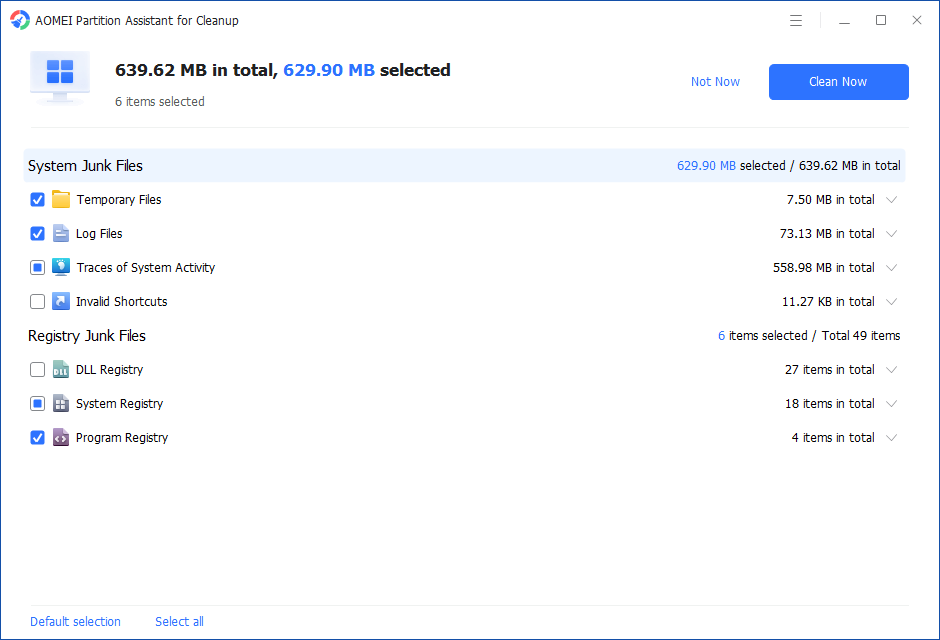
You can also click the button behind to view the junk files details.

Step 4. And, you can click the button behind to locate the file.
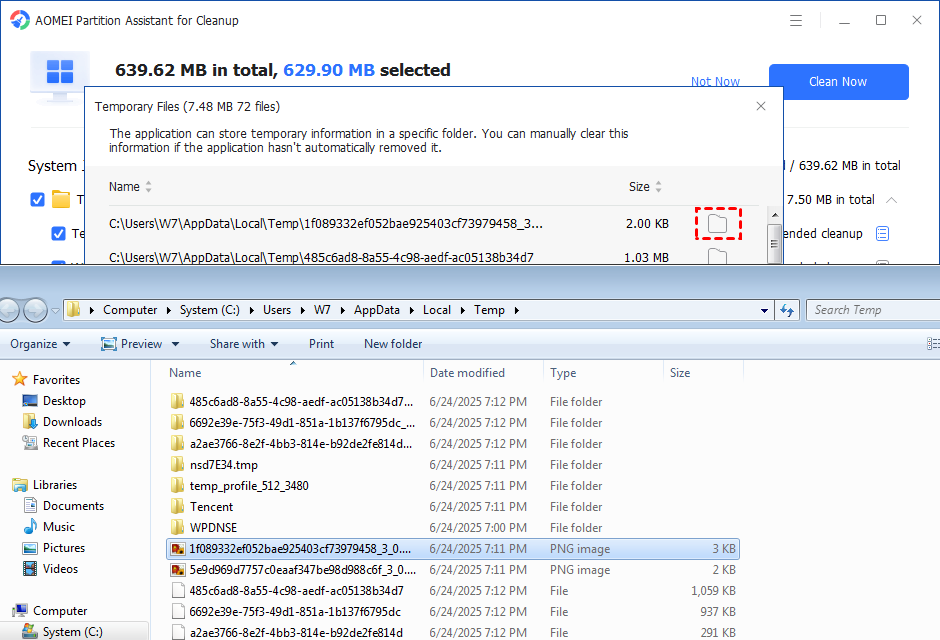
By default, the program will select some junk files to clean up, for example, temporary files, log files, and so on. You can also manually check to select more or uncheck to deselect fewer listed junk files. Or, click "Select All" to select all junk files to clean up if you need to clean up all.
Step 5. After selecting junk files that are not needed anymore, you can click the "Clean Now"button to start the cleanup.

The process of the cleanup might take time, and the selected files will be cleaned up. After the process is finished, you will get a cleanup completed window displaying how many files you have cleaned and not yet cleaned.

To Sum Up
Maintaining a clean and efficient BitLocker-encrypted drive is crucial for system performance and storage management. For a more thorough and powerful cleaning experience, a dedicated tool, PartitionAssistant Cleanup offers advanced scanning and junk removal capabilities.
By understanding the distinction between removing junk files and wiping a drive, you can choose the right tool for your specific needs, ensuring your encrypted drive remains both secure and optimized.
