AOMEI Partition Assistant
Windows 10 Extended Support: What to Know About the ESU Program
What is Windows 10 extended support? This passage will introduce the Extended Security Updates (ESU) plan with sharing the best alternative to protect your Windows 10.

By Irene / Updated on July 22, 2025


What is Windows 10 extended support?
Microsoft has announced that support for Windows 10 will officially end on October 14, 2025. After this date, the system will no longer receive security updates, feature upgrades, or technical help. If you're still using Windows 10, Microsoft suggests upgrading to Windows 11 if your device supports it. If your PC can’t run Windows 11, you still have a few choices:
🌟 Upgrade Windows 10 to Windows 11 if your device hardware supports it.
🌟 Buy a new PC that supports Windows 11.
The ESU program is a paid option that helps keep your device secure, but it only includes important security updates—no new features or full tech support. For individual users, the cost starts at $30 per year (more pricing details for home users will be shared later).
For businesses and schools, the ESU program offers different pricing. And for Education customers usually pay less. Here's a quick look at the cost for Windows 10 Pro and Enterprise:
| Year | Windows 10 Pro | Windows 10 Enterprise | Windows 10 Education | Windows 10 Home |
|---|---|---|---|---|
| 2025–2026 | $61 per device | $47 per device | ~$1–$5 per device | Not eligible for ESU |
| 2026–2027 | $122 per device | $94 per device | ~$2–$10 per device | Not eligible for ESU |
| 2027–2028 | $244 per device | $188 per device | ~$4–$20 per device | Not eligible for ESU |
The price goes up each year, so upgrading sooner can help save money. More detailed info will be available as we get closer to the end-of-support date.
The best alternative to Windows 10 ESU program
After October 14, 2025, Windows 10 will no longer receive security updates, leaving systems more vulnerable to cyber threats, especially for users handling sensitive data. While upgrading from Windows 10 to Windows 11 is the safest option, it may not be possible for everyone. Plus, the ESU program excludes Windows 10 Home users unless they upgrade to Pro or Enterprise.
A good alternative is to enable drive encryption to protect your files. However, BitLocker is a built-in encryption tool in Windows, but it’s not available for Windows 10 Home users. That’s where AOMEI Partition Assistant comes in. It includes a BitLocker feature that works on all versions of Windows 10, including Home. With this software, you can easily encrypt your system drive. This means that even if your PC is stolen or hacked, no one can read your files without the correct password or recovery key. The best part? This protection continues to work even after Windows 10 stops getting updates.
 AOMEI Partition Assistant
The Best Windows Disk Partition Manager and PC Optimizer
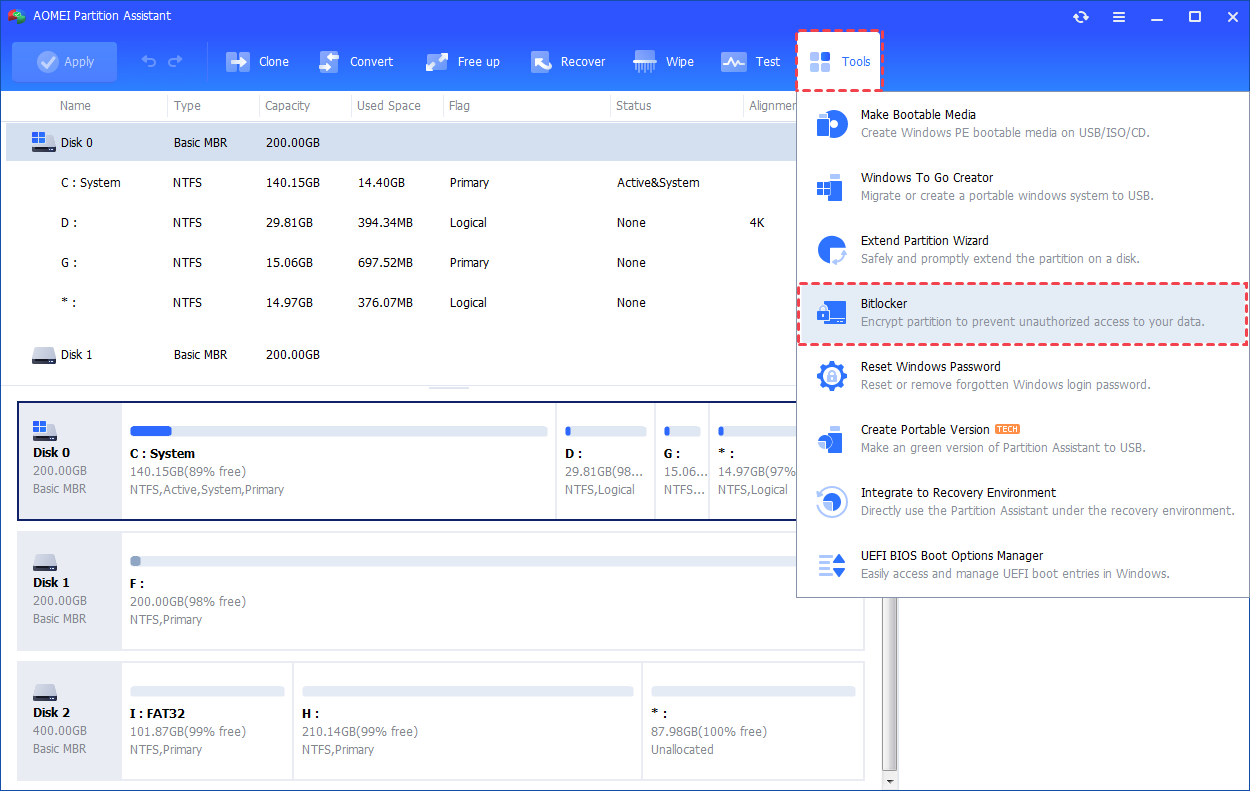
Step1. Install and launch AOMEI Partition Assistant. Click the "Tools" main tab and select "BitLocker".
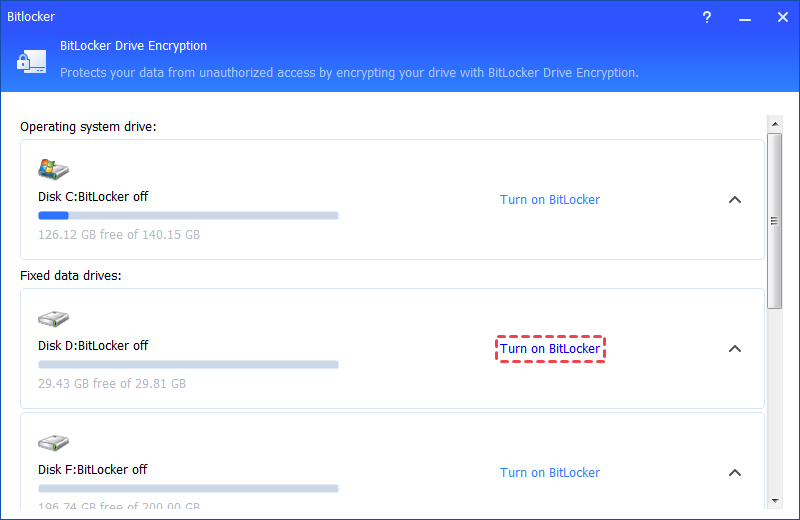
Step 2. All drives on the system will be displayed, including operating system drives, fixed data drives, and removable drives. Please find the system partition you would like to encrypt BitLocker and click the "Turn on BitLocker" option. (Here, we take the drive D: as an example.)
⚠️Notes: It only supports encrypting NTFS partitions. Other partition file systems, for example, FAT or FAT32 cannot be encrypted. To fix this, you can convert FAT32 to NTFS without losing data.
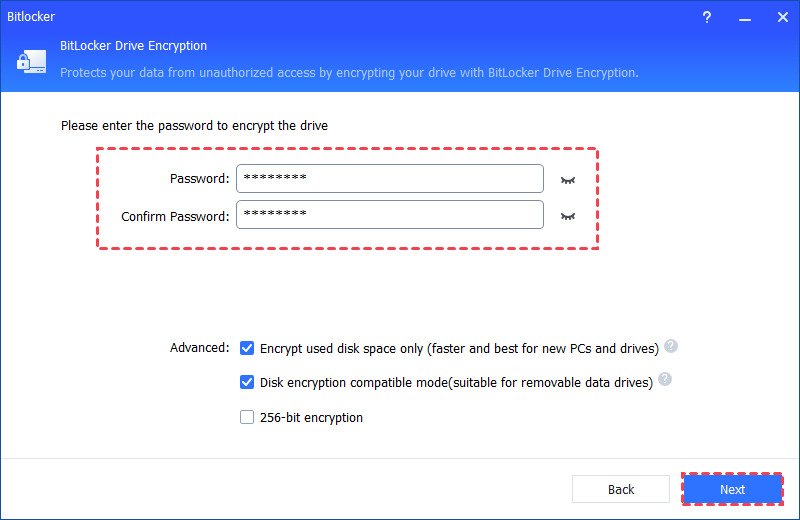
Step 3. Please set and confirm a password to encrypt the drive and click "Next".
Step 4. Select a way to back up your recovery key. You can either select "Save to a file" or "Print the recovery key".
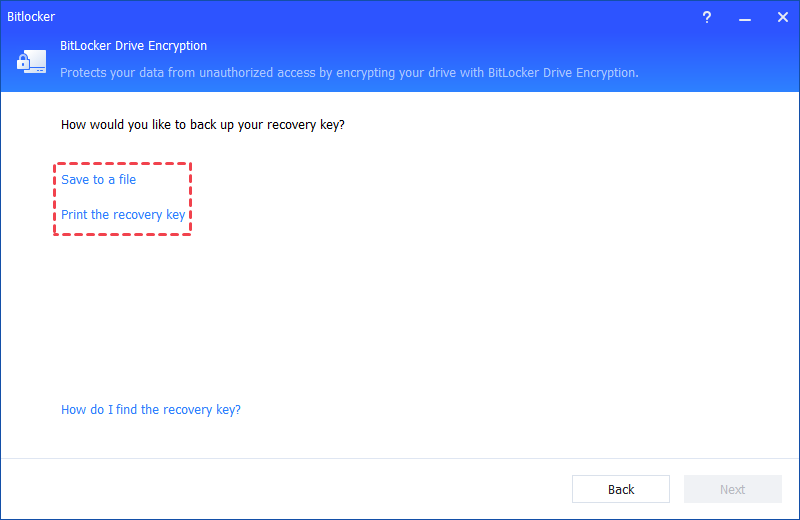
🌟Tips: Please do not save the recovery key in the encrypted drive path. For example, it is unable to encrypt D: and save the recovery key on the same D: drive.
Step 5. If you select "Save to a file", please choose a location on your PC to save the recovery key.
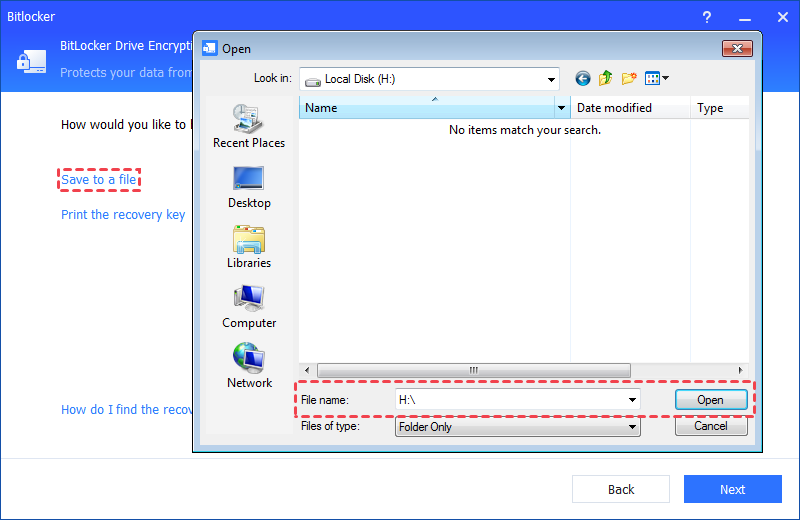
Then, please click the "Next" button to start the encryption process, then you will be required to restart your PC to enter into the Windows PE environment to BitLocker encrypt system drive. Please click "OK" to continue.
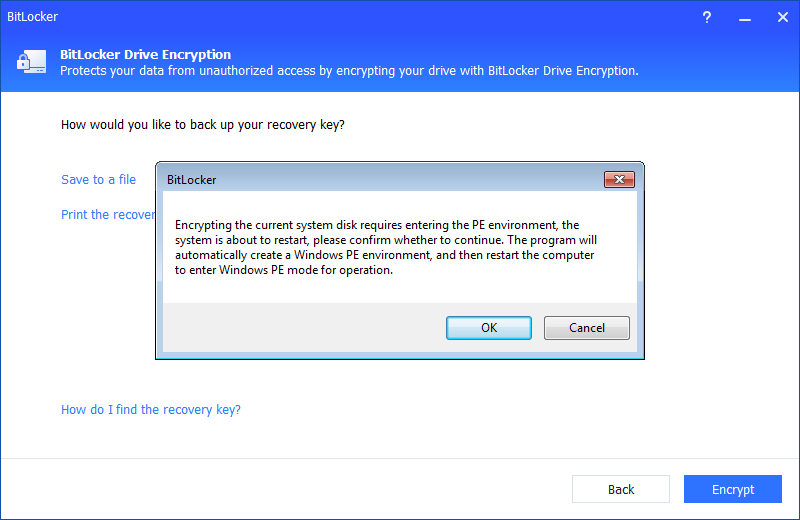
The program will automatically create a Windows PE environment on your PC.
Tips: AOMEI Partition Assistant will automatically detect whether your system has installed Windows AIK/ADK or not. If yes, it will start the Windows PE creation and then enter into WinPE to encrypt the drive. If not, please download and install Windows AIK/ADK first.
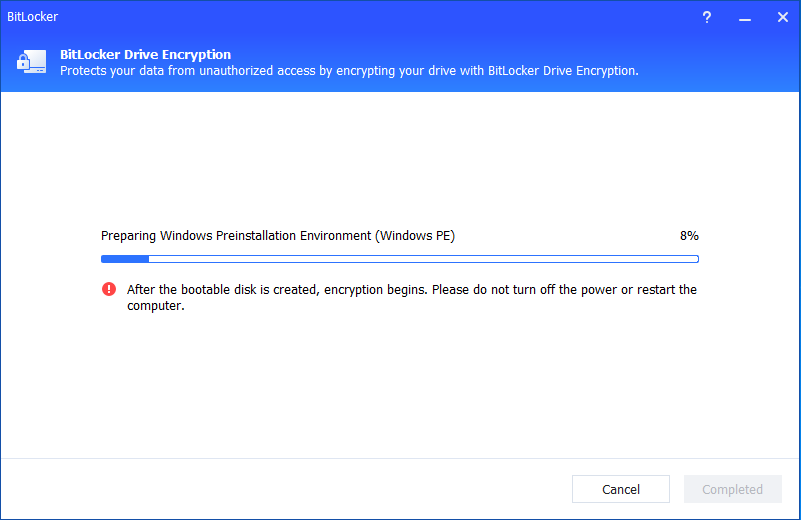
After it is created successfully, the PC will reboot into Windows PE mode to encrypt the drive. After the encryption is completed, you will get an encryption complete window and you can click "OK" to restart your PC.
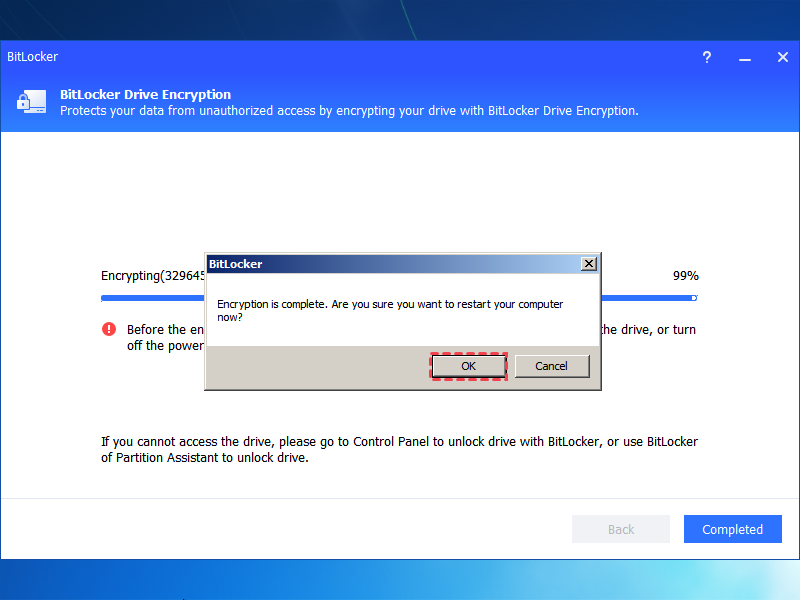
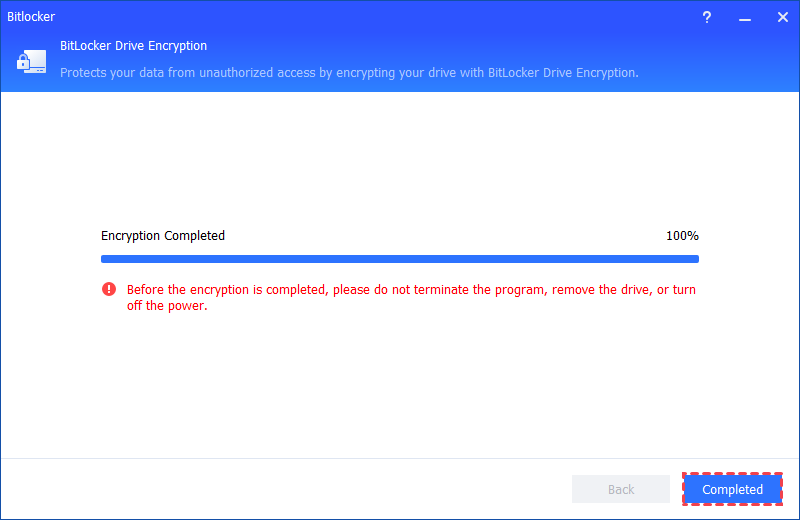
Step 5. The encryption process might take time to encrypt the drive. Before the process is finished, please do not terminate the program, remove the drive, or turn off the power. Once the encryption process is finished, please click "Completed". Finally, the system drive is BitLocker encrypted.
Enabling BitLocker on Windows 10 is a practical way to protect your data—it encrypts your drive and prevents unauthorized access if your device is lost or stolen. However, BitLocker cannot block system-level threats, such as malware or exploits that take advantage of unpatched security holes. So while BitLocker adds an extra layer of protection, it’s not a complete solution. For full, ongoing security—especially online—it’s strongly recommended to upgrade to Windows 11. The more details can be found in the related article: Can I Still Use Windows 10 After 2025.
Conclusion
What is Windows 10 extended support? That is the Extended Security Updates (ESU) program. After Windows 10 support ends in October 2025, users face higher security risks without updates. While upgrading to Windows 11 is the safest path, it’s not always possible. The Extended Security Updates (ESU) program can help, but only for supported editions. For Windows 10 Home users or anyone looking for extra protection, tools like AOMEI Partition Assistant offer a way to encrypt your system drive with BitLocker. This adds a strong layer of security, but it’s not a full substitute for system updates. For long-term safety, upgrading to Windows 11 remains the best solution.
AOMEI Partition AssistantThe Best Windows Disk Partition Manager and PC Optimizer