
 PartitionAssistant Recovery


Fixed: Windows 11 KB5051987 File Explorer Problem
Is the Windows 11 update KB5051987 breaking File Explorer for you? Find out why this 24H2 update causes issues and follow our step-by-step guide to resolve the File Explorer problem and prevent data loss. Get your system back to normal today

By Lucas / Updated on July 28, 2025


The rollout of a new Windows update is often met with a mix of anticipation and apprehension. While updates bring new features and security patches, they can sometimes introduce unexpected bugs. A significant issue users are reporting is the Windows 11 KB5051987 file explorer problem.
This frustrating bug, emerging after the installation of the Windows 11 KB5051987 24H2 update, can cause File Explorer to crash, freeze, or become completely unresponsive, severely disrupting user workflow.
If you're facing this issue, you're not alone. This article will dive deep into the common problems associated with the KB5051987 update, provide you with proven methods to fix the File Explorer instability, and show you how to recover any files that may have gone missing during the crashes.
Common Windows 11 KB5051987 Update Problems
This section covers the various issues reported by users after installing the KB5051987 update, with a primary focus on the File Explorer malfunction.
The Windows 11 KB5051987 24H2 update was intended to enhance system performance and security. However, for a segment of users, it has had the opposite effect. The most prominent complaint is undoubtedly the Windows 11 KB5051987 file explorer problem.
Users describe several frustrating symptoms:
Frequent Crashing: File Explorer closes unexpectedly when performing basic tasks like opening folders, right-clicking on files, or trying to access network drives.
Freezing and Unresponsiveness: The File Explorer window may become "Not Responding," forcing users to terminate the process through Task Manager.
Slow Performance: Navigating through folders and files becomes sluggish and laggy, making simple file management tasks a chore.
Search Bar Issues: The search functionality within File Explorer may fail to return results or crash the application entirely.
While the File Explorer issue is the most widespread, some users have also reported other problems post-update, including:
❗ Blue Screen of Death (BSOD) errors
❗ Performance degradation in certain applications and games
❗ Compatibility issues with third-party software and drivers
These issues highlight a recurring theme where a Windows 11 update, KB5051987, breaks File Explorer for some users, making it crucial to have reliable solutions at hand.
How to Fix Windows 11 KB5051987 File Explorer Problem
In this section, we will walk you through two effective methods to resolve the File Explorer issues caused by the recent Windows update.
Fortunately, you don't have to wait for Microsoft to release a patch. There are several troubleshooting steps you can take immediately to resolve the Windows 11 KB5051987 File Explorer issue. We'll start with the most direct solution and move on to system integrity checks.
▶ Method 1. Uninstall the KB5051987 Update
This method involves removing the problematic update from your system, which often provides an immediate fix for the File Explorer instability.
If the problems started immediately after the update, the simplest solution is often to uninstall it. This will revert your system to its previous state before the Windows 11 KB5051987 24H2 update was applied, resolving the conflict that is causing File Explorer to crash.
Step 1. Press the Windows + I keys to open the Settings app.
Step 2. Navigate to Windows Update in the left-hand pane.
Step 3. Click on Update history.
Step 4. Scroll down to the "Related settings" section and click on Uninstall updates.

Step 5. In the list of installed updates, locate the update labeled KB5051987. Select it and click the Uninstall button that appears next to it.
Step 6. Confirm your choice and wait for the uninstallation process to complete. Your computer will need to restart to finalize the changes.
After your PC reboots, check if the Windows 11 KB5051987 file explorer problem has been resolved. You may want to pause Windows updates for a short period to prevent the problematic update from reinstalling automatically.
▶ Method 2. Run CHKDSK and SFC Scans
This method uses built-in Windows tools to check for and repair corrupted system files or disk errors, which could be contributing to the File Explorer issues.
Sometimes, an update can exacerbate underlying issues with your system's files or your hard drive. The System File Checker (SFC) scans for and restores corrupt Windows system files, while the Check Disk (CHKDSK) utility finds and repairs errors on your disk. Running both can help fix the instability.
Step 1. Click the Start button, type "cmd", right-click on Command Prompt, and select Run as administrator.
Step 2. In the Command Prompt window, type the following command and press Enter to run the System File Checker:
sfc /scannow
Step 3. Wait for the scan to complete. It will inform you if it found and repaired any corrupt files. Do not close the window yet.
Step 4. Next, run the Check Disk utility. Type the following command and press Enter:
chkdsk C: /f /r /x
Note: Replace "C:" with the letter of your main system drive if it's different.
Step 5. You may be prompted that the volume is in use and asked if you want to schedule the scan for the next restart. Type "Y" and press Enter.
Step 6. Close the Command Prompt and restart your computer. CHKDSK will run automatically before Windows loads. This process can take some time, so be patient.
Once your computer has restarted, the combination of these scans should have repaired any underlying file or disk corruption that might have been triggered by the Windows 11 update KB5051987, potentially fixing the File Explorer crashes.
Recover Files from Crashed File Explorer
This section introduces a professional data recovery tool to help you retrieve any data that may have become inaccessible or lost due to crashes in File Explorer. The most alarming side effect of a malfunctioning File Explorer is the potential for data loss.
When the application crashes during a file transfer, save operation, or even just browsing, files can become corrupted, inaccessible, or seemingly disappear. If you've lost important documents, photos, or other data because the Windows 11 update KB5051987 breaks file explorer for some users, you need a reliable recovery solution.
This is where a powerful third-party tool like PartitionAssistant Recovery comes to the rescue. While it's known as a top-tier disk and partition management software, it also includes a robust "Recover Data" feature specifically designed for situations like this.
 100% Secure
It can deep-scan your drives to locate and restore files that have been lost due to system crashes, accidental deletion, or formatting. Its user-friendly interface makes the complex process of data recovery simple and accessible to everyone.
Step 1. Install and launch PartitionAssistant Recovery. Choose the exact partition or disk where your data lost and click Scan.

Step 2. Then, the recovery tool start to scan and search. lt will execute the “Quickly Scan" first for finding your deleted data fast, and then execute the “Deep Scan" for searching other lost data.

Step 3. Once the scan is completed, all deleted files, recycle bins and other missing files will be displayed. Please select the file you would like to recover and then click "Recover".

Step 4. Then, select a folder path to save your recovered files.
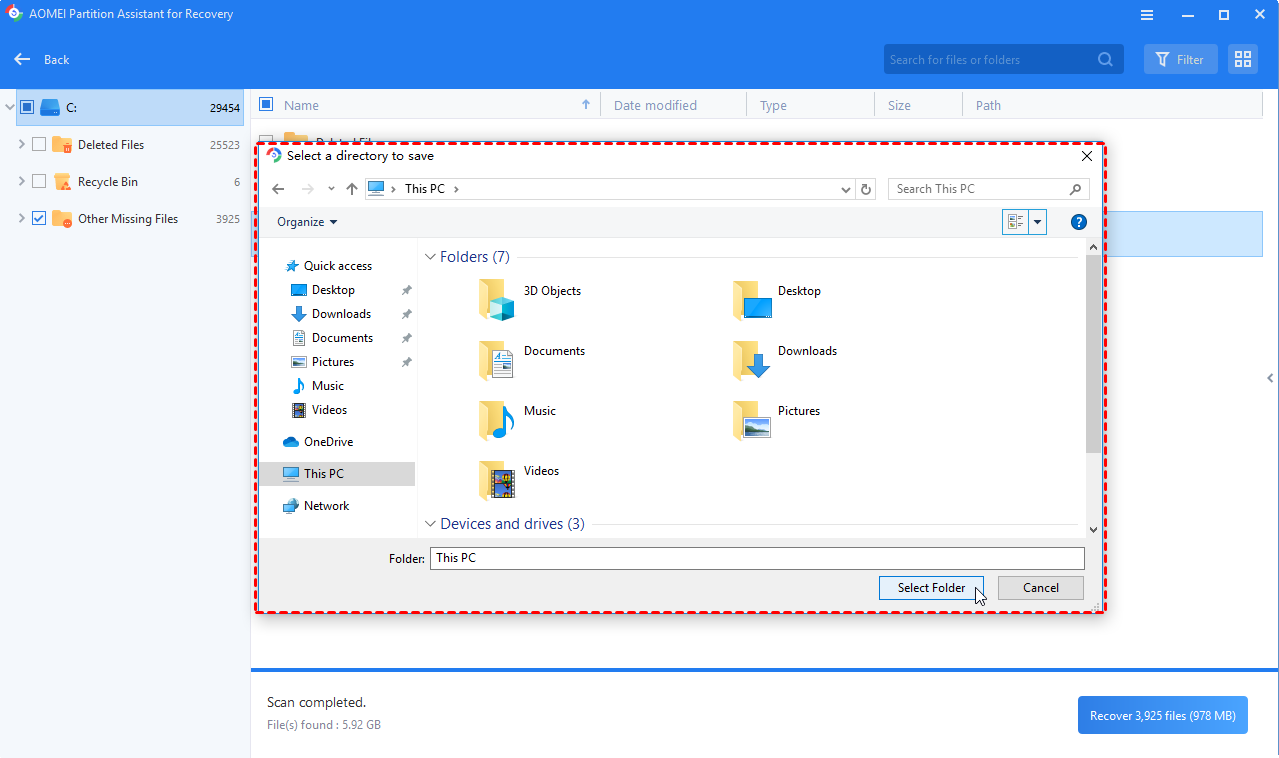
Step 5. Wait patiently for this process of recovering ends.
By following these steps, you can confidently retrieve your valuable data, mitigating the worst consequences of the Windows 11 KB5051987 file explorer problem.
Ending
Dealing with the Windows 11 KB5051987 file explorer problem can be incredibly disruptive, but it's a solvable issue. We've walked through the common symptoms caused by the Windows 11 KB5051987 24H2 update and provided clear, actionable solutions.
By either uninstalling the problematic update or running system repair scans like SFC and CHKDSK, you can restore stability to your File Explorer.
Furthermore, in the unfortunate event of data loss, powerful tools like PartitionAssistant Recovery offer a reliable safety net, ensuring your important files are not gone for good.
