
 PartitionAssistant Cleanup


How to Delete Multiple Files at Once on Windows 10/11
How to delete multiple files at onceWindows 10/11? In this post, you can learn five effective methods to remove these files at one time. Choose the most suitable one as you like.

By Hedy / Updated on July 22, 2025


Can I delete multiple files at once?
Yes, deleting multiple files at once is definitely possible, and it's a common task for managing space or organizing your system. Depending on the operating system and the method you're using, there are different ways to approach this.
The key to deleting multiple files at once lies in how you select them. Most systems allow for bulk selection through simple keyboard or mouse shortcuts, making it much faster than deleting files individually. Whether it's clearing out temporary files, old documents, or duplicates, batch deletion can save time and effort.
However, caution is essential when performing bulk deletions. It’s easy to accidentally select files you don't intend to remove, and once files are deleted, they may not be recoverable unless you have a backup or use recovery tools.
Moreover, some files may be in use or protected by the system, preventing them from being deleted in bulk, which can sometimes lead to errors. Always ensure that you're deleting the right files to avoid unwanted loss of important data.
How to delete multiple files at once on Windows 11/10
If you need to delete several files quickly in Windows, there are several methods you can use. Each approach has its own advantages, depending on whether you want to just remove files or permanently delete them from your system. Here's a look at the most common methods for deleting multiple files at once.
1. Using File Explorer
One of the easiest ways to delete multiple files is through File Explorer. This method allows you to select, delete, and even move files in bulk with just a few clicks.
Step 1. Open File Explorer and navigate to the folder containing the files you want to delete.
Step 2. Press and hold the Ctrl key while selecting each file. This allows you to select multiple files.
Step 3. Once all files are selected, right-click on any one of them and select Delete, or press the Delete key on your keyboard.
Step 4. The files will be moved to the Recycle Bin, from where you can restore them if needed.
2. Using Shift + Delete (permanent deletion)
If you need to permanently delete files without sending them to the Recycle Bin, the Shift + Delete shortcut is your best bet. This ensures that the files are completely removed from your system.
Step 1. Select the files you want to delete as described above.
Step 2. Hold down the Shift key and press the Delete key. This will permanently delete the files without sending them to the Recycle Bin.
Step 3. Confirm the action when prompted.
3. Using Command Prompt
For users who prefer using commands, the Command Prompt offers a way to delete multiple files at once. This method can be quicker for experienced users or those who want to delete files programmatically.
Step 1. Open the Command Prompt by typing cmd in the search bar and selecting Run as Administrator.
Step 2. Use the del command to delete multiple files. For example:
del C:\Users\YourUsername\Documents\*.txt
Step 3. This deletes all .txt files in the specified folder. You can specify wildcards like * to select multiple files at once.
4. Using PowerShell
PowerShell provides a more powerful and flexible way to delete files. This method is especially useful for advanced users who want to automate file deletion or handle more complex tasks.
Step 1. Open PowerShell by searching for it in the start menu.
Step 2. Use the Remove-Item command to delete files. For example:
Remove-Item -Path "C:\Users\YourUsername\Documents\*.txt"
This will delete all .txt files in the specified directory.
5. Using a third-party file cleaner
For those looking for extra functionality, third-party file cleaner tools can help delete multiple files at once and even clean up unnecessary files from your system. PartitionAssistant Cleanup is a professional disk cleaning tool that offers a powerful Cleanup feature, making it easy to delete multiple files at once.
With its user-friendly interface, users can quickly select and remove unwanted files in bulk, saving time and improving system performance. Whether you're cleaning up junk files, large files, or duplicate files, AOMEI Partition Assistant streamlines the process with efficient batch deletion options, helping you free up valuable disk space effortlessly.
 PartitionAssistant Cleanup
Free Up Disk Space To Keep Your PC Running Smoothly and Efficiently
Step 1. Install and launch PartitionAssistant Cleanup. Click the "Clean Junk Files" tab.
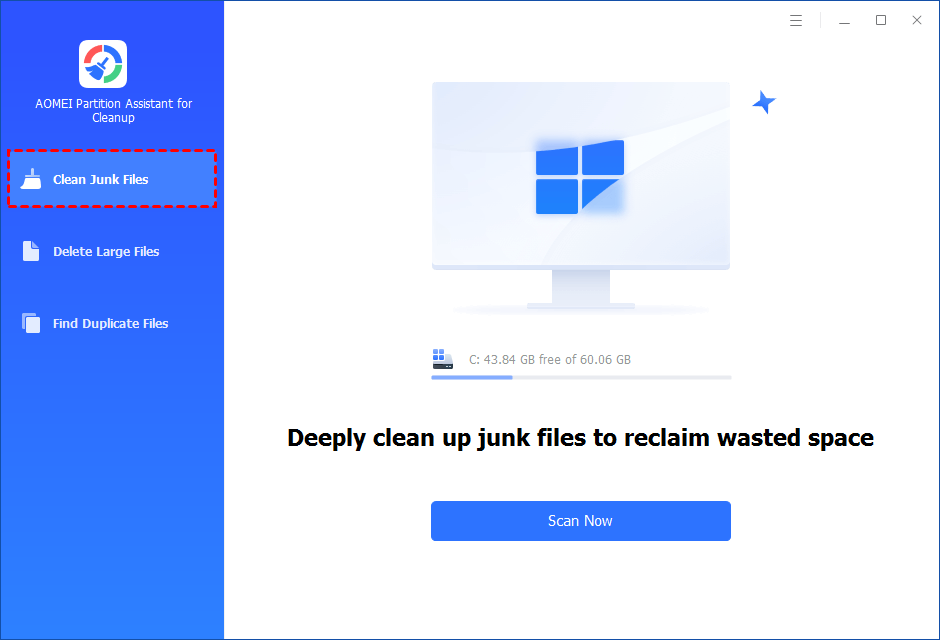
Step 2. Click the "Scan Now" button to start the process of scanning junk files.

Step 3. After the scan process is finished. All system junk files (including recycle bin files, temporary files, log files, invalid shortcuts, and so on) and registry junk files (including DLL registry, system registry, and program registry) will be displayed.
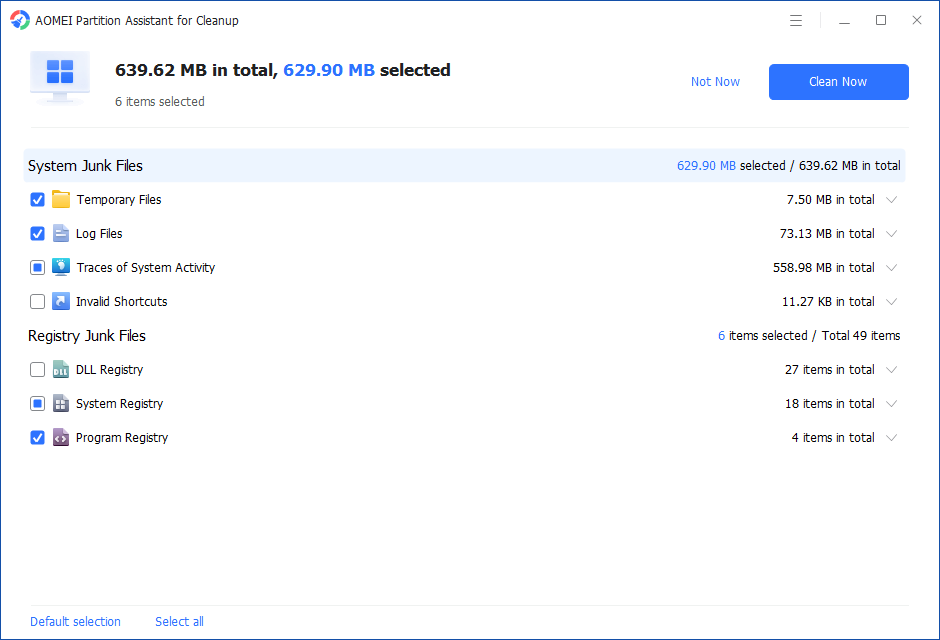
You can also click the button behind to view the junk files details.

Step 4. And, you can click the button behind to locate the file.
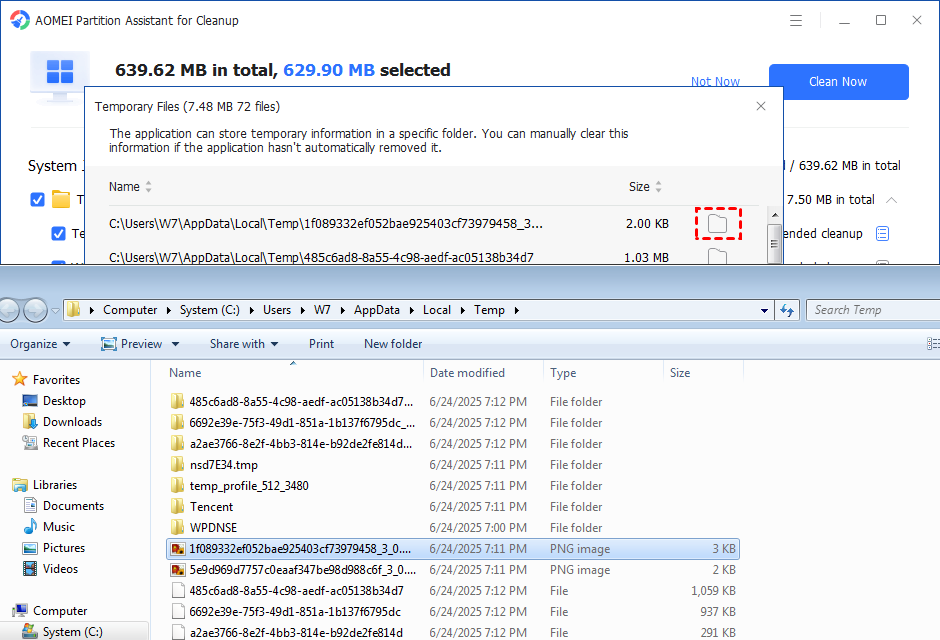
By default, the program will select some junk files to clean up, for example, temporary files, log files, and so on. You can also manually check to select more or uncheck to deselect fewer listed junk files. Or, click "Select All" to select all junk files to clean up if you need to clean up all.
Step 5. After selecting junk files that are not needed anymore, you can click the "Clean Now"button to start the cleanup.

The process of the cleanup might take time, and the selected files will be cleaned up. After the process is finished, you will get a cleanup completed window displaying how many files you have cleaned and not yet cleaned.

Conclusion
Yes, deleting multiple files at once is easy and efficient on Windows 10/11 using methods like File Explorer, Shift + Delete, Command Prompt, PowerShell, or third-party tools. For a professional solution, PartitionAssistant Cleanup offers powerful bulk file deletion, helping users quickly remove junk, large, or duplicate files. This speeds up system performance and frees disk space effortlessly.
