


Top 4 Disk Space Analyzers for Windows PCs
Struggling to find out what's taking up space on your PC? A reliable Windows disk space analyzer can help you quickly identify large files and folders, so you can manage storage more efficiently.

By Gia / Updated on July 10, 2025


How to Choose a Reliable Disk Space Analyzer?
Disk space analyzers are useful tools for monitoring and managing your disk space. They are designed to scan your computer's hard drives and provide a detailed breakdown of how your storage space is being used, often in a visual format.
When you're looking for the best disk space analyzer for Windows PCs, there are several key features you should consider:
📊 Visual Overview: A good disk space analyzer should present data in a clear, easy-to-read visual format.
⚡ Scanning Speed: A fast and efficient scanning process is crucial, especially if you have large or multiple hard drives.
🔍 Filtering and Sorting Options: The ability to filter and sort results helps you quickly locate large or unnecessary files.
🖱️ User-Friendly Interface: The software should be intuitive and easy to navigate, even for users who aren't tech-savvy.
Top 4 Windows Disk Space Analyzers
Based on the key features outlined above, we’ve compiled a list of 4 recommended disk space analyzers for Windows PCs. Each tool comes with its own pros and cons, so you can choose the one that best fits your needs.
Option 1. Storage Sense
Storage Sense is a built-in feature in Windows 10/11 to analyze disk space. It's a handy tool that not only helps you visualize disk usage but also automates the process of freeing up space by deleting temporary files, old downloads, and items in your Recycle Bin. You can enable it by navigating to Start > Settings > System and Storage.
While not as graphically detailed as some dedicated tools, it's a good way to check disk space in Windows.

✔️ Pros:
• No need to download or install anything extra.
• Supports automatically deleting useless files to free up space.
• Simple interface, making it accessible for all users.
❌ Cons:
• Doesn't offer the detailed treemap or sunburst visualizations.
• Fewer options for advanced users to fine-tune scanning and cleaning.
💰 Price: Free (included with Windows 10/11)
Option 2. WinDirStat
WinDirStat is a popular, open-source Windows disk space analyzer. It features a unique graphical display called a "treemap," where files and folders appear as colored rectangles sized proportionally to their actual disk usage. This visual layout makes it easy to quickly view disk usage and identify large files and folders.
✔️ Pros:
• The treemap view makes it easy to identify disk usage at a glance.
• Provides a lot of detailed information about files, including their paths, sizes, and last modified dates.
• Allows you to filter results by file type.
❌ Cons:
• The user interface looks a bit dated compared to more modern applications.
• Does not offer any automated cleaning features; you have to manually delete files.
• Slower initial scans, especially on drives with large amounts of data.
💰 Price: Free
Option 3. TreeSize
TreeSize is another excellent Windows disk space analyzer that quickly scans and visualizes disk usage with a clean, intuitive interface. It provides a free version, but the paid versions include advanced features like network drive scanning, detailed reporting, and powerful filtering options.
✔️ Pros:
• Known for its quick scanning performance.
• Provides a clear, expandable tree view of folders and subfolders.
• It supports scanning network drives, cloud storage, and external storage devices.
• Integrates with Windows Explorer for easy access.
❌ Cons:
• The filter feature is lacking.
• Many powerful features like network scanning, advanced reporting, and duplicate file finding are only available in the paid versions.
💰 Price:
• TreeSize Free: Free
• TreeSize Personal: $30.95 (one-time purchase)
• TreeSize Professional: $64.95 (one-time purchase)
Option 4. SpaceSniffer
SpaceSniffer is a free and portable Windows disk space analyzer that helps users visualize how their storage is being used. It uses a treemap visualization where files and folders are displayed as dynamically sized rectangles. The size of each rectangle corresponds to the file or folder’s actual disk usage, allowing users to quickly identify space hogs.
✔️ Pros:
• No installation required, making it easy to run on any Windows PC.
• Offers a clear and interactive treemap that quickly highlights large files and folders.
• Scans drives quickly and efficiently.
• Allows you to filter results by file type or size.
❌ Cons:
• Does not include cleaning or file management features.
• No options for generating detailed reports.
• The interface may be slightly confusing for absolute beginners.
💰 Price: Free
Pro Tips: Clean Up Disk Space for Free
After using a Windows disk space analyzer to identify what's taking up your storage, the next step is to free up that space. While manually deleting files is an option, a more convenient and efficient approach is to use professional software to remove junk files, system caches, and other unnecessary data.
One of the most effective and user-friendly tools for this task is PartitionAssistant Cleanup. This powerful and versatile disk management utility can scan for various types of junk files and present a clear overview of what can be safely removed, ensuring you don’t accidentally delete important system files.
 PartitionAssistant Cleanup
Free Up Disk Space To Keep Your PC Running Smoothly and Efficiently
A Step-by-Step Guide to Using PartitionAssistant Cleanup to Clean Up Disk Space :
Step 1. Install and launch PartitionAssistant Cleanup. Click the "Clean Junk Files" tab.
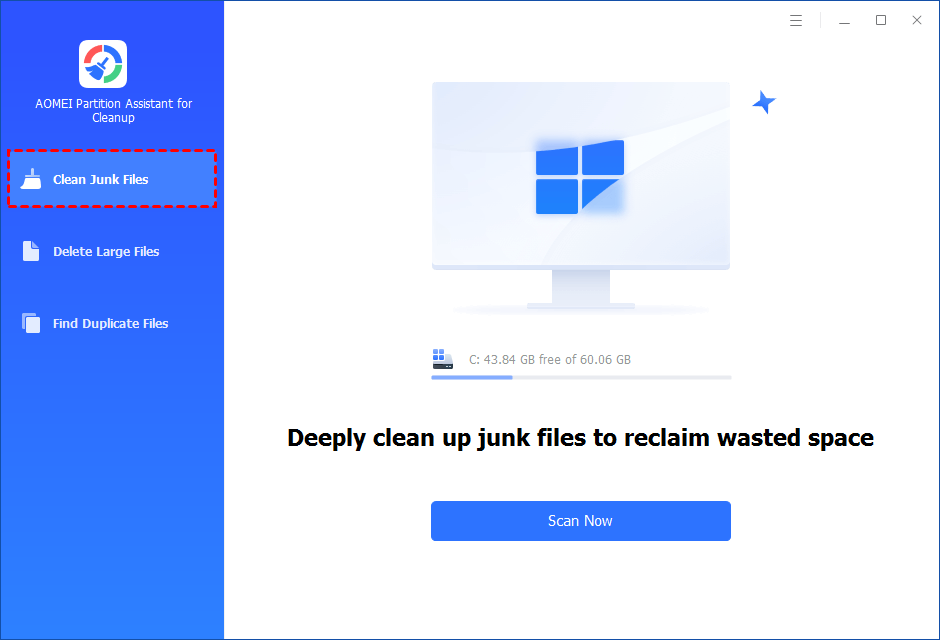
Step 2. Click the "Scan Now" button to start the process of scanning junk files.

Step 3. After the scan process is finished. All system junk files (including recycle bin files, temporary files, log files, invalid shortcuts, and so on) and registry junk files (including DLL registry, system registry, and program registry) will be displayed.
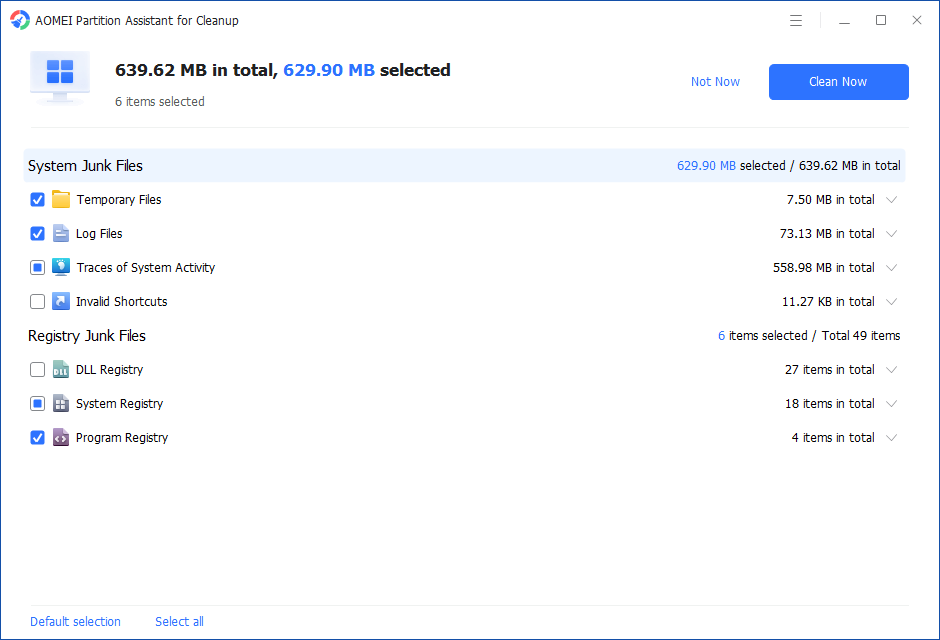
You can also click the button behind to view the junk files details.

Step 4. And, you can click the button behind to locate the file.
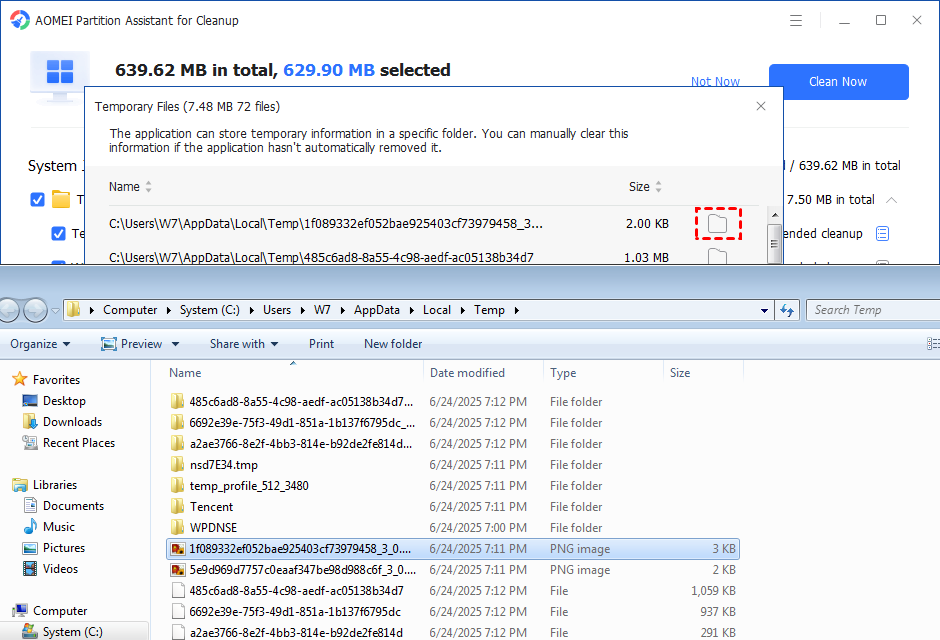
By default, the program will select some junk files to clean up, for example, temporary files, log files, and so on. You can also manually check to select more or uncheck to deselect fewer listed junk files. Or, click "Select All" to select all junk files to clean up if you need to clean up all.
Step 5. After selecting junk files that are not needed anymore, you can click the "Clean Now"button to start the cleanup.

The process of the cleanup might take time, and the selected files will be cleaned up. After the process is finished, you will get a cleanup completed window displaying how many files you have cleaned and not yet cleaned.

Final Thoughts
A good disk space analyzer allows you to identify what's eating up your storage space quickly. In this post, we've outlined four recommended disk space analyzers for Windows PCs.
Remember, checking your disk space is only half the battle. Tools like PartitionAssistant Cleanup offer a simple yet powerful solution for cleaning up disk space. By regularly using a top disk space analyzer and a reliable cleaner, you can easily manage your storage and enjoy a faster computing experience.
