PartitionAssistant NTFS for Mac
Solved: Cannot Copy File From Mac to USB? Here Is the Fix
Can't copy files to USB Mac? Fix the read-only error now. This guide covers troubleshooting tips and introduces PartitionAssistant, the best tool to write to NTFS drives on macOS 12+.

By Lucas / Updated on March 2, 2026


Transferring data between computers and external storage devices should be a seamless task. However, for Apple users, a simple drag-and-drop operation can sometimes turn into a source of immense frustration. You plug in your flash drive, select your documents or photos, and attempt to move them, only to find that you cannot copy file from Mac to USB. The file might bounce back to its original location, or you might see a "prohibited" sign when hovering over the drive.
If you are stuck in this situation, do not panic; your drive is likely not broken. This article will analyze the root causes of why users can't copy files to USB Mac systems and provide authoritative, step-by-step solutions to resolve the issue effectively.
Why Cannot I Copy Files to USB on Mac?
To apply the correct fix, we must first diagnose the underlying cause. When you encounter a situation where you cannot copy file from Mac to USB drive, it is rarely a hardware failure. Instead, it is usually a software permission issue or a file system limitation.
Here are the most common reasons why this operation fails:
Incompatible File System (the most possible): Most USB drives come pre-formatted with NTFS (New Technology File System), which is the standard for Windows. Mac OS can read NTFS drives (meaning you can view files), but Apple restricts native write access. This means you cannot copy new files to the drive, edit existing ones, or delete data.
Permission Restrictions: Even if the file system is compatible, the drive's permission settings might be set to "Read Only" for your specific user account.
The 4GB Limitation (FAT32): If your drive is formatted as MS-DOS (FAT32), it has a strict file size limit. You cannot copy any single file larger than 4GB to it, regardless of how much free space is available.
Drive Corruption: If the USB drive was pulled out without "Safe Ejection" previously, the file system might be logically corrupted, causing mac OS to mount it as read-only to protect the data.
Troubleshooting [Can't Copy Files to USB Mac] with System Tools
Before installing new software, it is wise to rule out basic settings and minor corruption issues. If you can't copy files to USB Mac, follow these standard troubleshooting steps using macOS built-in utilities.
Method 1: Check Permissions via "Get Info"
If the drive is formatted for Mac (APFS or HFS+) but still blocks file transfers, it might be a permission error.
Step 1. Connect the USB drive to your Mac. Right-click (or Control-click) on the USB drive icon on your desktop or in Finder.
Step 2. Select "Get Info".

Step 4. Scroll down to the "Sharing & Permissions" section. If you see a lock icon, click it and enter your admin password to make changes.
Step 5. Check the box that says "Ignore ownership on this volume". This forces the Mac to treat you as the owner, potentially resolving the inability to copy files.
Method 2: Repair the Drive with Disk Utility
If the drive has minor file system errors, macOS might lock it. Disk Utility can fix this.
Step 1. Go to Applications > Utilities > Disk Utility. Select your USB drive from the left sidebar.
Step 2. Click the "First Aid" button at the top.
Step 3. Click "Run". If Disk Utility finds and repairs errors, try copying your file again.
Method 3: Enable NTFS on Mac via professional tool
If you check your drive format and see "Windows NT File System (NTFS)," no amount of tinkering with Mac settings will allow you to copy files natively. This is the most common reason why users cannot copy file from mac to USB. To solve this without formatting the drive (and erasing your data), you need a professional NTFS driver.
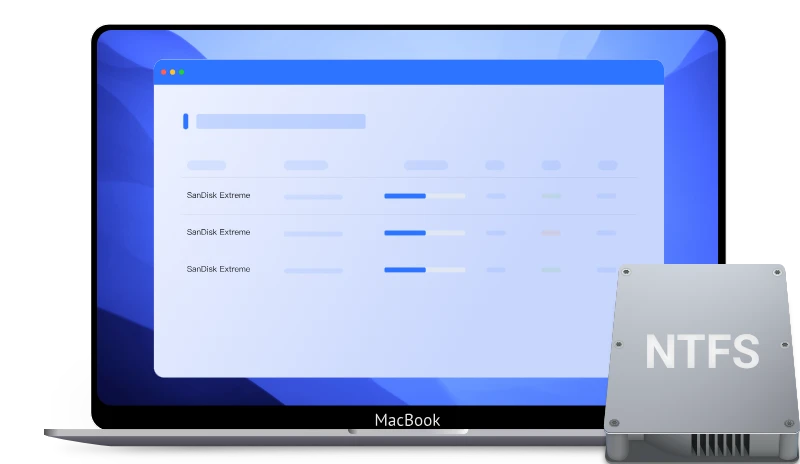
PartitionAssistant NTFS for Mac is the authoritative solution for this scenario. It acts as a bridge, instantly enabling full read-write capabilities for Windows-formatted drives on your Mac.
 100% Secure
Total File Control: It allows you to read, write, delete, rename, and move files and folders on NTFS drives directly within macOS Finder.
Universal Compatibility: It supports a wide range of storage media, including HDD, SSD, USB flash drives, SD cards, and CF cards.
Broad System Support: It manages NTFS (Windows NT 3.1–11) as well as FAT32 and exFAT file systems.
Modern Architecture: It is fully compatible with macOS 12 and later, running natively on both Intel and Apple Silicon (M1/M2/M3) Macs.
Tip: You need to configure Security Policy in iOS Recovery Mode to set the access permission to third-party tool.
Step 1. Run PartitionAssistant NTFS for Mac and connect your USB. The connected, removable, and external drives will be mounted and listed.
Step 2. Click the three dots of the target USB drive, select "Enable Writable“.
Step 3. Now you can copy files on your Mac and click "Paste Item" to copy the files to your USB.
Step 4. After all operations are complete, please click "Eject" to disconnect the USB from your Mac. And your Mac can still read other NTFS devices.
Method 4: Reformat USB Drive
If you do not wish to use third-party software and you do not care about the existing data on the USB drive, you can reformat it to a file system that both Mac and Windows can read/write natively, such as exFAT.
Warning: This process will erase all files currently on the USB drive.
Step 1. Open Disk Utility. Select your USB drive.
Step 2. Click "Erase". In the Format dropdown, select "exFAT".
Step 3. Click "Erase". Once the process is finished, you will be able to copy files, but any previous data is lost.
Method 5: Run First Aid to Repair USB Drive
Using the First Aid tool on your USB drive is an efficient way to fix issues that cause you to be unable to copy files to a USB Mac. This method helps you search for and fix any faulty errors on the disk, improving its reliability and removing obstacles to file transfers.
Step 1. Launch "Disk Utility" from the "Utilities" folder under your Mac's "Applications."
Step 2. Select the USB device in Disk Utility. On the top panel, press the "First Aid" button.
Step 3. When prompted, click "Run" to allow First Aid to repair the drive. Once finished, click "Done" to exit.
Method 6: Update Your Mac OS
It’s very helpful to upgrade mac OS if you can't copy files to a USB Mac since it ensures that your system has the most recent compatibility and performance advancements for external devices.
Step 1. Go to the Apple menu and choose "System Preferences."
Step 2. Select "Software Update."
Step 3. If updates are available, select "Update Now."
Conclusion
The frustration of discovering you cannot copy file from Mac to USB is usually caused by the file system incompatibility between Apple's mac OS and Microsoft's NTFS. While native system tools like Disk Utility can fix minor corruption, they cannot natively unlock write access for NTFS drives.
For a seamless experience that protects your data and workflow, PartitionAssistant NTFS for Mac is the recommended solution. It solves the cannot copy file from Mac to USB drive issue instantly by granting full read-write permissions. Whether you are using the latest M2 MacBook or an older Intel model, this tool ensures you can manage your files freely across platforms without the need for destructive reformatting.
FAQs
Q1: Why does my USB drive work on Windows, but I cannot copy files to it on Mac?
A: This is because the drive is formatted with NTFS, the Windows standard. macOS can read NTFS drives (view files) but cannot write to them (copy/edit files) natively. You need software like PartitionAssistant NTFS for Mac to enable write access.
Q2: I have 50GB of free space, but I can't copy a 6GB video file to my USB. Why?
A: If your drive is formatted as MS-DOS (FAT32), it has a limitation where no single file can be larger than 4GB. To fix this, you need to use an NTFS drive (with PartitionAssistant) or format the drive to exFAT.
Q3: Will PartitionAssistant NTFS for Mac work on the new macOS Sonoma?
A: Yes. PartitionAssistant NTFS for Mac is fully optimized for macOS 12 and later, including the latest updates like Ventura and Sonoma. It also runs natively on Apple Silicon chips (M1, M2, M3).
Q4: Is it safe to use third-party software to write to NTFS drives?
A: Yes, provided you use reputable professional software. PartitionAssistant uses stable drivers to ensure data integrity during transfers and includes a "Safe Eject" feature to prevent corruption when you unplug the drive.
Q5: Can I just change permissions in 'Get Info' to fix an NTFS drive?
A: No. On an NTFS drive, the "Read-only" status is a driver-level restriction, not a simple permission setting. You cannot change it via the "Get Info" window; you must use NTFS driver software.