AOMEI Partition Assistant
[Solved] Is SSD Good for Long Term Storage?
Is SSD good for long term storage? This article explores that question by examining past and current perspectives, focusing on key factors like temperature sensitivity, read/write cycles, and memory charge retention.

By Hedy / Updated on July 30, 2025


Is SSD good for long term storage?
When considering an SSD for long-term storage, durability and lifespan are crucial factors. SSDs offer several compelling advantages that make them a strong choice for extended use. Below are the key benefits:
1. Durability and reliability
SSDs are free of moving parts, which eliminates issues like head crashes or mechanical failures. They’re also immune to magnetic interference, allowing them to maintain stable performance even under challenging conditions. Additionally, their lack of moving components results in lower operating temperatures.
2. Speed
With rapid startup and impressive data transfer speeds, SSDs excel in performance, especially when accessing large amounts of data. This makes them a superior option for tasks requiring quick access to information.
3. Power efficiency
Since SSDs have no moving parts, they consume less power compared to traditional hard drives. This energy efficiency makes them ideal for meeting the power demands of modern PCs while reducing energy consumption.
4. Quiet operation
The absence of moving parts also means that SSDs operate silently, making them a quieter storage solution compared to conventional hard drives.
Given these benefits, SSDs are an excellent choice for long-term storage. However, it’s also important to consider the potential downsides.
What is the best SSD storage for long term data storage?
This guide presents five top SSDs, highlighting their prices, capacities, and key features. Use this information to determine which SSD best fits your needs.
1. WD Blue SN570
Western Digital offers a diverse range of storage solutions, and the WD Blue SN570 is no exception. As the third iteration of its SSD series, it boasts enhanced data handling capabilities, making it a strong contender for those seeking reliable performance.

2. Acer Predator GM7000
Acer’s Predator GM7000 is their inaugural PCI Express 4.0 SSD, offering exceptional performance across the board. With read speeds of up to 7400MB/s and sequential write speeds of 6700MB/s, it’s ideal for gamers. Additionally, it features AES encryption and supports a 2TB storage capacity.

3. Samsung SSD 980
The Samsung SSD 980 strikes a balance between price and performance. Offering performance that’s five to six times faster than older SATA SSDs, it’s available at a similar price point. It also supports hardware encryption and is backed by a five-year warranty.

4. WD Black SN850 NVMe SSD (with heatsink)
Designed to handle demanding workloads, the WD Black SN850 features a built-in heatsink to manage its high power requirements. Capable of reaching speeds up to 7,000MB/s, it’s available with or without the heatsink. It’s also compatible with PlayStation 5, making it a versatile choice for both gaming and general use. A five-year warranty adds extra value.

5. Samsung 870 QVO SATA
The Samsung 870 QVO is a second-generation QLC SSD, offering up to 8TB of storage. It excels at handling tasks like photo and video editing, offering an excellent price-to-performance ratio and a three-year warranty.

How to clone data to SSD for long term storage
Cloning data to an SSD for long-term storage is a great way to ensure your data is safe, easily accessible, and performs well.If you're planning to transfer your important data to an SSD for long-term storage, AOMEI Partition Assistant is a reliable and user-friendly tool to help you get the job done efficiently and safely.
AOMEI Partition Assistant is a powerful disk management software designed for both beginners and advanced users. One of its most popular features is Disk Clone, which allows you to clone your entire hard drive or specific partitions to another disk—like an SSD—without data loss.
Why use AOMEI Partition Assistant to clone data to SSD?
◆ Easy-to-use interface: Its step-by-step wizard makes it easy to clone disks even if you’re not tech-savvy.
◆ Supports all disk types: Whether you're cloning from HDD to SSD, SSD to SSD, or MBR to GPT, AOMEI handles it all.
◆ Sector-by-sector or intelligent clone: Choose between cloning every byte (for exact backups) or cloning only used space (for faster transfers).
◆ Includes SSD optimization: AOMEI aligns partitions automatically during cloning to enhance SSD performance and lifespan.
◆ Safe and stable: Your data stays intact, ensuring a worry-free migration process.
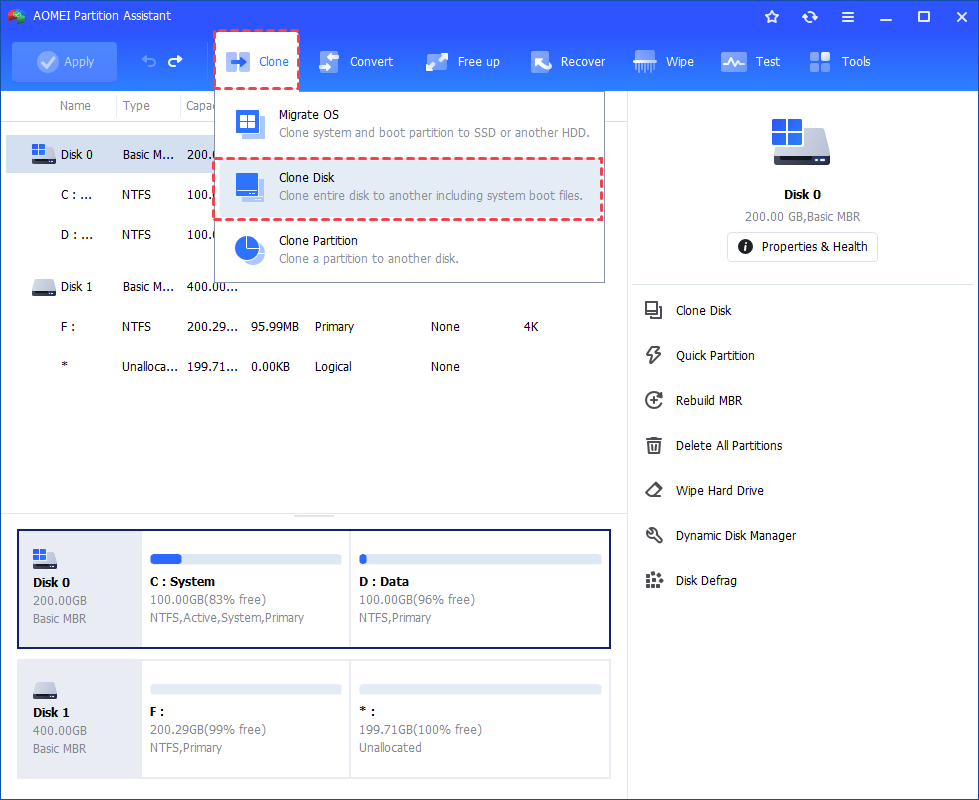
Step 1. Install and open AOMEI Partition Assistant. Click "Clone" in the main interface, and select "Clone Disk".
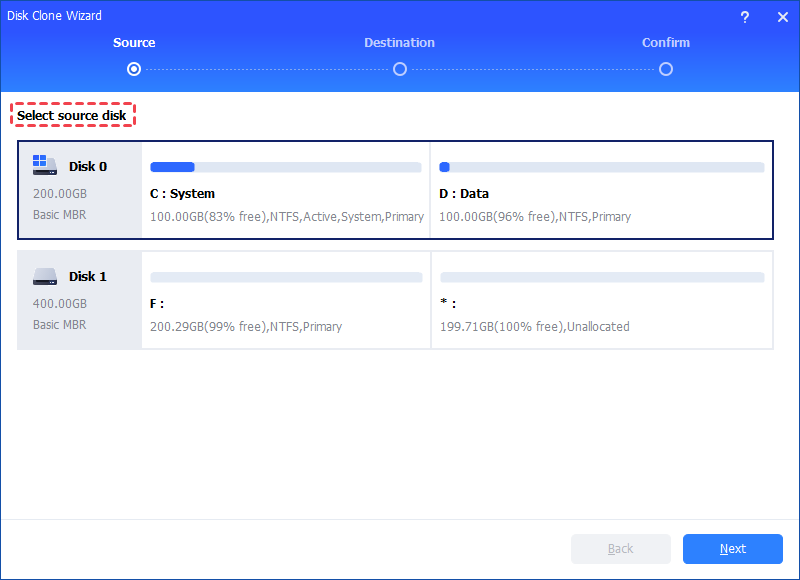
Step 2. Choose the hard disk that you need to clone as the source disk and click "Next".
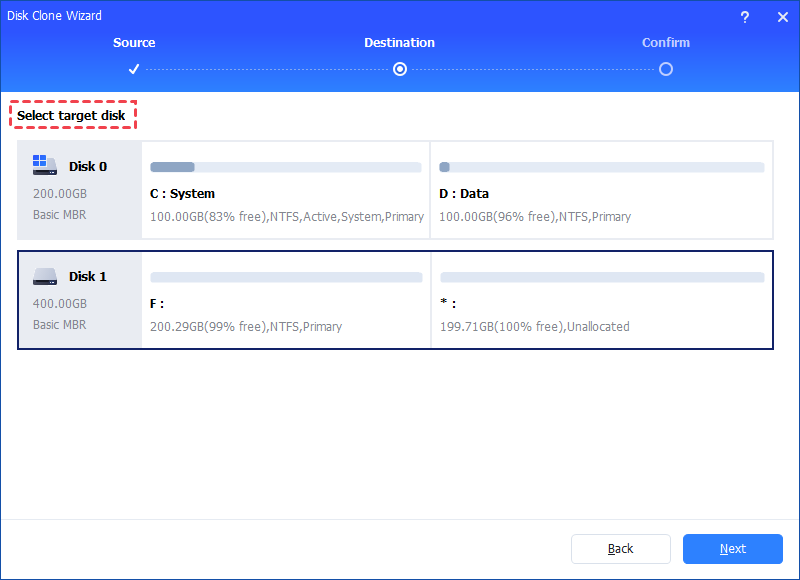
Step 3. Select another drive as the destination disk, and then click "Next".
Step 4. Then, you can check the source and destination disk in the next window or change to "Sector to Sector clone", and click the "Confirm" button to continue if there is no problem.
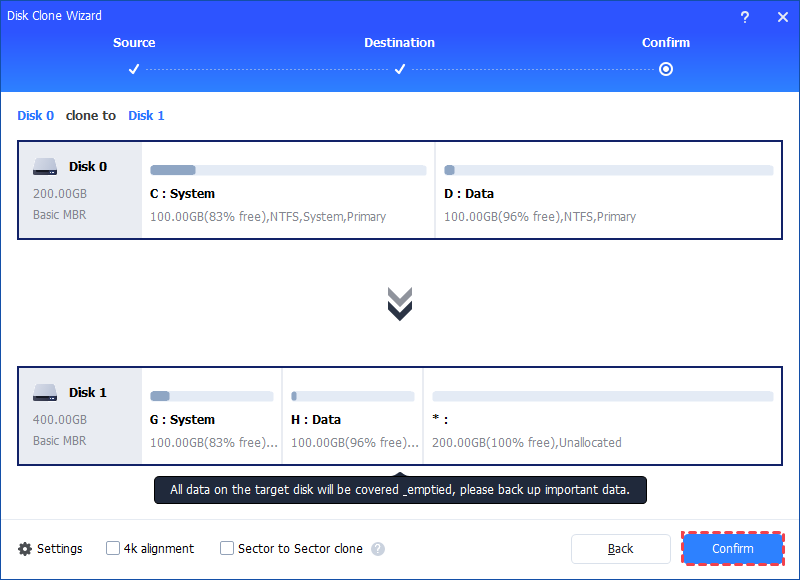
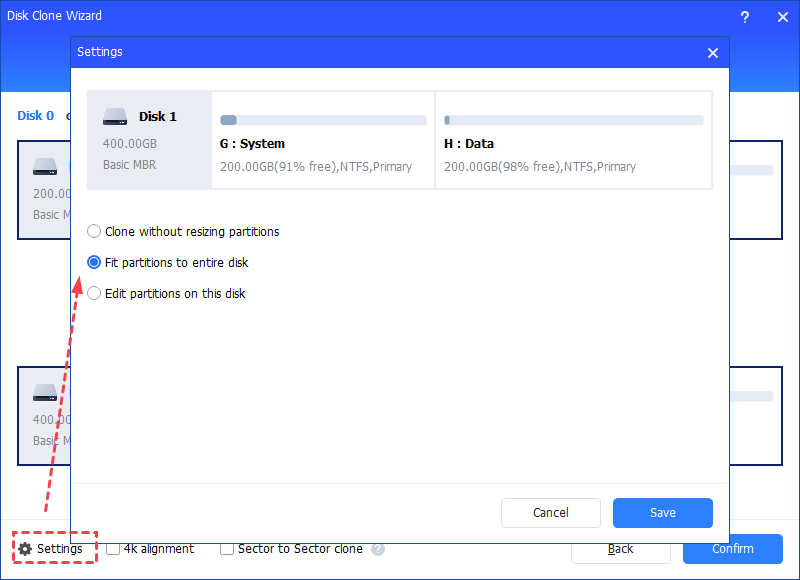
Here, you can also click the "Settings" button to adjust the partition size on the destination disk or tick "4k alignment" to improve the reading and writing speed of the SSD.
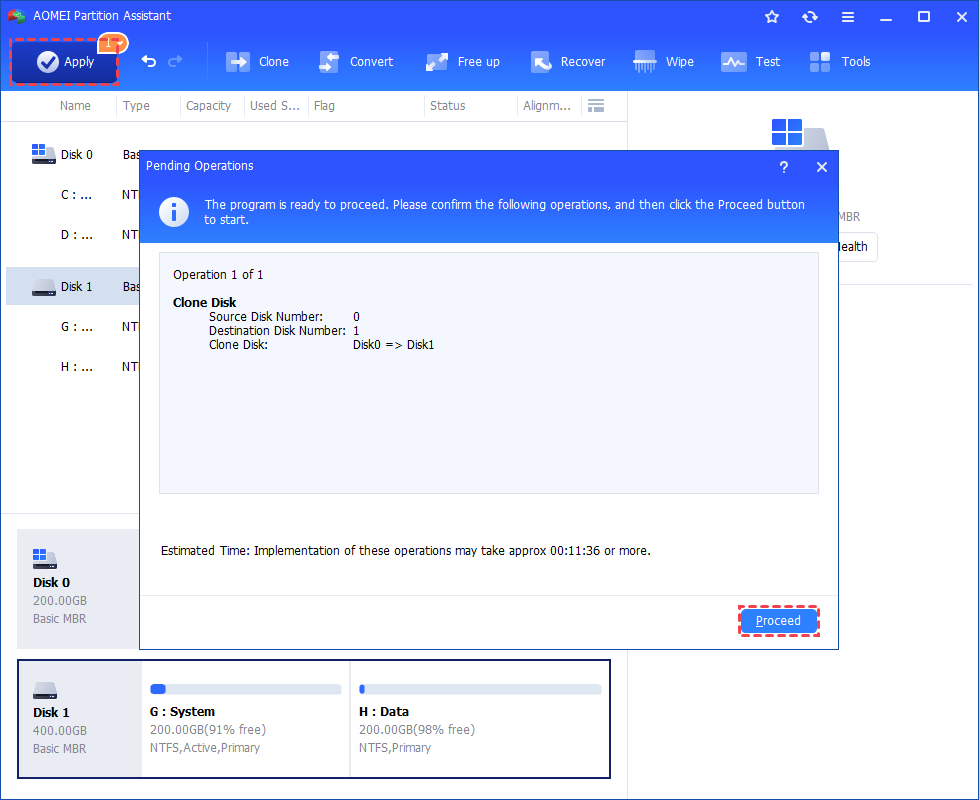
Step 5. After returning to the main interface, check the pending operation and click "Apply" and "Proceed" to commit the operation.
Conclusion
Overall, SSDs are an excellent choice for everyday storage compared to traditional HDDs. However, they may not be the best option for long-term data storage, especially when powered off. That said, with continuous advancements in technology, SSDs could soon become the top choice for long-term storage, whether in active use or idle.