AOMEI Partition Assistant
Where Are Temporary Files Stored? Here is the Hidden Folder Location
Temporary files are typically stored in C:\Users\User\AppData\Local\Temp and C:\Windows\Temp. This guide provides step-by-step instructions to access these folders, safely delete useless data, and use recovery tools for lost files.

By Irene / Updated on January 30, 2026


-
PC temp files location: In Windows 10/11, temporary files are primarily stored in two folders:
C:\Windows\Temp(System temp files)
C:\Users\[YourUsername]\AppData\Local\Temp(User temp files)
-
Is it safe to delete? Yes.These files are only needed while a program is open. Once closed, they become junk that slows down your PC.
-
How to clean temp files: You can delete them manually by running the %temp% command, using the built-in Disk Cleanup tool, or performing a 1-click deep scan with AOMEI Partition Assistant.
Where are Temporary files stored?
If you use a computer, you might have come across the term "temporary files." Let’s explore what these files are, including how they are named, where they are usually stored, how to delete them, and whether deleting them is safe. In Windows 10, for example, most temporary files are stored in a folder called "Temp." However, the exact location of this folder can vary depending on the computer and user.
Where are temporary files stored? Temporary files are typically located in one of these directories:
- C:\Windows\Temp
- C:\Users[Your Username]\AppData\Local\Temp
When you try to access the C:\Windows\Temp folder, you might see a message saying, "You don’t currently have permission to access this folder. Click Continue to permanently get access to this folder." By clicking "Continue," you can open the folder and view its contents.
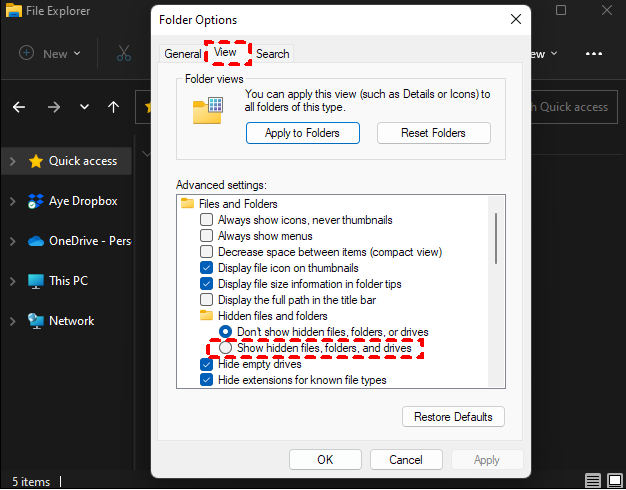
Alternatively, you can navigate to C:\Users[Your Username]\AppData\Local\Temp to find temporary files. If the Temp folder isn’t visible, it may be hidden. To show hidden files in Windows 11 and 10, you’ll need to enable the "Show hidden files" option.
Is it safe to delete temp files?
Temporary files are created by various applications and processes on your Windows PC to temporarily store data while specific tasks are being carried out. These may include cache files, log files, downloaded updates, and other similar data. Although these files are useful during their intended tasks, they become unnecessary once the task is complete. If not removed, they can accumulate, clutter your storage, and potentially affect your computer's performance.
Deleting temporary files is generally both safe and beneficial. These files are not essential for your device or applications to function, and removing them can help free up storage space and improve your system's overall performance.
Regularly clearing temporary files offers several advantages. It frees up storage space, allowing you to make room for important files and applications. It also enhances system performance by preventing a buildup of unnecessary files that could slow down your computer. Additionally, deleting temporary files can protect your privacy, as some of them might contain sensitive information, such as browsing data or cached login details.
How to clear temp files and folders?
To find and delete temp files and folders, you will have 4 choices. Please follow these steps to find where are temp files stored and how to safely clean up to free up space for your Windows 10 and 11.
Method 1. Use a handy tool
To effectively clean up temporary files, it's often necessary to use multiple tools, as manually removing all temp and junk files is impractical. In this situation, a dedicated cleanup tool can be incredibly helpful. AOMEI Partition Assistant is a great option. This free disk and partition manager works with Windows 11, 10, 8, 8.1, and 7, providing users with an efficient way to manage disk space and system resources.
One of its standout features is the "PC Cleaner" function. This feature thoroughly scans your disks and system to locate and filter out junk files, even those hidden deep within your system. After the scan, you can review the results and initiate a complete cleanup with just one click.
 AOMEI Partition Assistant
The Best Windows Disk Partition Manager and PC Optimizer
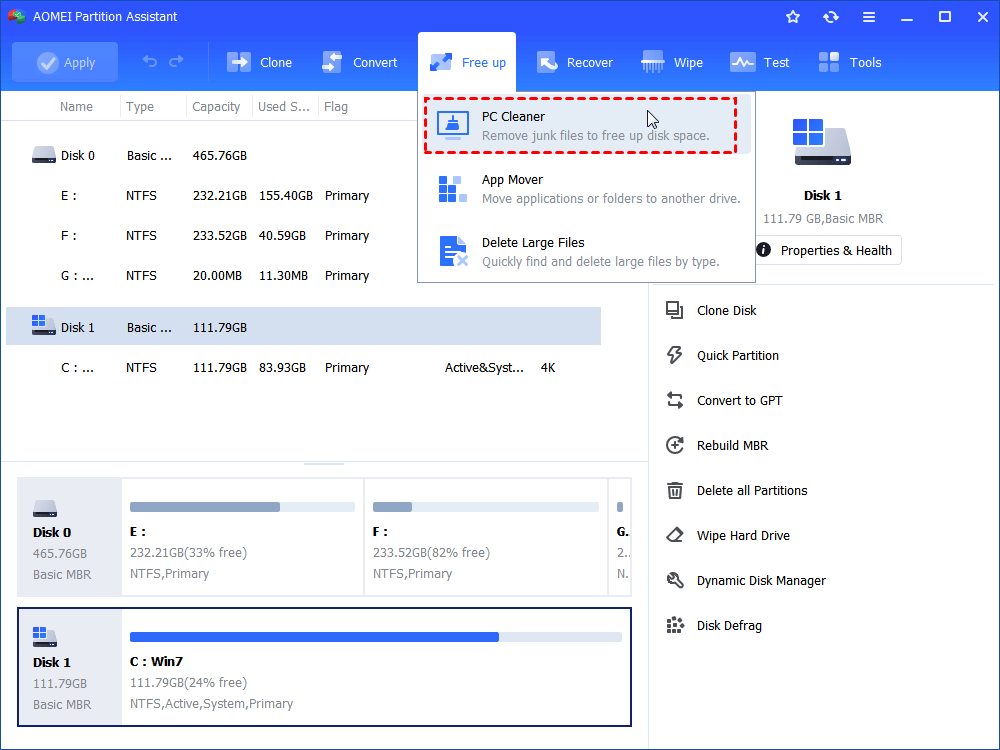
Step 1. Click "Free up" and "PC Cleaner" at the top menu.
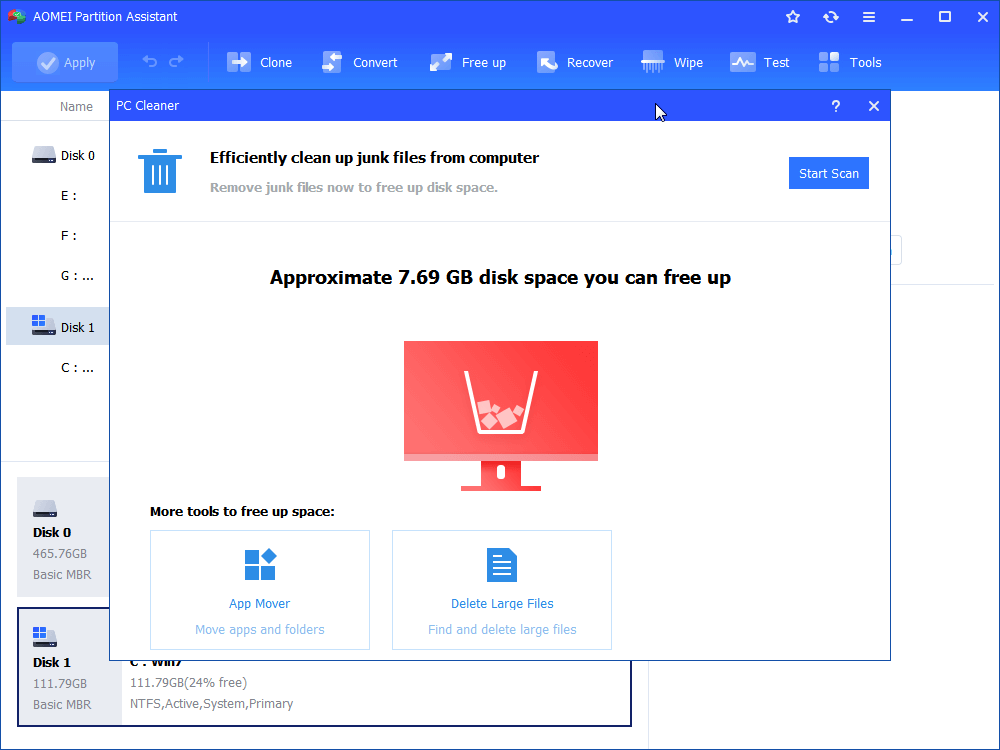
Step 2. Then, click "Start Scan" in the new pop-up window.
Step 3. After that, you can see temp files under System Junk Files. Tick it and click “Clean All” to delete it.
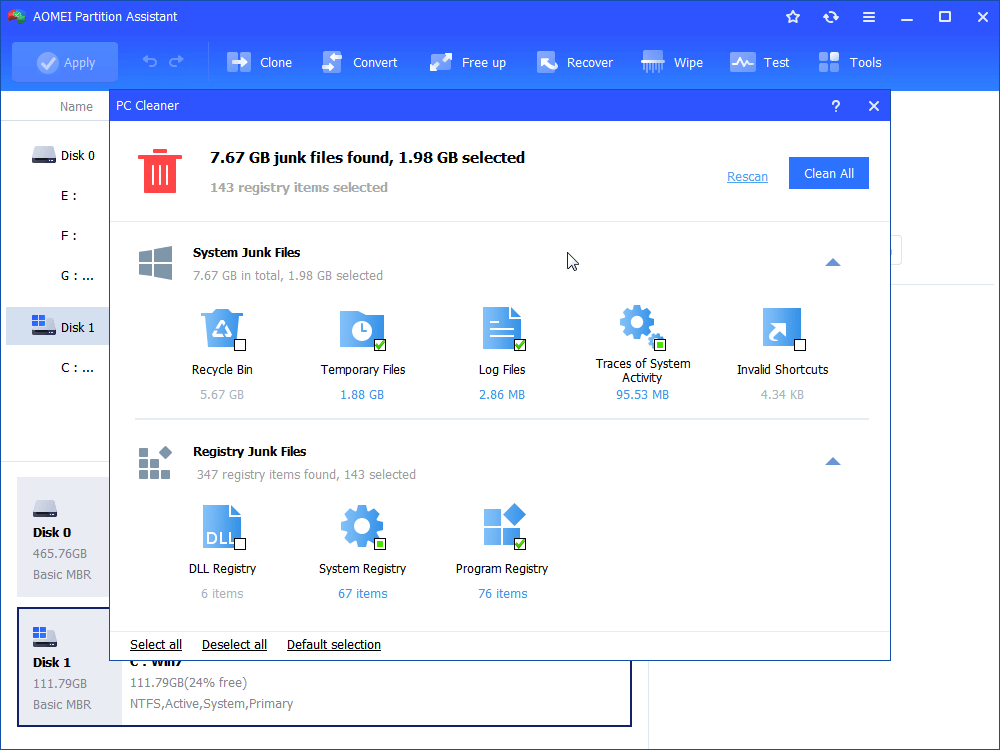
Step 4. When you see a correct symbol displayed in the interface, you can click "Back" to leave the function.
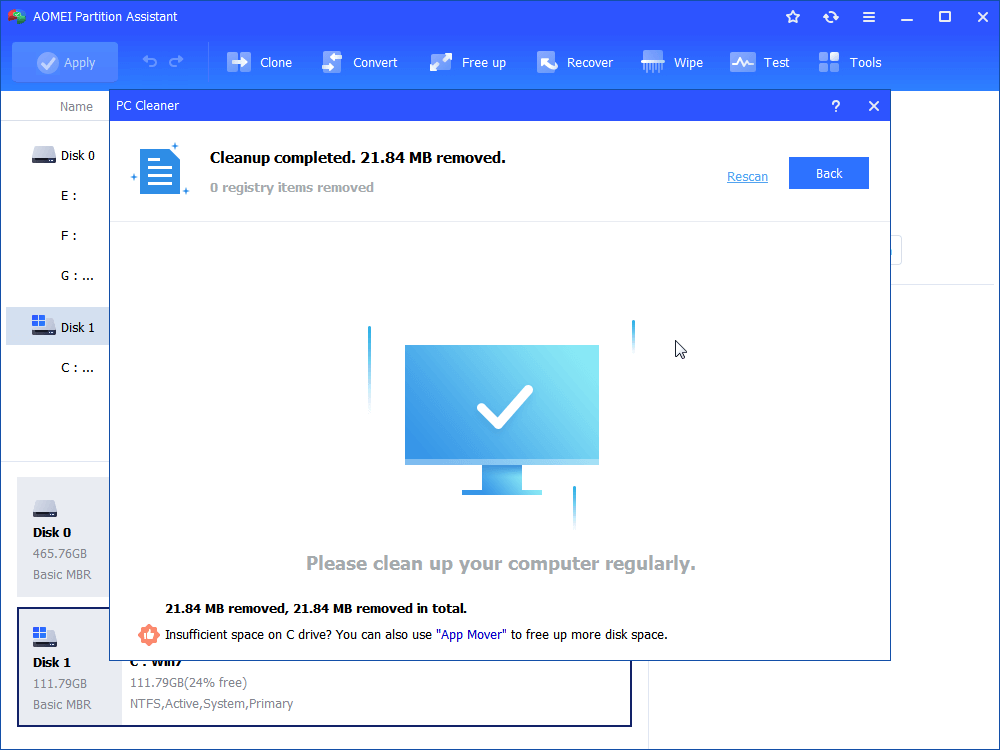
1. Delete large files: This function can scan and delete large files from the deep storage location on your PC.
2. App Mover: This function can move installed programs from current location to another between partitions and disks.
Method 2. Manually clean up temp files
You can manually delete temporary files in the traditional way, please refer to the following steps:
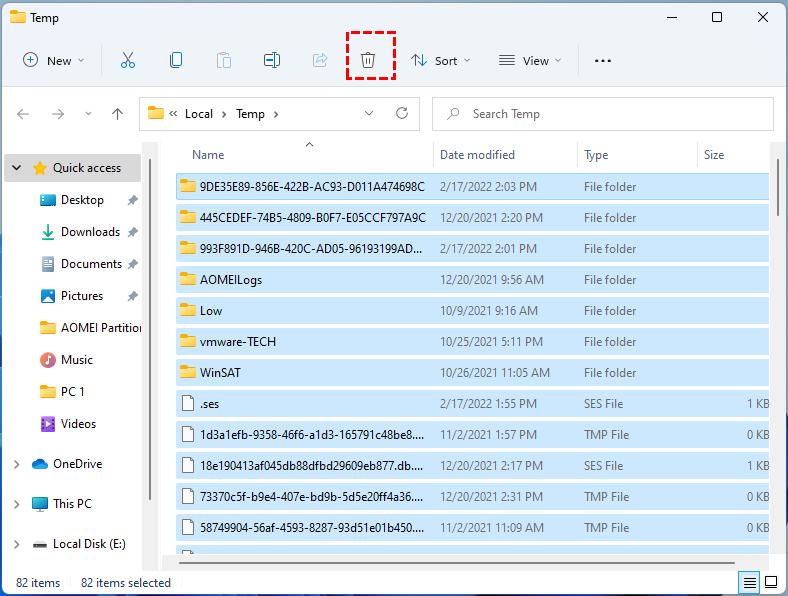
Step 1. Press “Windows + R”, type in “%temp%” and hit Enter.
Step 2. Here, you can select the temp files and delete them.
Method 3. Run Disk Cleanup to find and clear temp files
Windows provides a built-in "Disk Cleanup" tool that makes it easy to find and delete temporary files. Here's how to use it:
Step 1. Type "Disk Cleanup" in the search bar and press "Enter".
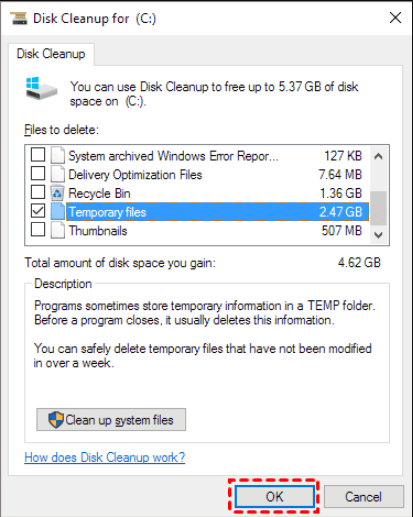
Step 2. Select the target drive and click“OK”.
Step 3. Then, tick the Temporary files and click "OK" to delete them.
Method 4. Clear temp files in Windows 10 and 11 via CMD
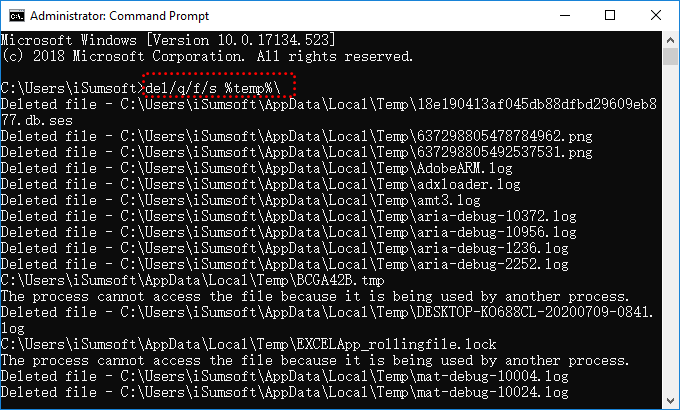
Delete temporary files in Windows with Command Prompt will permanently remove those files. They won’t be stored in Recycle Bin, so you need to make sure you choose the right files.
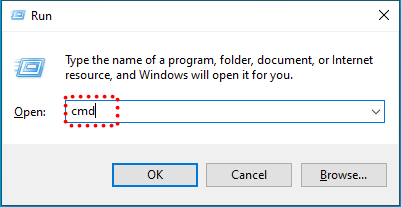
Step 1. Open “CMD” or “Command Prompt” from either the “Start” menu or by entering the code “cmd” in the Run Dialog Box and then pressing the “Enter” key from the keyboard.
Step 2. In the CMD window, write down the command “del /q/f/s %TEMP%\*” and press Enter.
/q performs the operation without prompting for confirmation /f ignores the read-only attribute and forces deletion /s deletes content from all subfolders
Further reading: How to recover accidentally deleted temp files and folders?
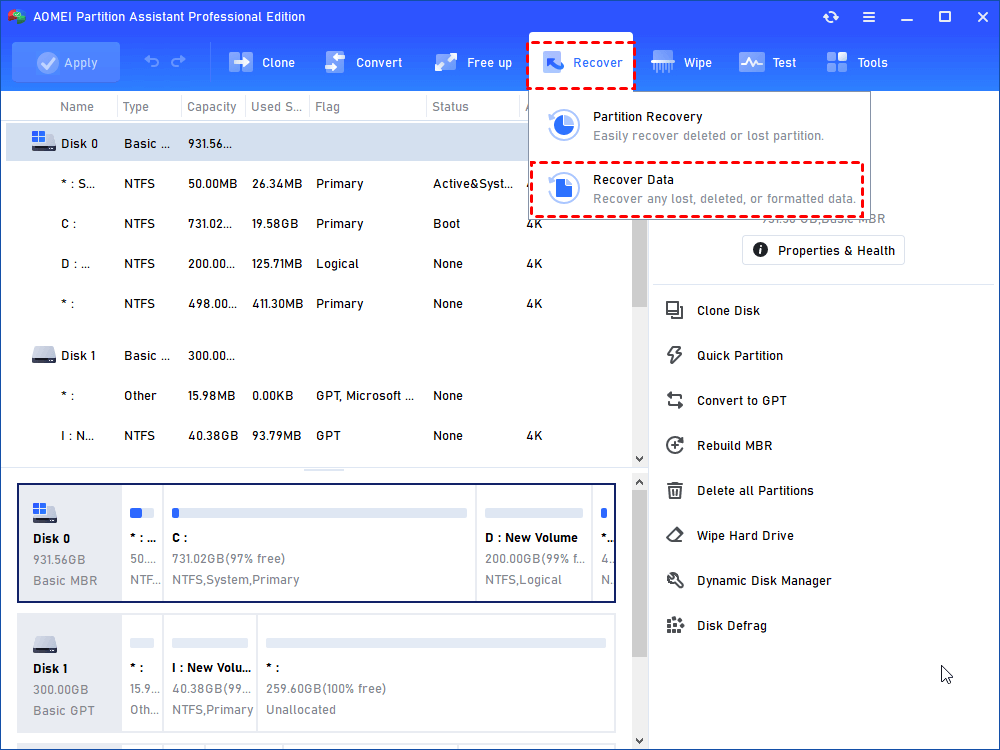
Did you accidentally delete an important temp file while cleaning up? First, check your Recycle Bin to see if it can be restored. If the files are missing, or if you emptied the Recycle Bin—stop using the device immediately. Continuing to write data to the drive can overwrite the lost files, making them impossible to retrieve. To safely get them back, you can rely on the Recover Data feature built into AOMEI Partition Assistant.
Unlike complex command-line recovery methods, AOMEI Partition Assistant offers a user-friendly interface that simplifies the entire process. With a single click, the tool scans for lost data across internal hard drives, external SSDs, USB flash drives, and even wiped data from SD cards. It supports over thousands distinct file formats, ensuring you can retrieve everything from Excel spreadsheets and Word documents to videos, images, and emails. Most importantly, the software uses advanced algorithms to retain original file names and folder structures, so you won’t have to waste time reorganizing your data after recovery.
AOMEI Partition AssistantThe Best Windows Disk Partition Manager and PC Optimizer
Conclusion
Where are temporary files stored? You can generally find them in C:\Users\Username\AppData\Local\Temp (replace "Username" with your own username). The temporary files play a role in the smooth operation of your computer, but they can accumulate and affect performance if not regularly cleared.
AOMEI Partition Assistant provides an excellent solution for managing and deleting temporary files with its user-friendly tools like the "PC Cleaner" function. Whether you choose to use dedicated software, manual methods, or built-in Windows tools like Disk Cleanup, regularly clearing temporary files helps free up storage, improve performance, and safeguard your privacy. Additionally, in cases of accidental deletion, the "Recover Data" feature in AOMEI Partition Assistant ensures you can recover lost files effectively. Keeping your system clean and organized has never been easier.
FAQs
🗨️ Where can I find my temporary files?
On Windows, temporary files are usually stored in these locations:
-
Press Win + R, type %temp%, and press Enter
-
Go to C:\Windows\Temp (administrator permission may be required)
You can also find and manage temporary files via Settings > System > Storage > Temporary files.
🗨️ Is it safe to delete Temp files?
Yes, in most cases it is safe to delete temporary files. They are created by Windows and applications for short-term use and are not meant to be permanent. However, close all running programs before deleting them to avoid errors.
🗨️ Can deleting temp files free up storage space?
Yes. Deleting temporary files can free up a noticeable amount of storage space, especially if they have accumulated over time. On systems with limited disk space, this can help improve overall performance.
🗨️ Can I delete all temporary files on my computer?
You can delete most temporary files safely, but some files currently in use cannot be removed. If Windows shows a warning or skips certain files, simply ignore them. Using AOMEI Partition Assistant is the most effective way to remove temp files automatically.
🗨️ How to view hidden temporary files?
To view hidden temporary files in File Explorer:
-
Open File Explorer
-
Click View > Show > Hidden items
-
Go to temp file locations such as %temp% or C:\Windows\Temp