
 PartitionAssistant Cleanup


Does Disk Space Effect Game Performance?
Struggling with slow load times? Find out how to free up disk space for Steam games and optimize your PC's performance with built-in tools and advanced cleaning software.

By Lucas / Updated on October 28, 2025


Every gamer has felt the frustration: your favorite game starts stuttering, loading screens drag on forever, and you're suddenly hit with an error message when a new patch tries to install. In these moments, you might blame your graphics card or processor, but a surprisingly common culprit is hiding in plain sight: your hard drive. This leads to a critical question for any PC gamer: Does disk space effect game performance?
The short answer is a resounding yes. While it might not impact your raw FPS in the same way a GPU does, a nearly full drive can create significant bottlenecks that lead to lag, longer load times, and system instability. This guide will explain why disk space is crucial for gaming and show you exactly how to clean a game disk to reclaim performance and get back to a smooth, immersive experience.
Does Disk Space Affect Game Performance?
When your primary drive (usually the C: drive) gets packed to the gills, it impacts your entire system's ability to operate efficiently. This has a direct and noticeable effect on your gaming sessions for several key reasons.
Virtual Memory (Paging File): Windows uses a portion of your hard drive as a "paging file," which acts as an overflow for your system's RAM. When your RAM is full, data is temporarily swapped to this file. If your drive has little free space, this process becomes incredibly slow and inefficient, leading to in-game stuttering and freezes, especially in demanding open-world games.
Game Updates and Patches: Platforms like Steam require a significant amount of free space to download and install updates. The launcher often needs to copy the entire game, apply the patch, and then delete the original files. If you don't have enough space, the update will fail, preventing you from playing online.
Loading Times and Texture Streaming: While the speed of your drive (SSD vs. HDD) is the primary factor for loading times, a severely fragmented or full HDD can struggle to read game data quickly. Modern games also use "texture streaming" to load high-resolution assets in real-time. A slow or full drive can't keep up, resulting in blurry, low-quality textures that pop into detail moments later.
General System Responsiveness: A full drive slows down everything, including background processes that Windows relies on. This can steal resources from your game and cause performance drops.
How Do You Clean a Game Disk?
Now that you understand the "why," let's focus on the "how." Cleaning your game disk (referring to your hard drive or SSD) involves removing unnecessary files to free up space. This is especially important for anyone wondering how to free up disk space for Steam games, which are notorious for their large file sizes. Windows provides several built-in utilities that can help you perform a basic cleanup.
1. Run Storage Sense
This is Windows' modern, automated cleaning tool.
Step 1. Go to Settings > System > Storage.
Step 2. Toggle Storage Sense to the "On" position.
Step 3. Click "Configure Storage Sense or run it now" to customize its settings, such as how often it runs and what files it deletes (e.g., temporary files, old items in the Recycle Bin).

2. Use the Classic Disk Cleanup
For a more manual but deeper clean, the classic Disk Cleanup tool is excellent.
Step 1. Type "Disk Cleanup" in the Windows search bar and open the app.
Step 2. Select the drive your games are on (usually C:).
Step 3. For the best results, click the "Clean up system files" button. This rescans the drive for more data, like old Windows update files, which can take up gigabytes of space.
Step 3. Check the boxes next to the file types you want to remove and click "OK."
3. Manage Your Steam Library
Steam has its own tools to help you manage your installed games.
Step 1. In the Steam client, go to Steam > Settings > Storage.
Step 2. This will show you all your installed games across all your drives, sorted by size.
From here, you can easily select and uninstall games you no longer play.
A Deep Clean with PartitionAssistant Cleanup
While the built-in tools are effective, they often overlook deeply ingrained junk files. For an extensive cleanup, you need a specialized tool like PartitionAssistant Cleanup. This software is a dedicated PC cleaning utility designed to scan your entire system and eliminate a wide range of unnecessary files that slow down your computer and consume valuable disk space.
Unlike basic cleaners, PartitionAssistant Cleanup targets everything from system junk and registry clutter to large, forgotten files, making it the perfect tool for gamers who want to maximize their available storage.
 PartitionAssistant Cleanup
Free Up Disk Space To Keep Your PC Running Smoothly and Efficiently
Step 1. Install and launch PartitionAssistant Cleanup. Click the "Clean Junk Files" tab.
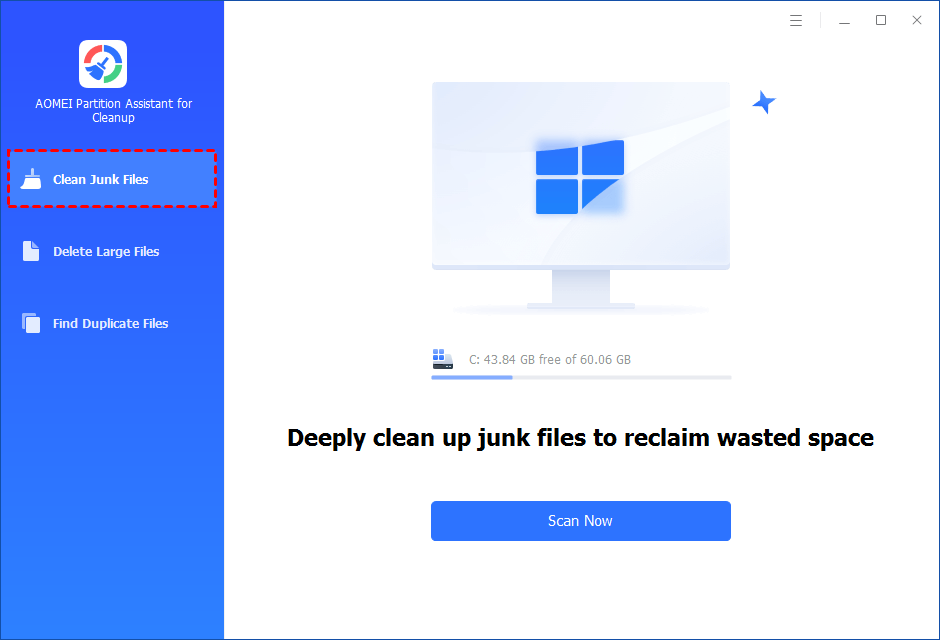
Step 2. Click the "Scan Now" button to start the process of scanning junk files.

Step 3. After the scan process is finished. All system junk files (including recycle bin files, temporary files, log files, invalid shortcuts, and so on) and registry junk files (including DLL registry, system registry, and program registry) will be displayed.
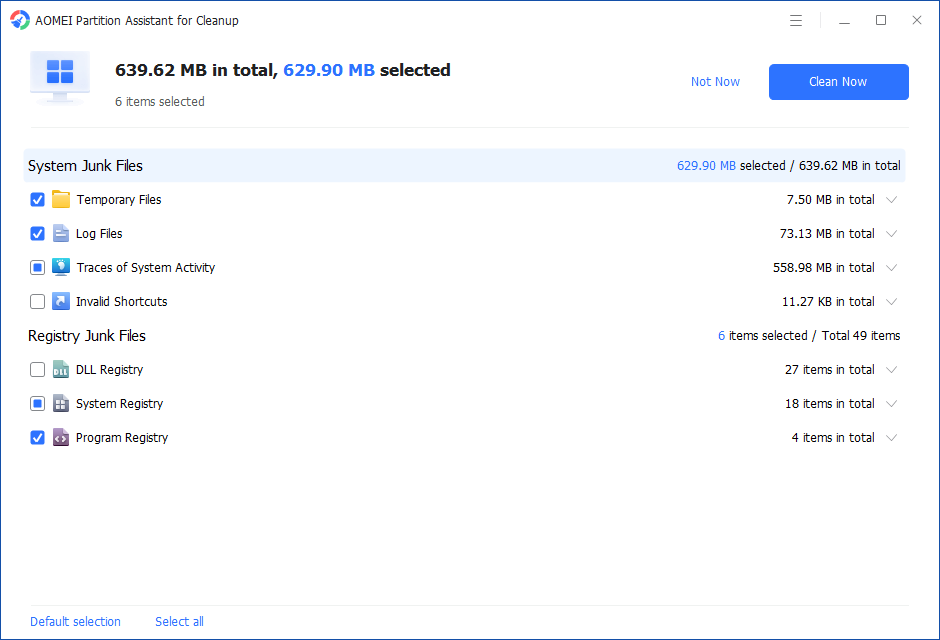
You can also click the button behind to view the junk files details.

Step 4. And, you can click the button behind to locate the file.
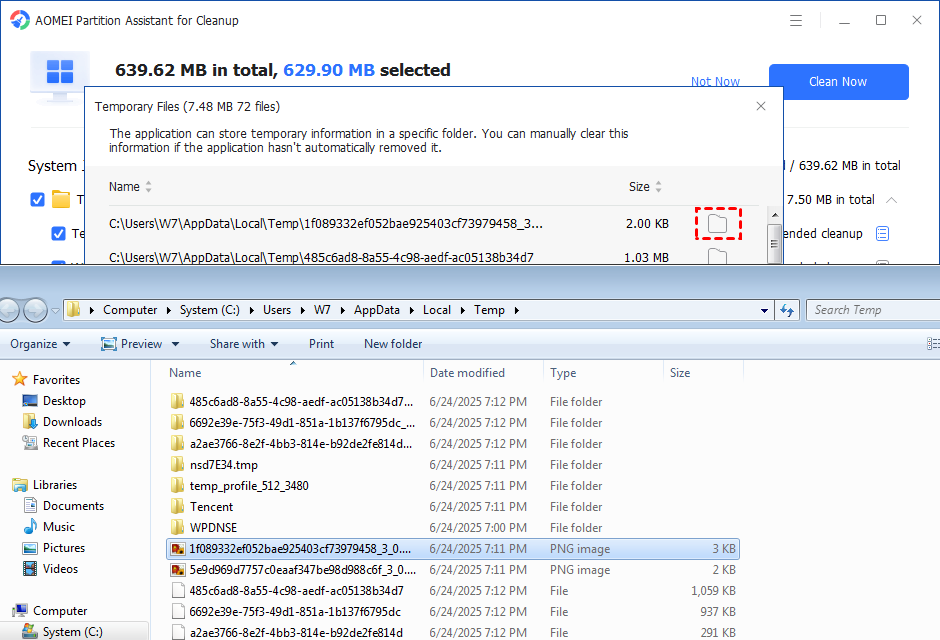
By default, the program will select some junk files to clean up, for example, temporary files, log files, and so on. You can also manually check to select more or uncheck to deselect fewer listed junk files. Or, click "Select All" to select all junk files to clean up if you need to clean up all.
Step 5. After selecting junk files that are not needed anymore, you can click the "Clean Now"button to start the cleanup.

The process of the cleanup might take time, and the selected files will be cleaned up. After the process is finished, you will get a cleanup completed window displaying how many files you have cleaned and not yet cleaned.

Bonus tips: Upgrade your disk for better gaming experience
If you've cleaned your drive and still find yourself wanting better performance, the single most impactful hardware upgrade for gaming is switching from a traditional Hard Disk Drive (HDD) to a Solid-State Drive (SSD).
Drastically Faster Loading Times: SSDs can read data many times faster than HDDs, slashing loading times in games.
Smoother Gameplay: The faster speed eliminates stuttering caused by texture streaming, leading to a more fluid experience.
Improved System Responsiveness: Your entire PC, from boot-up to launching applications, will feel significantly snappier.
To Sum Up
So, does disk space effect game performance? Absolutely. A full or cluttered hard drive can lead to stuttering, slow load times, and failed updates, creating a frustrating gaming experience. By regularly cleaning your drive, you can ensure your PC has the breathing room it needs to perform at its best.
While Windows' built-in tools provide a good starting point, a dedicated utility like PartitionAssistant Cleanup offers a more powerful and comprehensive solution, allowing you to easily remove deep-seated junk files and identify large, forgotten data. For those seeking the ultimate performance boost, an upgrade to an SSD remains the king of gaming storage solutions. By keeping your disk clean and optimized, you'll spend less time waiting and more time winning.
