AOMEI Partition Assistant
[Answered] Is There a Simple VHD Manager?
Looking for a simple VHD manager? This guide introduces easy tools to create, mount, and manage VHD and VHDX files, helping you organize virtual disks easily.

By Irene / Updated on November 4, 2025


Why do you need a simple VHD manager?
A simple VHD manager is important because it makes working with virtual hard disks easy and safe for everyone. It offers a clear and user-friendly interface to create, attach, detach, or resize VHDs without using complicated commands. This helps users back up data, test operating systems, and manage virtual storage without risking their main drive. With an easy tool, the chance of errors is lower, and tasks can be done more quickly. In short, a simple VHD manager helps improve efficiency and ensures smooth disk management.
What is the simplest VHD manager?
AOMEI Partition Assistant is widely recognized as the simplest and most efficient VHD and disk manager because it combines an intuitive design with strong, practical features. Its clear interface allows users to create, attach, and detach VHD or VHDX files easily, making it suitable for both beginners and advanced users. The program supports all major Windows systems and ensures smooth performance when handling different virtual disk formats.
Beyond virtual disk management, AOMEI Partition Assistant also functions as a complete disk management solution. It helps users resize, clone, merge, or convert partitions safely, offering data protection through reliable preview and recovery features. This makes it an excellent choice for anyone who wants to manage both physical and virtual disks in one place.
The built-in “Virtual Disk” feature simplifies every step, from choosing the disk type and size to initializing and assigning a drive letter. Users can also attach existing virtual disks or detach them when no longer needed. Compared with Windows’ built-in tools, AOMEI provides a faster, easier, and more flexible way to manage virtual disks. Whether you are creating VHD backups, testing software, or running virtual machines, it ensures simple, safe, and efficient disk management.
 AOMEI Partition Assistant
The Best Windows Disk Partition Manager and PC Optimizer
1. How to Create VHD
If you want to create a VHD, you can follow the steps below:
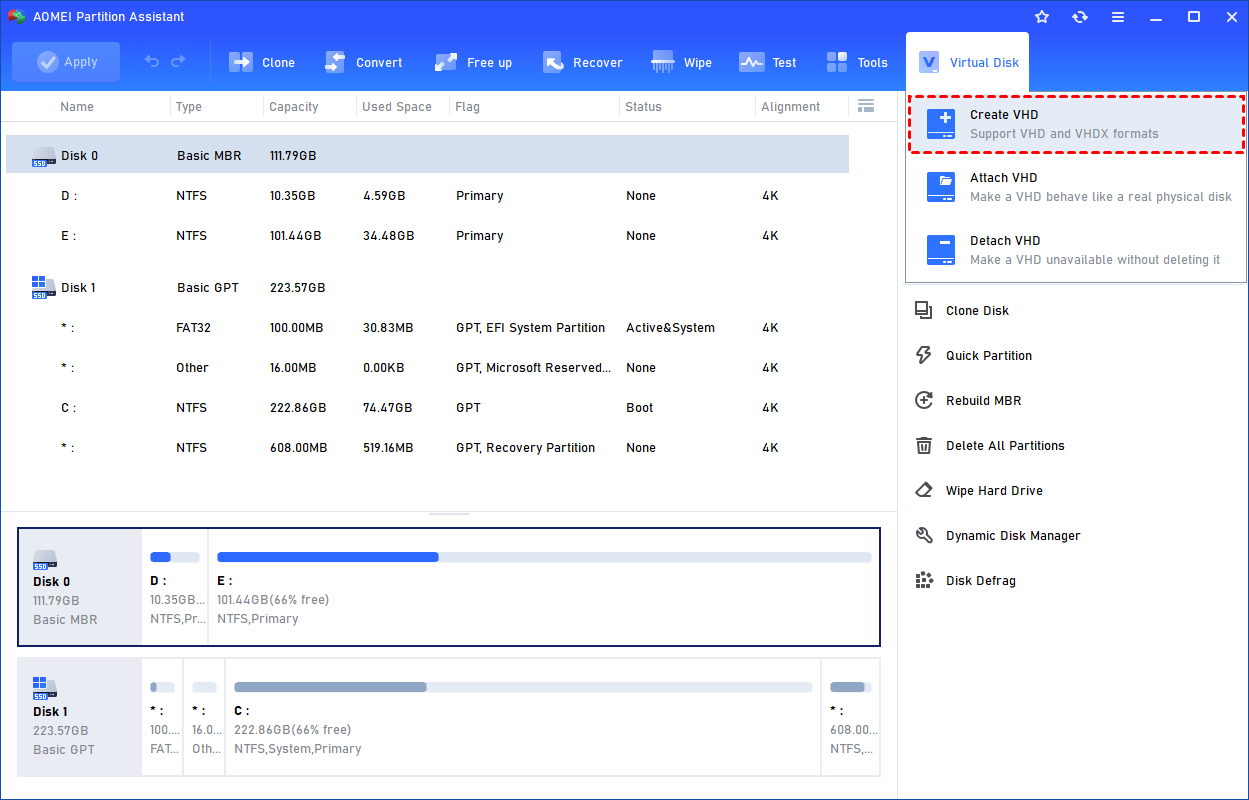
Step 1. Click the tab "Virtual Disk", you will see 3 options available for VHDs: create VHD, attach VHD, and detach VHD. Select the "Create VHD" option after clicking the "Virtual Disk" tab.
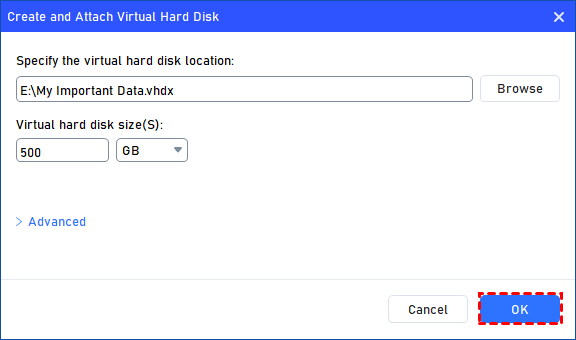
Step 2. You can specify the virtual disk location and size.
Optionally, you can click the "Advanced" option to set the virtual hard disk format and type. (By default, the VHDX format and the Dynamically expanding type are checked.)
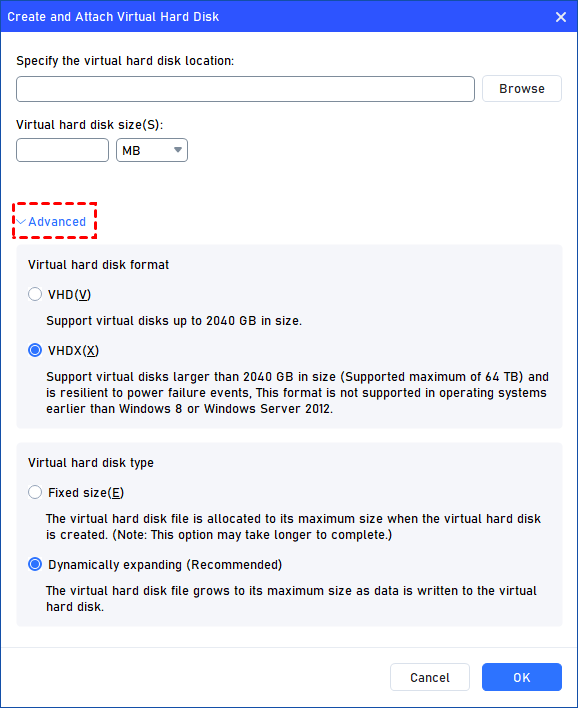
Virtual hard disk format: VHD and VHDX are supported.
For VHD, it supports virtual disks up to 2040GB in size.
For VHDX, it supports virtual disks larger than 2040GB in size. (Up to 64TB) This format is not supported in operating systems earlier than Windows 8 or Windows Server 2012.
Virtual hard disk format: Fixed size and Dynamically expanding are supported.
For fixed size, the virtual hard disk file will be allocated its maximum size when it is created. So it will take much longer to create.
For Dynamically expanding, the virtual hard disk file will grow to its maximum size as data is written to it. (Recommended)
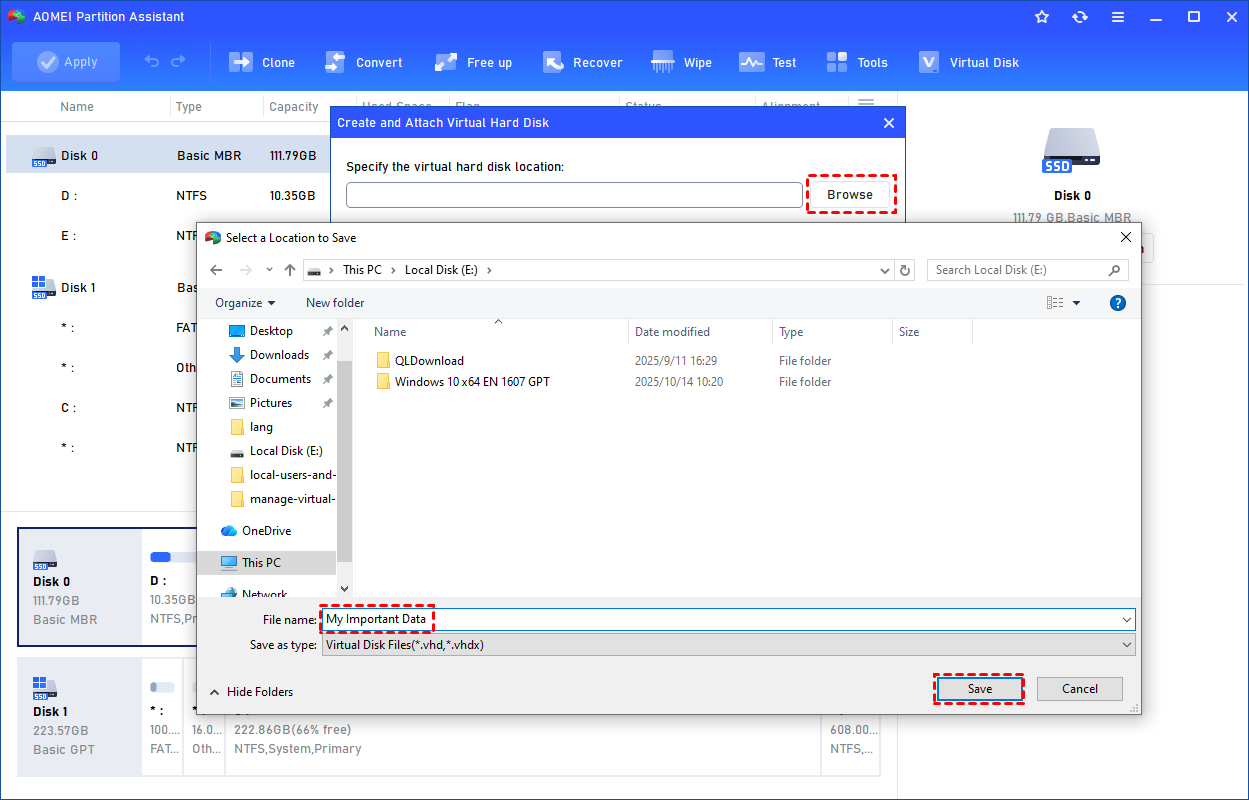
Click "Browse" to select a location to create the VHD. Please enter a file name for the virtual disk and click "Save".
Step 3. Once the virtual disk location and size are set up, you can click "OK" to start creating the VHD.
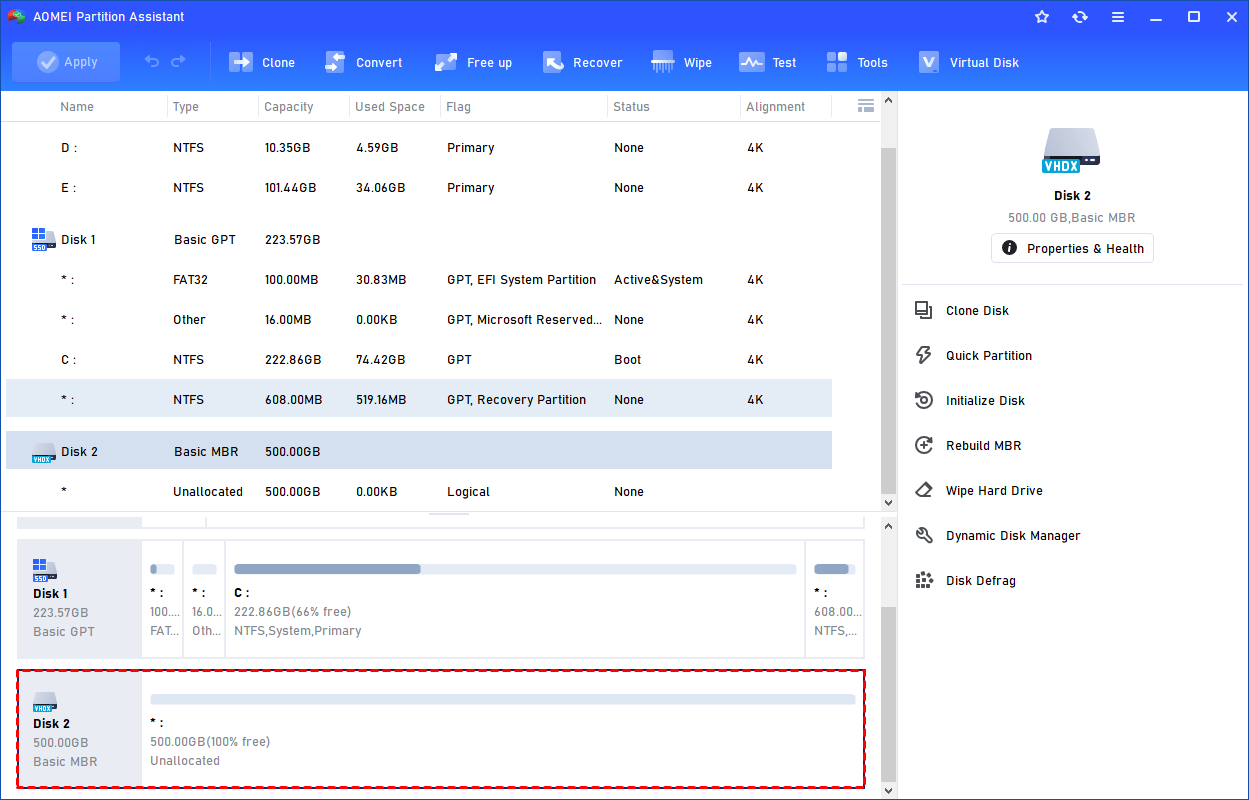
Step 4. After the reload process is finished, you will see that the VHD has been created successfully. It will be attached automatically.
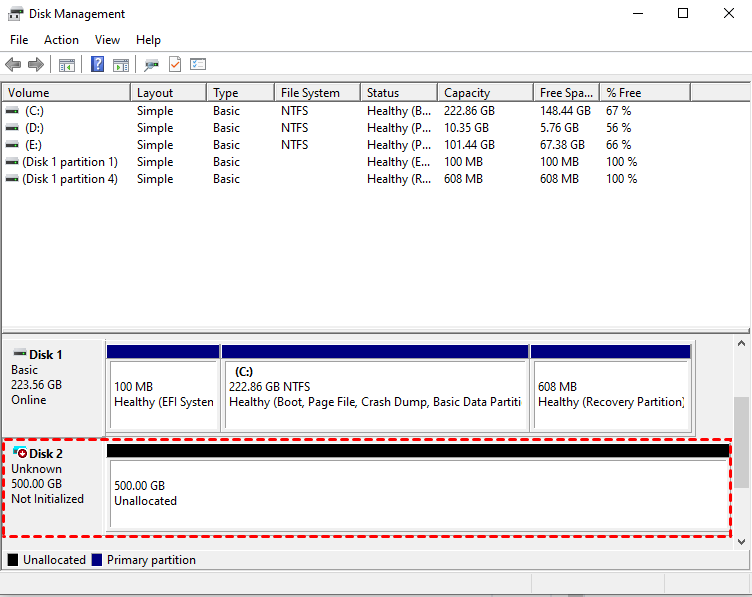
You can also view the VHD in Windows Disk Management.
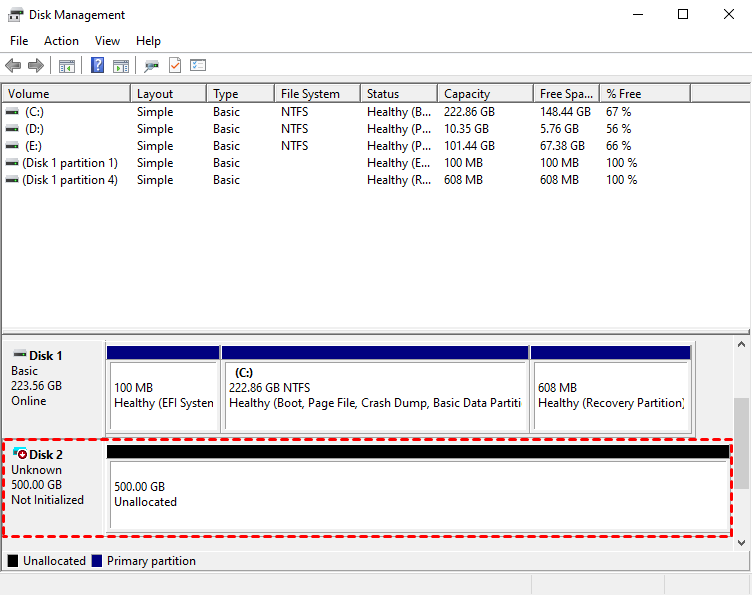
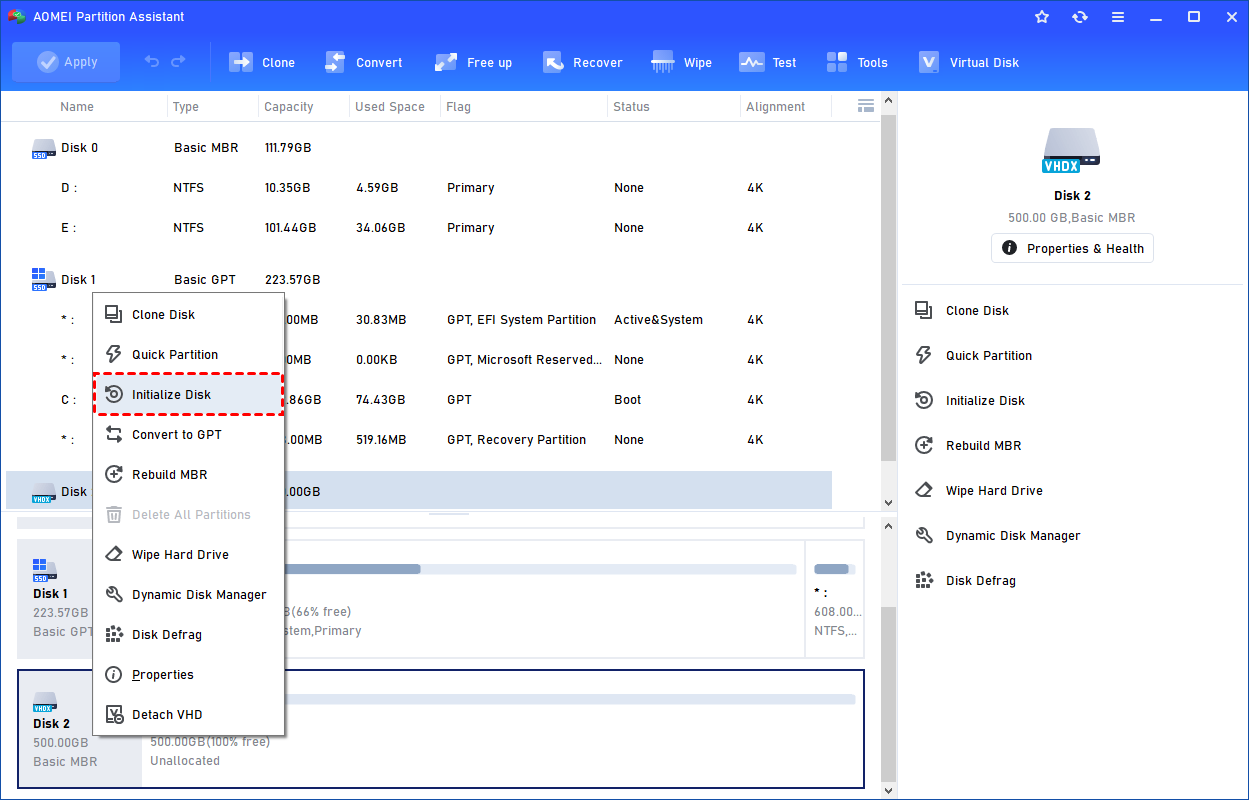
The created VHD will be uninitialized so it is empty without any data or file system. To make it useful, you need to initialize the disk, create a partition, and assign a drive letter.
You can initialize the drive in Partition Assistant.
Or, initialize it in Windows Disk Management.
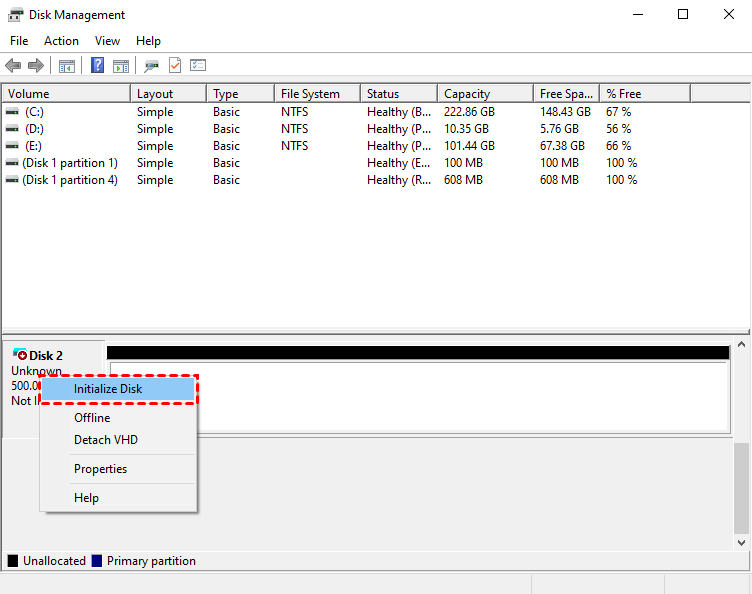
Then, you can create a partition and assign a drive letter for the partition. Finally, you can use the VHD normally.
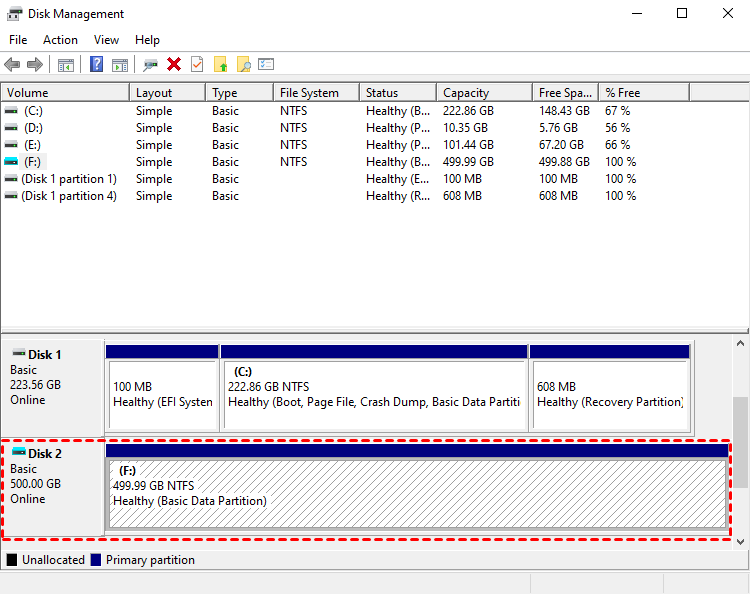
2. How to Attach VHD
A VHD is a container file that holds a virtual disk image. Until it is attached, Windows sees it only as a regular file. Once attached, Windows mounts it as a virtual disk, assigns a drive letter, and allows access to its file system. You can only perform disk operations, such as cloning VHD to HDD, checking for corruption or errors, or resizing partitions, after attaching it. Detaching the VHD safely removes it from the system without deleting the file.
 AOMEI Partition Assistant
The Best Windows Disk Partition Manager and PC Optimizer
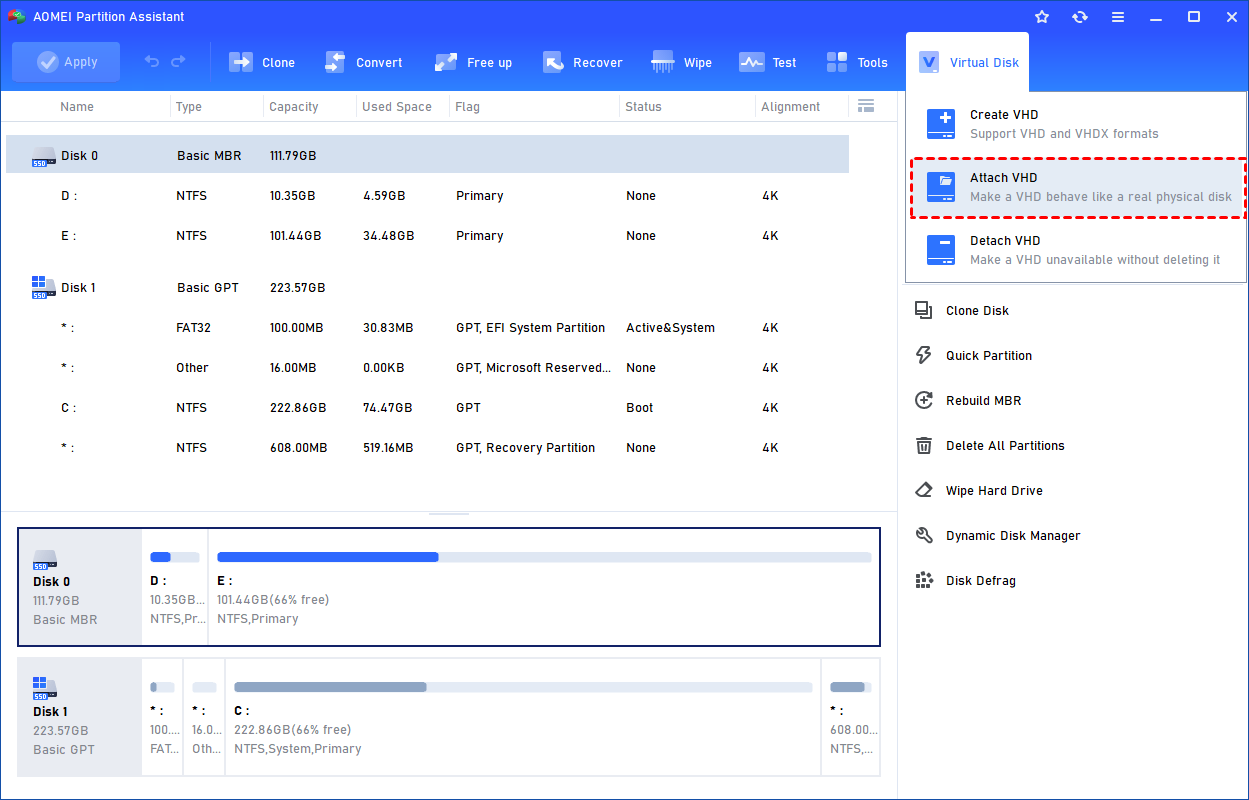
Step 1. Select the "Attach VHD" option after clicking the"Virtual Disk" tab.
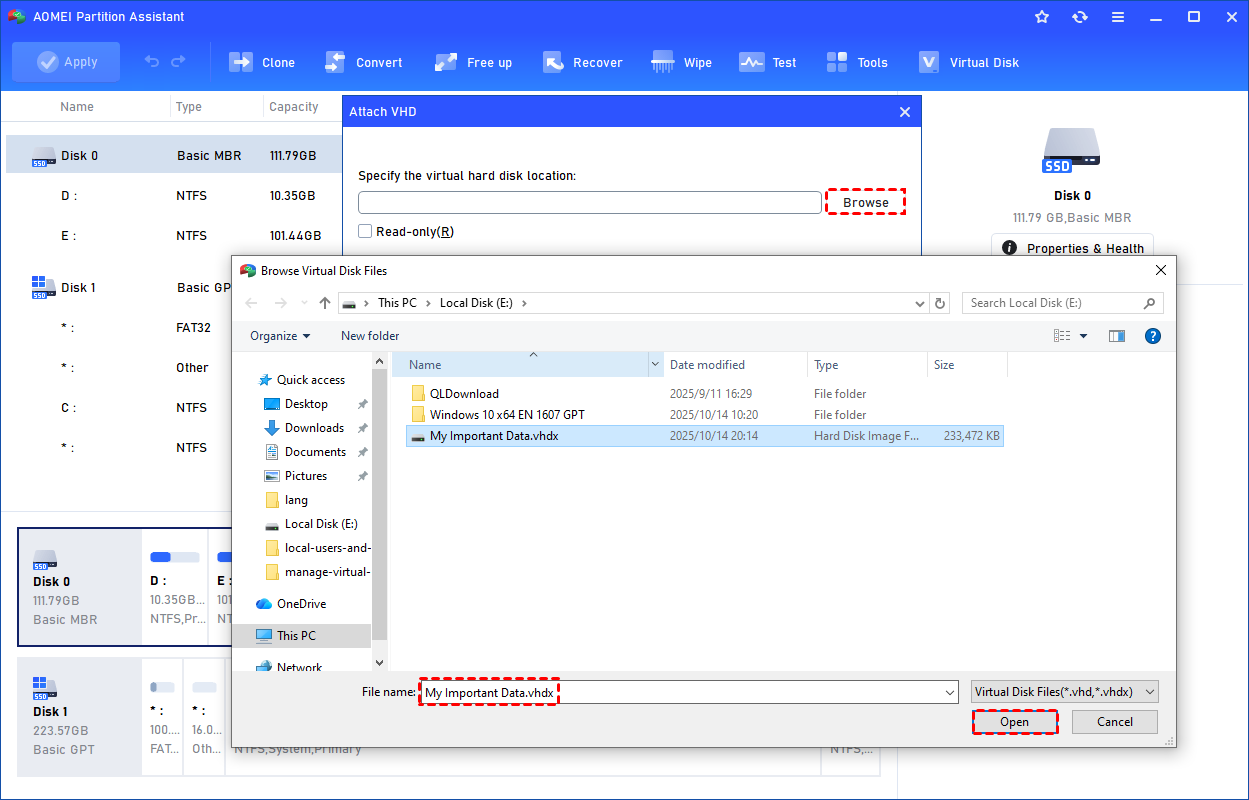
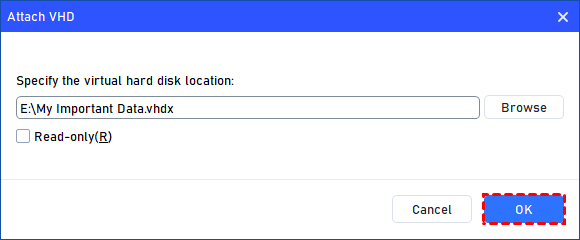
Step 2. Click "Browse" to locate the location where the .vhd or .vhdx file is saved. Select the .vhd or .vhdx file you want to attach and click "Open" to attach it.
Step 3. Once the virtual file is selected, you can click "OK" to start attaching the VHD.
Step 4. Once the process is finished, you will see that the VHD is attached successfully.
3. How to Detach VHD
If the VHD is not necessary, you can remove it by detaching the VHD.
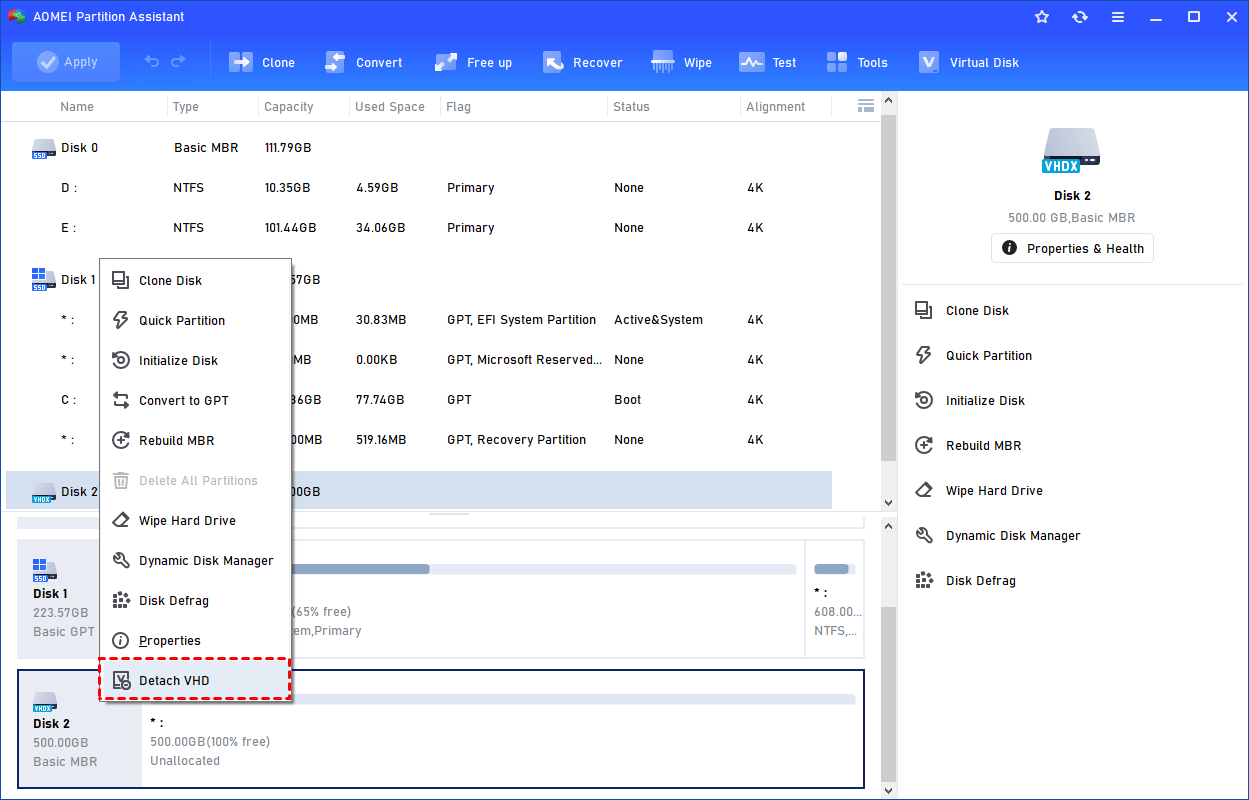
Step 1. You can right-click the attached VHD in Partition Assistant and select the "Detach VHD" option to detach it.
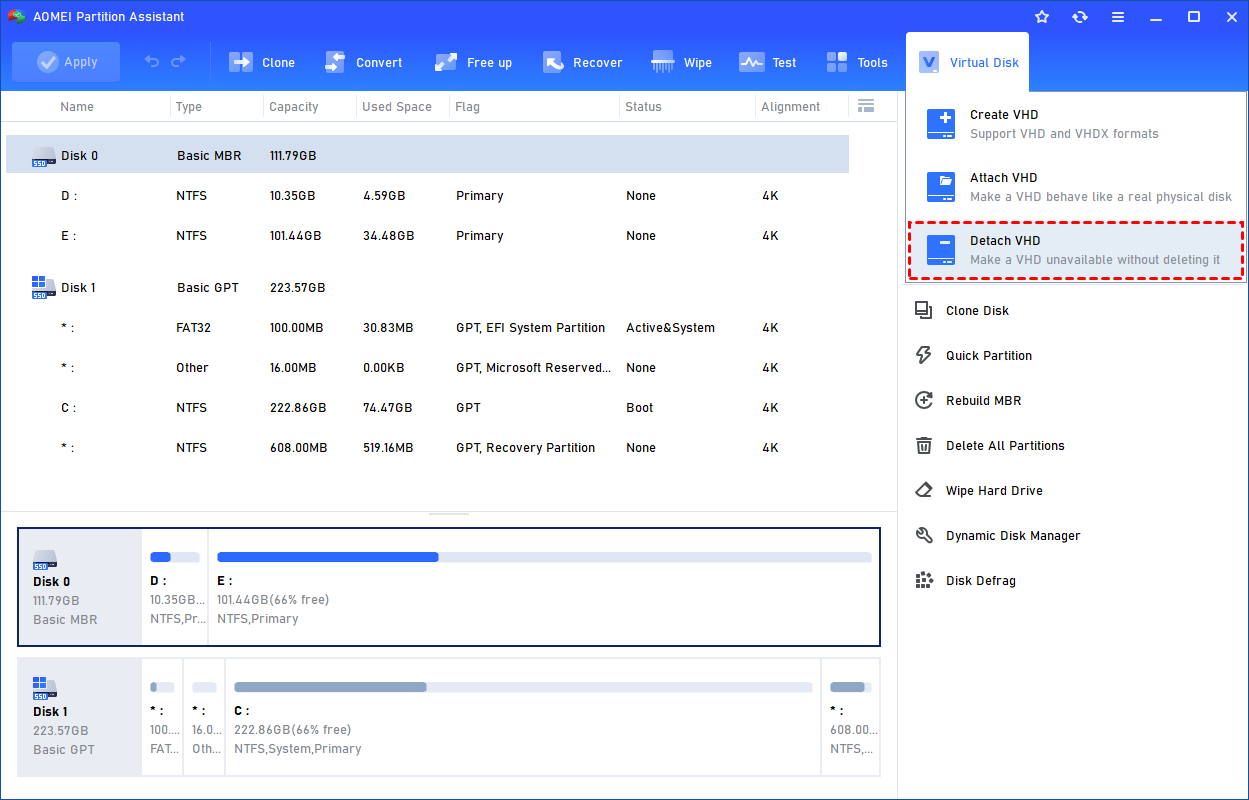
Or, you can select the "Detach VHD" option after clicking the"Virtual Disk" tab.
Step 2. You can select and deselect the virtual disk(s) and click the "Detach" button to start detaching the VHD(s).
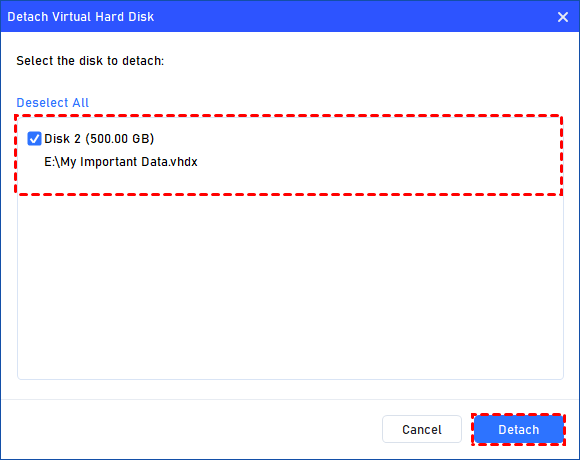
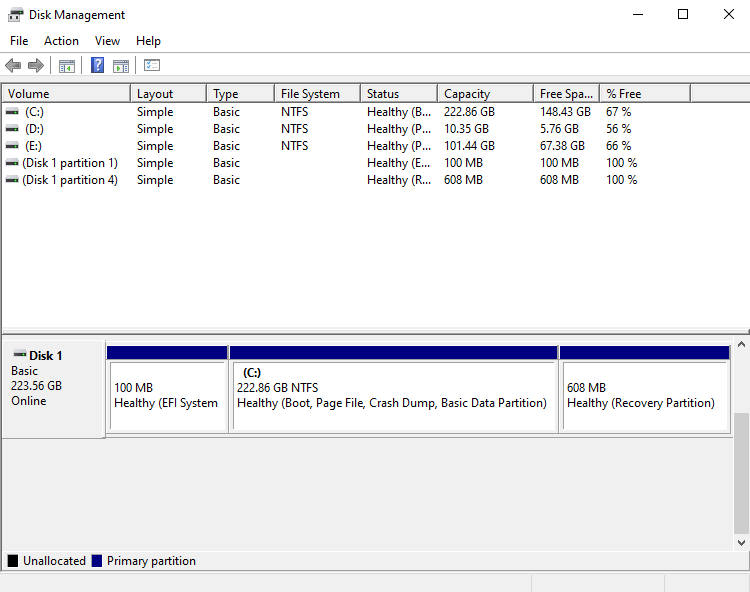
Step 3. Once the process is finished, you will see that the VHD(s) has been removed successfully.
Conclusion
Managing virtual disks is much easier and safer with a simple VHD manager like AOMEI Partition Assistant. This VHD manager software offers a clear and user-friendly interface to create, attach, and mount virtual hard disks quickly. It works as an all-in-one attach VHD VHDX tool that helps users manage VHD files efficiently on Windows. Whether you need to manage VHD in Windows, back up data, test systems, or organize storage, AOMEI Partition Assistant ensures smooth, secure, and flexible disk management for both virtual and physical drives.
AOMEI Partition AssistantThe Best Windows Disk Partition Manager and PC Optimizer