
 PartitionAssistant Cleanup


How to Clear Cache on Chrome
How to clear cache on Chrome when you find your browser piled up too much unnecessary data? You can learn how to clear cache on Google Chrome, and how to clean PC and disk cache in this article.

By Lucas / Updated on July 11, 2025


Overview of cache data
Cache data refers to the temporary storage of web documents, images, and other resources on a device or server. When you visit a website, your browser downloads various elements such as HTML files, images, stylesheets, and scripts to display the page properly.
Instead of downloading these elements every time you visit the same website, your browser stores copies of these files locally. This helps speed up the loading time of web pages because the browser can retrieve these files from the cache rather than downloading them again.
When you revisit a website, your browser checks its cache to see if it already has the necessary files stored. If it finds the files in the cache and they haven't expired, it will load the page using those cached files instead of downloading them again from the web server.
Why do you need to clear cache and cookies on Chrome?
Although cache files generally help to speed up your web browsing, over time, accumulating cache data without clearing it regularly can lead to several issues that can negatively impact users' browsing experience and overall device performance. Here are some of the potential menaces:
1. Sluggish Performance: Cache data accumulation can consume significant storage space on your device. This can lead to decreased performance, causing your browser and other applications to run slower than usual.
2. Outdated Content: Cached files stored in your browser may become outdated if the website updates its content or design. This can result in viewing old web page versions, missing out on important updates, or experiencing display errors.
3. Privacy Risks: Some cache data contains sensitive information such as login credentials, browsing history, and form data. If someone gains unauthorized access to your device, they could potentially retrieve this information from the cache.
4. Inaccurate Website Functionality: Some websites use dynamic content that changes based on user interactions or time-sensitive data. Cached files may interfere with the proper functioning of these websites, leading to errors or glitches.
5. Cross-Site Tracking: Cookies, which are often stored alongside cache data, can be used by third-party trackers to monitor your online activities across different websites. Accumulated cookies may provide a comprehensive profile of your browsing habits, posing privacy concerns.
How to clear cache on Chrome manually
While browser cache serves the purpose of improving browsing speed and efficiency, if you allow it to accumulate, it can also lead to various menaces. Therefore, it's important for users to regularly clear their cache and cookies to mitigate these risks and ensure a smoother and more secure browsing experience.
Here are detailed steps on how to clear your cache on Google Chrome.
Step 1. Open the Chrome browser.
Step 2. Click on the three dots (menu icon) located at the top-right corner of the Chrome window to open the Chrome menu.
Step 3. From the menu, hover over "More tools" and then click on "Clear browsing data."

Step 4. A new tab will open with the "Clear browsing data" window. Here, users can select the time range for which they want to clear data. They can choose from options like "Last hour," "Last 24 hours," "Last 7 days," "Last 4 weeks," or "All time."
Step 5. Select the Chrome temp webpage data that you wish to erase. You may choose between browser history, cached pictures and files, autofill form data, download history, and other browsing data.
Step 6. Click Clear data.

Further tips: How to clean computer cache
Like browsers, your system also creates cache files to help you quickly access some data files. Windows utilizes various caching techniques to optimize system performance, such as disk caching, file caching, and memory caching. These cached data help improve system performance by reducing the need to retrieve the same information repeatedly from slower storage devices like hard drives.
By the way, the memory cache is also called RAM cache. This allows the processor to access the data much faster compared to retrieving it from slower storage devices like hard drives or solid-state drives (SSDs). RAM cache helps accelerate system performance by reducing latency and improving overall responsiveness, especially for tasks that involve frequent read and write operations, such as loading applications and accessing frequently used files.
However, too many cache files always use a portion of your disk capacity, causing your computer to slow down unexpectedly; also, certain cache files may get corrupted or destroyed, causing an app or software to malfunction. So, you'd better clean computer cache regularly.
Here, we offer you a free clean tool: PartitionAssistant Cleanup. It is a powerful and versatile, and robust PC cleaning feature. It offers a scan and removal of various types of junk files, including system junk, registry junk, and, importantly, browser cookies and cache.
 PartitionAssistant Cleanup
Free Up Disk Space To Keep Your PC Running Smoothly and Efficiently
Step 1. Initiate Clean Junk Files. Install and launch PartitionAssistant Cleanup. Click the "Clean Junk Files" tab.
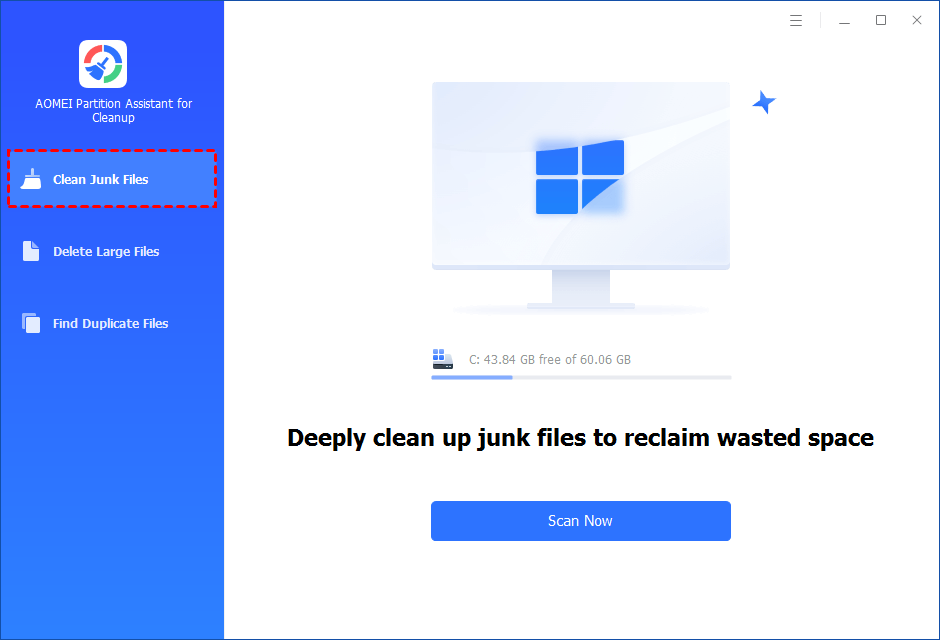
Step 2. Start scan junk files. Click the "Scan Now" button to start the process of scanning junk files.

Step 3. After the scan process is finished. All system junk files (including recycle bin files, temporary files, log files, invalid shortcuts, and so on) and registry junk files (including DLL registry, system registry, and program registry) will be displayed.
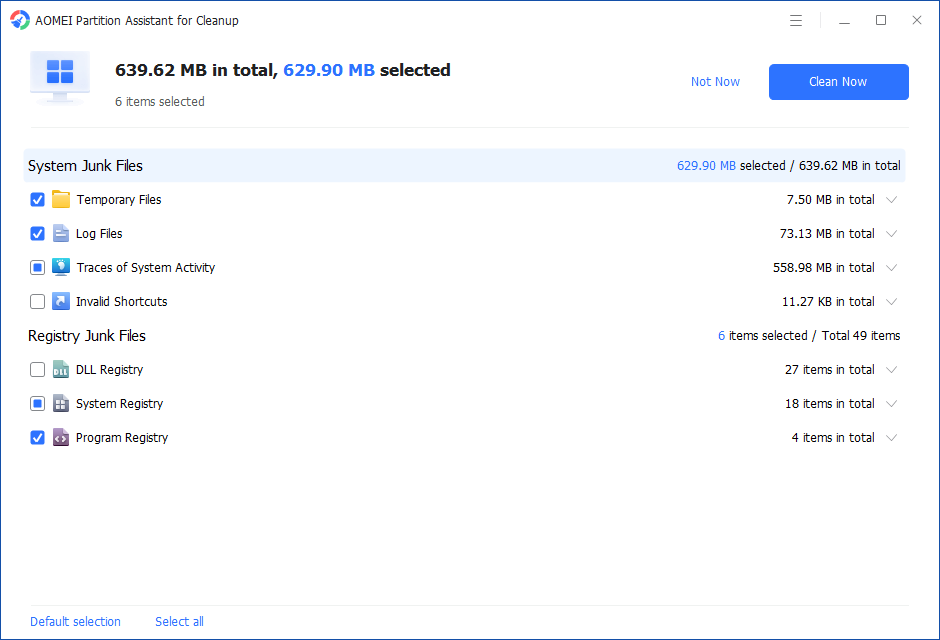
Step 4. You can also click the button behind to view the junk files details.

Step 5. And, you can click the button behind to locate the file.
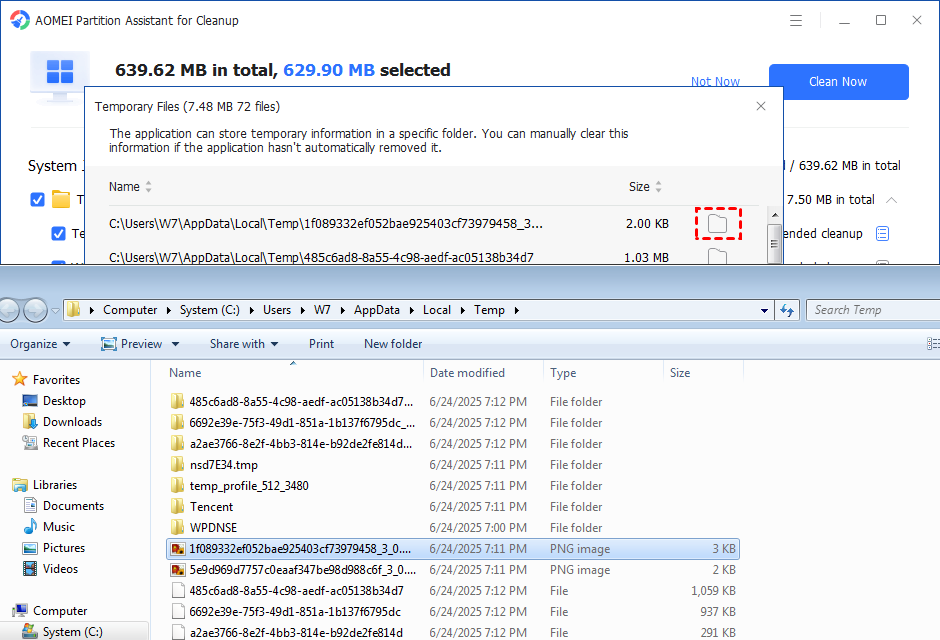
Step 6. Select junk files to start cleanup. By default, the program will select some junk files to clean up, for example, temporary files, log files, and so on. You can also manually check to select more or uncheck to deselect fewer listed junk files. Or, click "Select All" to select all junk files to clean up if you need to clean up all.
After selecting junk files that are not needed anymore, you can click the "Clean Now"button to start the cleanup.

Step 7. Cleanup completed. The process of the cleanup might take time, and the selected files will be cleaned up. After the process is finished, you will get a cleanup completed window displaying how many files you have cleaned and not yet cleaned.

Now, all junk files are removed by this handy tool.
Duplicate file finder: Deeply scan the target location to filter repeated files and clean them all with one click.
Conclusion
Now you know how to clear cache on Chrome. It's similar to a clean cache on other browsers. You can find relevant options in their settings. Don't forget to clean your computer cache, it can keep your PC in a great status and provide you with nice computer performance.
